Washington Escalates War on The Hague: Executive Sanctions Target International Criminal Court Operations and Financial Infrastructure
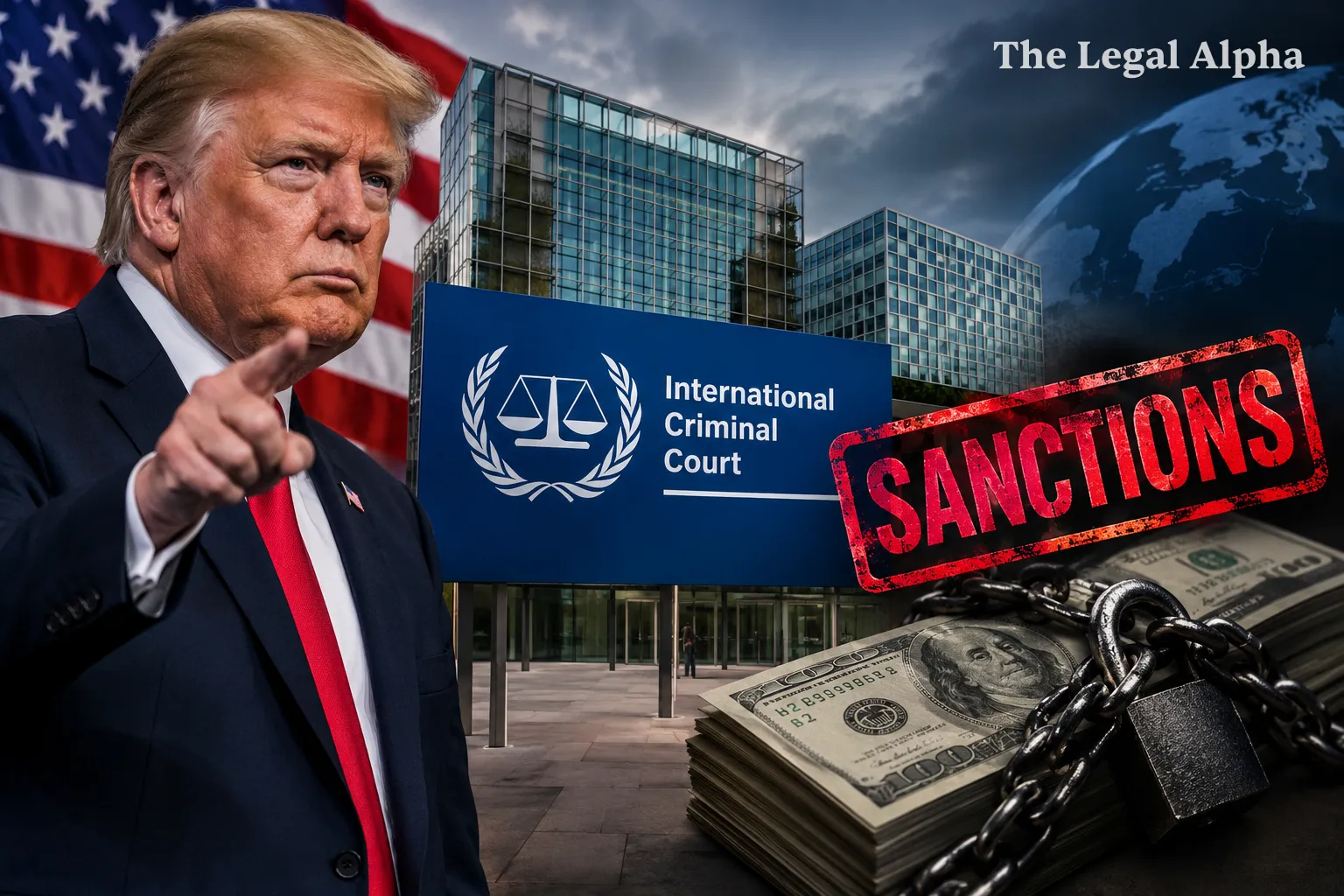
The United States government escalated its confrontational stance toward the International Criminal Court by issuing sweeping economic sanctions directly targeting the international tribunal as an institution. Secretary of State Marco Rubio declared that Washington intends to systematically dismantle the court unless it halts investigative actions against nationals of non-member states, specifically highlighting American personnel and allied leadership.
The decision follows heightened bilateral friction after ICC judges issued arrest warrants in late 2024 for senior Israeli officials—including Prime Minister Benjamin Netanyahu—over conduct in the Gaza conflict. While past American punitive measures singled out specific prosecutors or judges, this latest action expands the scope to freeze tribunal assets under U.S. jurisdiction and prohibit American entities from delivering operational, financial, or tech services to the court without special authorisation.
Legal Topic
Area of Law: Public International Law
Sub-topic: International Criminal Jurisdiction / Unilateral Economic Sanctions & Immunity
Core Legal Issue
The primary legal controversy centers on the boundaries of treaty-based international criminal jurisdiction versus state sovereignty under public international law. Specifically, the dispute turns on whether an international tribunal established by treaty can exercise delegated criminal jurisdiction over nationals of non-signatory sovereign states for acts committed on the territory of a state party.
A parallel administrative and constitutional issue involves the extraterritorial application of domestic executive sanctions to paralyze an independent multilateral judicial body created by an international treaty regime.
What Did the Court / Authority Decide?
The U.S. executive branch ordered the blocking of all assets and property interests of the International Criminal Court subject to U.S. jurisdiction. Under the direction implemented via the Department of the Treasury's Office of Foreign Assets Control, U.S. persons and financial institutions are barred from facilitating payments, transferring funds, or providing goods and technological services to the tribunal without specific licenses.
In response, the International Criminal Court issued a formal statement rejecting the measures as unlawful interference with an independent judicial process. The court confirmed that all ongoing investigations, prosecutions, and pending warrants remain valid and active, calling upon its 125 member states to fulfill their statutory obligations and establish protective mechanisms to ensure uninterrupted tribunal operations.
Key Legal Points
-
The Rome Statute operates on delegated territoriality: member states delegate their domestic criminal jurisdiction over grave crimes committed within their borders to the ICC, even when alleged perpetrators belong to non-signatory nations.
-
The United States asserts the customary international law doctrine of pacta tertiis nec nocent nec prosunt—treaties create neither obligations nor burdens for third-party non-signatories without consent.
-
The expanded sanctions transition from targeting individual court officers to an institutional economic blockade, creating acute secondary sanctions risks for international banking institutions handling Hague accounts.
-
The confrontation exposes the unresolved friction between customary functional immunity of foreign sovereign officials and Article 27 of the Rome Statute, which denies official immunity for international crimes.
Relevant Law
-
Article 12, Rome Statute of the International Criminal Court (Preconditions to the Exercise of Jurisdiction)
-
Article 27, Rome Statute of the International Criminal Court (Irrelevance of Official Capacity)
-
International Emergency Economic Powers Act, 50 U.S.C. § 1701 et seq.
-
United States American Servicemembers' Protection Act, 22 U.S.C. § 7421 et seq.
-
Article 34, Vienna Convention on the Law of Treaties (General rule regarding third States)
Arguments of the Parties
The United States Executive
The U.S. administration contended that the International Criminal Court is exceeding its legitimate authority by claiming jurisdiction over individuals whose home nations have not ratified the Rome Statute. American authorities argued that international courts cannot usurp domestic sovereignty or subject citizens of non-party sovereign states to foreign prosecutions without explicit consent. Washington maintained that domestic emergency powers allow the executive branch to deploy financial embargoes against entities that infringe upon core national security interests.
The International Criminal Court and Member States
The tribunal submitted that its jurisdiction over alleged offenses in Palestine and other territories derives strictly from the valid accession of the affected sovereign states under Article 12 of the Rome Statute. The court argued that international law permits states to prosecute crimes committed on their sovereign soil or delegate that territorial competence to a multilateral forum. Furthermore, ICC leadership contended that unilateral economic sanctions designed to halt judicial proceedings violate international norms protecting independent courts from coercive interference.
Why Does It Matter?
This administrative escalation strikes at the practical viability of the international criminal justice apparatus. While the ICC maintains judicial independence on paper, the freezing of dollar-clearing accounts, digital infrastructure contracts, and vendor relationships could severely hamper day-to-day forensic investigations, trial management, and witness protection programs.
Beyond institutional logistics, the measure forces a sharp compliance dilemma for European and Western allies who are simultaneously bound by international treaty obligations to support the ICC and subject to U.S. financial system exposure. For multinational legal practitioners, financial institutions, and contractors, the sanctions create immediate regulatory conflict-of-law risks between American embargo rules and European blocking statutes.
Legal Takeaway
Unilateral sanctions can significantly impair the operational capabilities of multilateral tribunals even when their underlying treaty jurisdiction remains formally valid. The standoff underscores that international criminal justice relies fundamentally on geopolitical consensus and voluntary cooperation rather than enforceable sovereign power.
Sources
Primary Source:
-
U.S. Department of State and Executive Actions on Sanctioning the International Criminal Court; Official Statement of the Presidency of the International Criminal Court.
Additional Sources:
-
Rome Statute of the International Criminal Court (1998).
-
U.S. Department of the Treasury, Office of Foreign Assets Control (OFAC) Regulatory Directives.
-
Associated Press Reporting on U.S.–ICC Diplomatic and Sanctions Developments.