Delhi Police Intercept Demonstrating Advocates Near Supreme Court Amid Escalating Controversy Over Chief Election Commissioner and Electoral Roll Revision
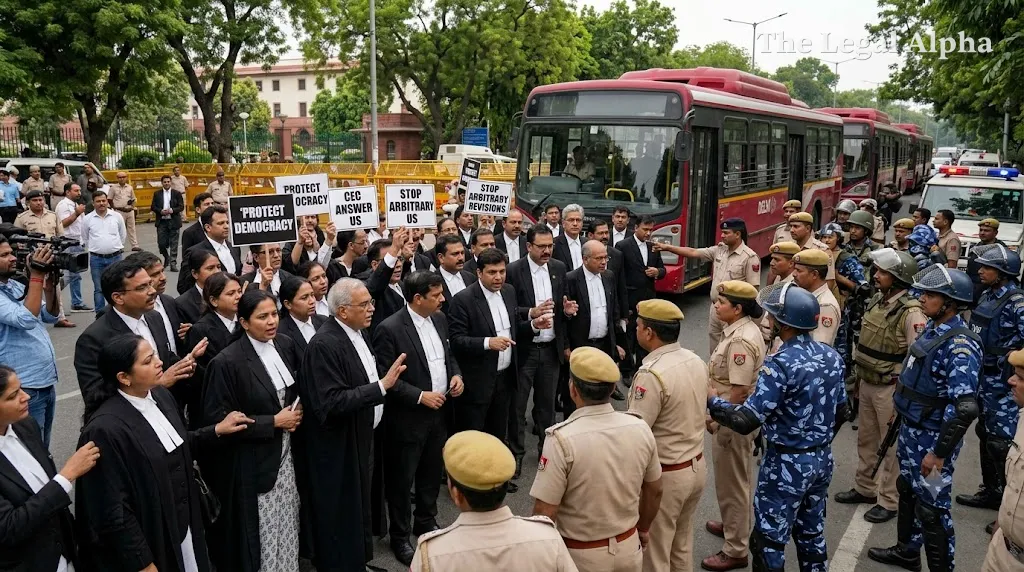
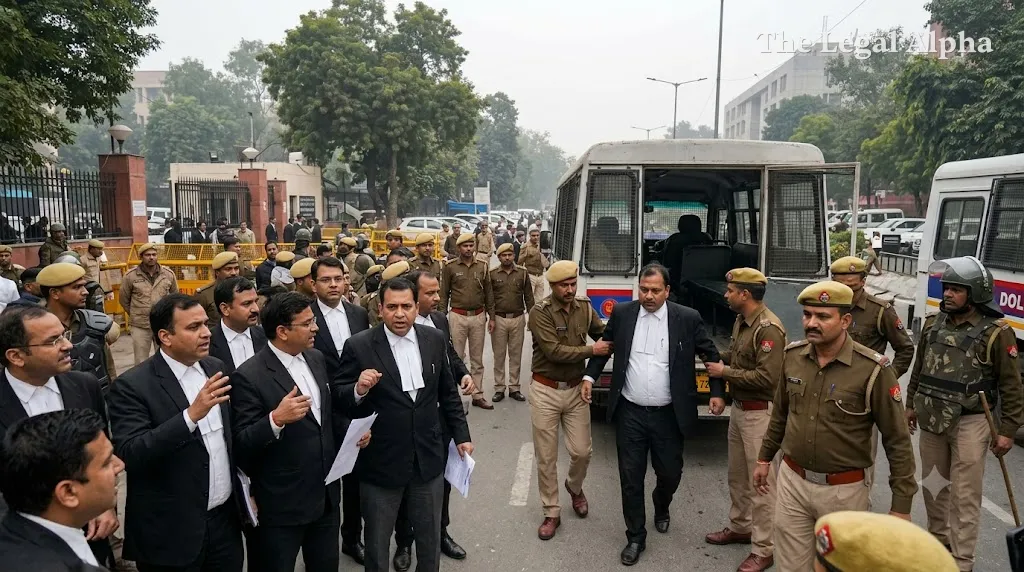
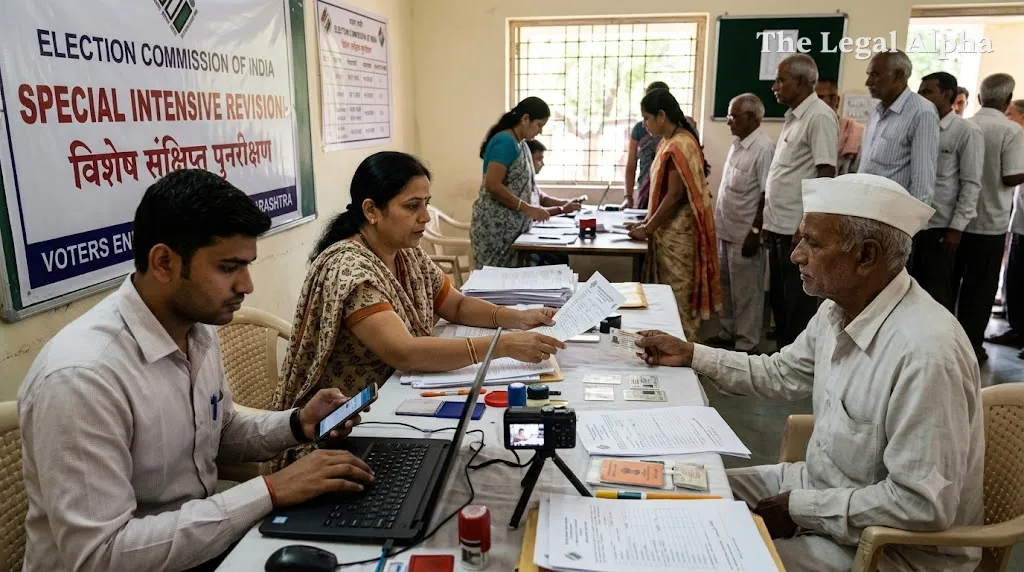
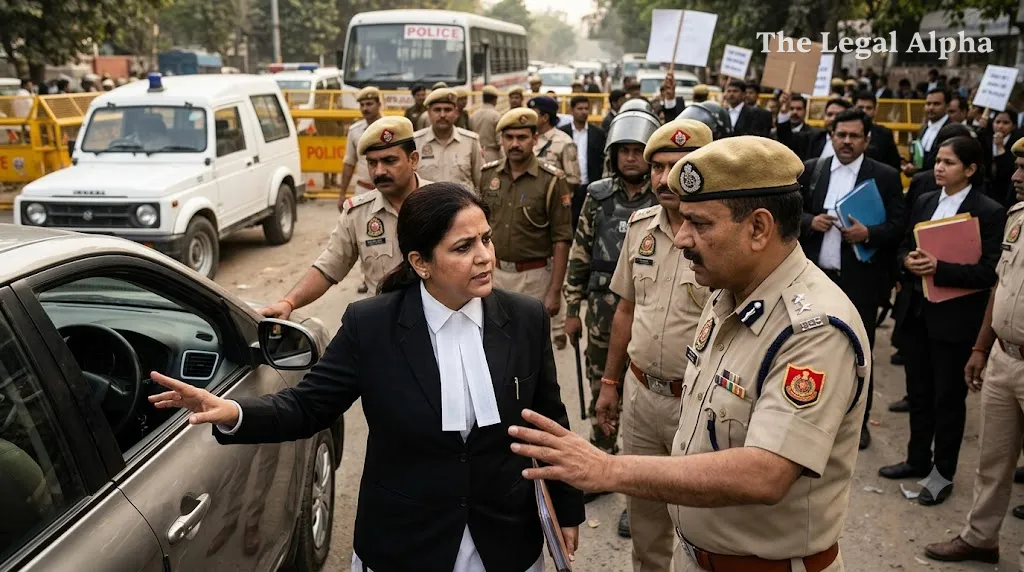
Security forces in the national capital intercepted and detained a gathering of practicing advocates shortly after they initiated a demonstration near the Supreme Court of India. The legal practitioners were marching to register their opposition against the Chief Election Commissioner (CEC) and the contentious Special Intensive Revision (SIR) exercise.
Personnel drawn from the Delhi Police and the Central Reserve Police Force (CRPF) halted the procession approximately one hundred yards into the demonstration. The protesting lawyers were boarded onto transport buses and relocated to an undisclosed detention facility. The move follows broader street demonstrations and detentions across central Delhi involving civil society groups and senior members of the bar over electoral integrity concerns.
Legal Topic
Area of Law: Constitutional & Administrative Law
Sub-topic: Civil Liberties / Preventive Police Powers / Electoral Governance
Core Legal Issue
The controversy centers on the constitutional friction between citizens' fundamental rights to peaceful assembly and protest under Article 19(1)(b) of the Constitution of India, and the executive's invocation of statutory preventive detention and public order regulations.
At the institutional level, it brings into sharp focus the legal accountability, independence, and operational transparency of the Election Commission of India when conducting sweeping voter list revisions that impact the fundamental democratic franchise.
What Did the Court / Authority Decide?
No formal judicial pronouncement has been rendered in this specific instance, as the intervention constituted an executive and preventive policing action. Law enforcement authorities deployed statutory crowd control measures, halting the assembly within a sensitive administrative zone and placing participants under preventive custody to prevent the procession from reaching key government precincts.
While preventive detentions typically end within a matter of hours upon dispersal, the procedural legality of blanket protest curbs and transit shutdowns in the area remains subject to judicial scrutiny through pending applications before superior courts.
Key Legal Points
-
Protection of Assembly vs. Regulatory Powers: The invocation of preventive detention under criminal procedural provisions directly intersects with the constitutionally guaranteed freedom to assemble peaceably without arms under Article 19(1)(b).
-
Independent Oversight of Electoral Revisions: The Special Intensive Revision (SIR) exercise must conform to statutory thresholds under electoral laws, preventing arbitrary disenfranchisement or summary voter list modifications.
-
Institutional Accountability of the Election Commission: The independence guaranteed under Article 324 is accompanied by public duty, rendering executive decisions and procedural revisions open to democratic critique and judicial review.
-
Jurisdictional Thresholds in High-Security Zones: Police authorities frequently deploy Section 144 orders or local regulatory frameworks near constitutional institutions, though such restrictions must meet tests of proportionality and procedural necessity.
Relevant Law
-
Constitution of India:
-
Article 19(1)(a) & 19(1)(b) (Freedom of speech, expression, and peaceful assembly)
-
Article 21 (Protection of life and personal liberty)
-
Article 324 (Superintendence, direction, and control of elections vested in the Election Commission)
-
-
Code of Criminal Procedure, 1973 / Bharatiya Nagarik Suraksha Sanhita, 2023 (BNSS):
-
Sections governing preventive arrests, assembly dispersals, and regulatory orders in public spaces.
-
-
Representation of the People Act, 1950 & 1951:
-
Statutory frameworks governing the preparation and revision of electoral rolls.
-
Arguments of the Parties
Demonstrators and Legal Practitioners: Members of the legal fraternity and associated civil groups contend that the ongoing Special Intensive Revision lacks transparency and risks disenfranchising eligible voters. They submit that advocates possess a constitutional right to engage in peaceful dissent against institutional impropriety and that preventive detention violates fundamental liberties without reasonable justification.
Law Enforcement and State Authorities: The police administration contends that regulatory restrictions and prohibitory measures in central and high-security zones are essential to maintain public order and secure constitutional institutions. The State maintains that unauthorized marches near superior courts or high-security government installations create severe security risks and traffic disruption, necessitating preventive detention and relocation of unauthorized assemblies.
Why Does It Matter?
When practicing advocates take to the streets and face preventive detention, it highlights an institutional fault line regarding how democratic accountability is exercised and policed. The incident emphasizes growing tensions over the Election Commission's procedural handling of voter roll updates and the extent to which administrative authorities can preemptively curtail peaceful assembly near sensitive institutions. Furthermore, it tests judicial standards concerning proportional crowd control and whether routine invocation of preventive detention against non-violent professional groups exceeds reasonable statutory bounds.
Legal Takeaway
The confrontation highlights that while the executive retains broad statutory powers to manage public order, the fundamental right to peaceful protest cannot be displaced without satisfying the test of proportionality. It also reflects growing legal scrutiny over electoral governance, underscoring that institutional procedures such as voter roll revisions must remain transparent and subject to lawful public accountability.
Sources
Primary Source:
-
Executive preventive detention action by the Delhi Police and Central Reserve Police Force near the Supreme Court of India.
Additional Sources:
-
High Court and administrative proceedings regarding public assembly regulations in Central Delhi.
-
Statutory provisions under the Representation of the People Act, 1950 and the Code of Criminal Procedure / BNSS.