Supreme Court Rebuffs Federal Bid to Segregate 20,000 California Mail Ballots Ahead of Midterm Vote
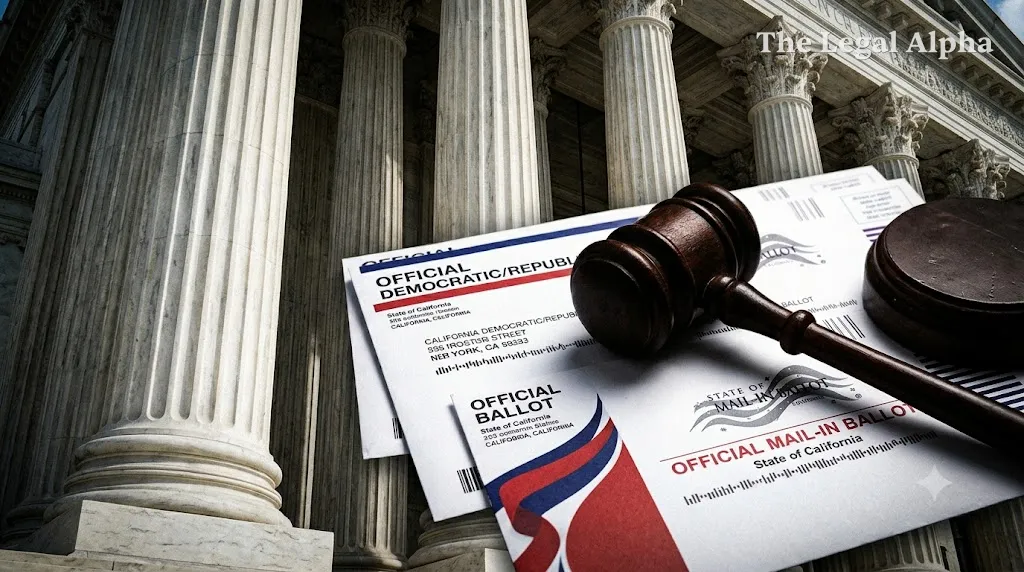
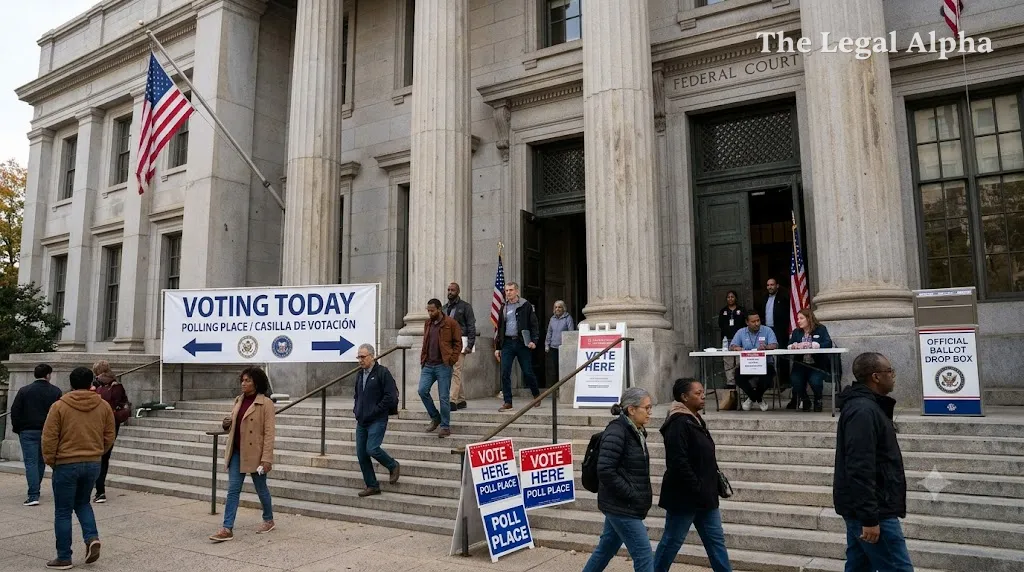
The United States Supreme Court denied an emergency application by the federal government seeking to force California election authorities to isolate roughly 20,000 mail-in ballots. The Department of Justice flagged these registered voters as potential noncitizens and sought an order prohibiting their votes from being tabulated until citizenship status could be verified.
The ruling arrived on the eve of the midterm election, following lower court determinations that rejected federal intervention in ongoing state election processes. The emergency application was turned away without oral argument, recorded dissent, or an invitation for California officials to submit a written response.
Legal Topic
-
Area of Law: Constitutional Law / Election Law
-
Sub-topic: Federalism, Executive Authority, and State Administration of Elections
Core Legal Issue
The dispute centres on whether the federal executive branch possesses the legal authority to compel state election administrators to alter vote-processing rules on the eve of an ongoing election based on unverified federal data.
At stake is the constitutional boundary established by the Elections Clause, specifically whether federal administrative claims regarding voter eligibility can override established state procedures for canvassing and tallying cast ballots.
What Did the Court / Authority Decide?
The Supreme Court issued a summary order dismissing the Trump administration’s emergency request for interim relief.
-
The Court did not issue a written opinion explaining its reasoning, which is common for emergency docket applications.
-
No justice recorded a public dissent.
-
The denial leaves intact the order from the U.S. Court of Appeals for the Ninth Circuit and the district court decision refusing to segregate the ballots.
-
California election officials remain free to process and count the returned mail-in ballots under standard state statutory frameworks.
Key Legal Points
-
Preservation of Lower Court Injunctions: The refusal to intervene maintains District Judge David O. Carter’s ruling, which held that executive attempts to force changes to state election procedures during an active voting cycle exceed executive power.
-
Evidentiary Deficiencies: Lower proceedings revealed substantial unreliability in the federal database used to flag voters, undermining the evidentiary basis necessary to justify injunctive relief that risks disenfranchising lawful electors.
-
Adherence to Election Timing Principles: The emergency rejection aligns with judicial doctrine cautioning federal courts against altering rules and procedures while balloting is actively underway.
-
Elections Clause Boundaries: The litigation highlighted limits on executive branch authority to impose administrative burdens on state election mechanics absent clear congressional enactments.
Relevant Law
-
U.S. Constitution, Article I, Section 4, Clause 1 (Elections Clause): Allocates the power to prescribe the times, places, and manner of holding congressional elections to state legislatures, subject to alterations by Congress.
-
Purcell Principle: Judicial doctrine originating from Purcell v. Gonzalez (2006), discouraging federal court intervention that alters election mechanics in the period immediately preceding an election.
-
National Voter Registration Act of 1993 (NVRA): Regulates maintenance of official voter registration lists and restricts systematic voter roll purges within close proximity to federal elections.
Arguments of the Parties
Petitioner / Applicant
The Department of Justice argued that segregating the disputed 20,000 ballots was a tailored, provisional measure required to prevent ineligible individuals from participating in federal races. Government counsel maintained that provisional isolation would not immediately cancel any vote, but would instead afford time to confirm eligibility while safeguarding the integrity of the election.
Respondent / State
The State of California and local election officials argued that the federal demand infringed upon the state’s constitutional authority over election administration. They submitted that the federal data was rife with discrepancies and unverified entries, meaning an order to isolate ballots would disrupt the ongoing count, impose administrative burdens, and unconstitutionally risk disenfranchising eligible citizen voters who had already cast lawful mail-in ballots.
Why Does It Matter?
The decision confirms the elevated threshold required for executive intervention in state-administered voting while an election is actively underway. By declining to intervene on the emergency docket, the Supreme Court prevented a disruptive change in ballot processing across California counties hours before polling concluded.
The order also signals the judiciary's reluctance to endorse last-minute federal directives based on preliminary or error-prone data match lists. For election administrators nationwide, the ruling reinforces existing state-level canvassing protocols against mid-election federal administrative challenges, reaffirming that broad challenges to registration eligibility must be resolved well before ballots are distributed and returned.
Legal Takeaway
The federal executive branch cannot use emergency judicial orders on the eve of an election to compel states to set aside ballots based on preliminary and disputed administrative lists. Constitutional primacy over the administration of voting rules remains with state authorities unless Congress or established federal statutory authority explicitly directs otherwise.
Sources
Primary Source:
-
Emergency Application and Order, United States v. California, et al., Supreme Court of the United States (November 2026).
-
District Court Opinion and Order, United States District Court for the Central District of California (Judge David O. Carter presiding).
Additional Sources:
-
Filings and orders in related proceedings before the U.S. Court of Appeals for the Ninth Circuit and the U.S. District Court for the District of Columbia.
-
Public statements and official filings from the California Secretary of State and the U.S. Department of Justice.