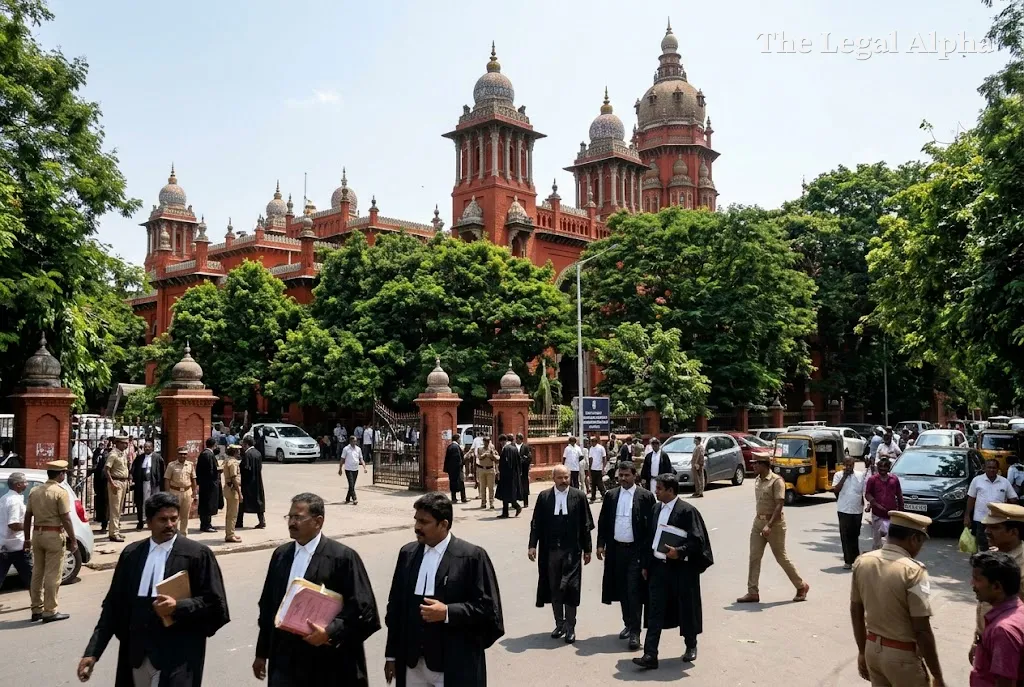
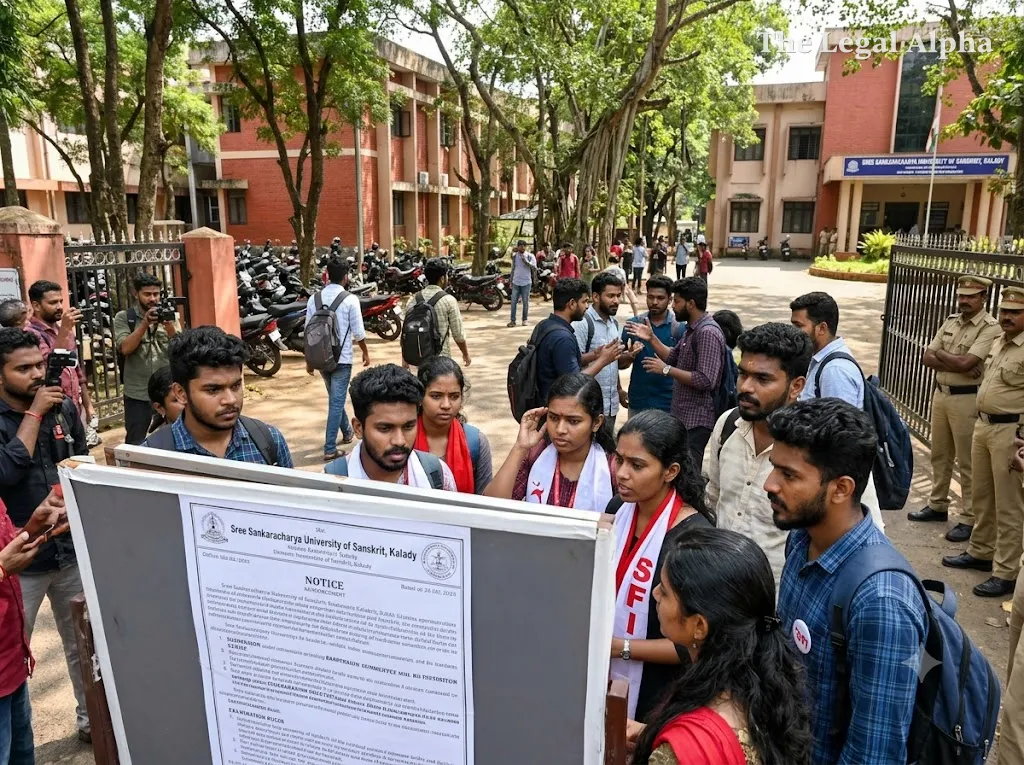
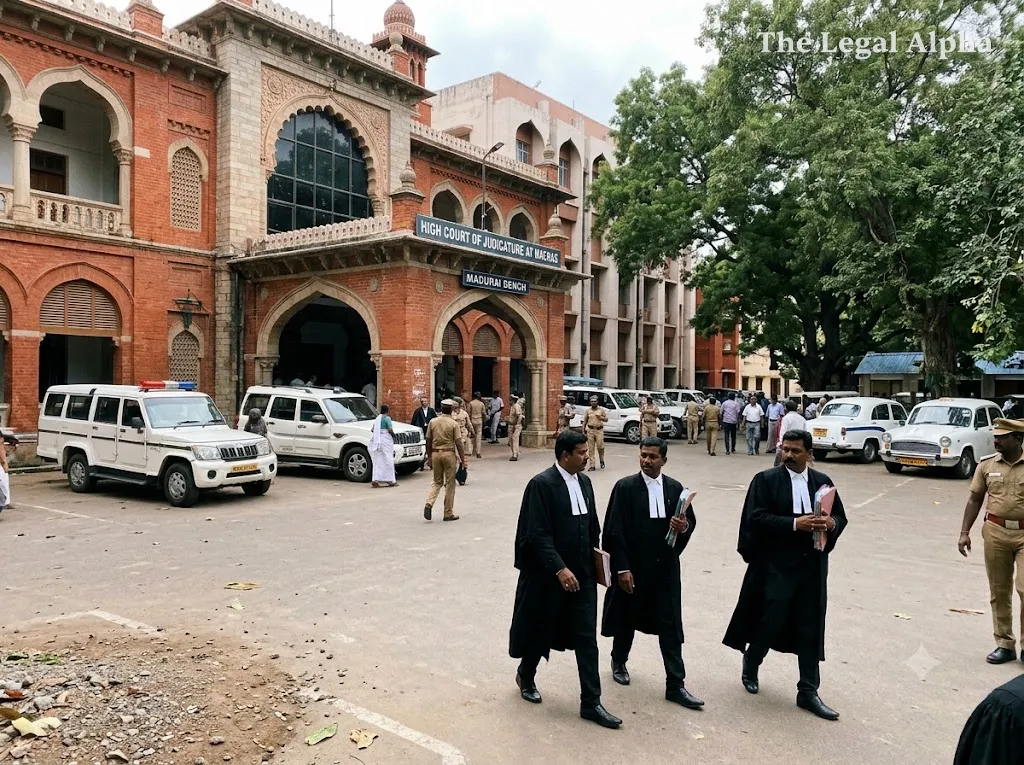
Police Must Serve the State, Not the Ruling Regime: Madras High Court Rebukes Tamil Nadu Police Over Arbitrary Dawn Detentions and Political Free Speech
The Madras High Court issued a sharp rebuke against the Tamil Nadu police machinery over its handling of political speech and arbitrary detentions, specifically referencing the recent pre-dawn detention of prominent economist and Madras Institute of Development Studies (MIDS) faculty member Professor A. Kalaiyarasan.
Justice N. Ramesh made these observations while hearing an anticipatory bail petition filed by D. Sudha, an elected Chennai civic councillor facing police action for alleged derogatory remarks directed against the Chief Minister. Addressing the growing tendency of law enforcement agencies to act with disproportionate aggression against citizens expressing political dissent or caught in social media controversies, the High Court emphasized that police forces cannot operate as enforcement arms of whichever political party holds power.
Legal Topic
Area of Law: Criminal Procedure & Constitutional Law
Sub-topic: Police Powers of Arrest, Procedural Safeguards, and Freedom of Speech
Core Legal Issue
The primary constitutional and procedural question before the court was whether law enforcement agencies can bypass mandatory statutory safeguards—specifically preliminary inquiries, summons procedures, and arrest protocols—to carry out coercive pre-dawn roundups and detentions under the guise of investigating political or social media commentary.
The court examined the limits of executive policing in speech-related offences, evaluating whether state authorities are weaponizing penal provisions to suppress political criticism while ignoring established legal checks against arbitrary deprivation of personal liberty.
What Did the Court Decide?
Justice N. Ramesh granted anticipatory bail to the petitioner, declining the State’s request to impose onerous gag conditions on her political expression. The court recorded the petitioner's voluntary assurance of restraint without transforming it into a judicial fetter.
In its detailed order, the High Court held that the constitutional validity of law enforcement is measured by how it treats ordinary, vulnerable citizens when scrutiny is absent, rather than how it responds to high-profile figures under media spotlights. Scrutinizing the dawn pickup of Professor Kalaiyarasan—who was apprehended by plainclothes officers merely because his photograph was misused on an impersonated social media profile—the court noted that high-level executive apologies or subsequent meetings cannot cure fundamental violations of personal liberty.
Key Legal Points
-
Police forces owe their allegiance strictly to the Constitution and the enduring State, not to transient ruling dispensations.
-
Law enforcement cannot deploy coercive arrest mechanisms at dawn for speech and online offenses without conducting basic verification and following statutory summons protocols.
-
Executive reconciliations or post-facto apologies do not erase or remedy state infractions against constitutionally guaranteed human rights.
-
Courts must guard against imposing broad judicial gag orders that chill legitimate political discourse and lawful dissent under Article 19(1)(a).
Relevant Law
-
Article 21 of the Constitution of India: Protection of life and personal liberty, establishing that no person shall be deprived of liberty except according to procedure established by law.
-
Article 19(1)(a) of the Constitution of India: Freedom of speech and expression, protecting political commentary and criticism from arbitrary state suppression.
-
Sections 41 and 41A of the Code of Criminal Procedure, 1973 (CrPC) / Sections 35 and 35(3) of the Bharatiya Nagarik Suraksha Sanhita, 2023 (BNSS): Mandatory statutory requirements governing arrest without warrant and mandatory issuance of notice before initiating coercive detention.
-
Arnesh Kumar v. State of Bihar (2014) 8 SCC 273: Supreme Court precedent mandating that arrest must not be routine or mechanical in offences punishable with imprisonment of seven years or less.
-
D.K. Basu v. State of West Bengal (1997) 1 SCC 416: Landmark guidelines governing identification of arresting officers, memo of arrest, and protections against custodial abuse.
Arguments of the Parties
Petitioner
Counsel for the petitioner submitted that the registration of criminal cases for political speech was an abuse of police power aimed at stifling opposition voices and elected local representatives. It was contended that custodial interrogation was wholly unnecessary for alleged verbal remarks, and that the apprehension of imminent arrest justified pre-arrest bail.
Respondent / State
The State Public Prosecutor contended that the petitioner had engaged in objectionable, defamatory, and derogatory speech against the head of the government, which disrupted public decorum and required formal investigation. The State urged the court to impose stringent conditions to restrain the petitioner from making further political or public statements during the pendency of the probe.
Why Does It Matter?
This ruling addresses the routine abuse of investigative power in disputes involving political commentary and social media activity. Across various jurisdictions, police departments have increasingly deployed summary detentions, late-night raids, and dawn roundups against citizens, journalists, and commentators before establishing even a prima facie evidentiary link.
By drawing an unequivocal distinction between service to the constitutional State and subservience to the government in power, the Madras High Court reinforces critical procedural guardrails. It serves as a stern warning to police hierarchies that premature coercive action—especially on unverified online impersonation claims—exposes investigating officers to scrutiny for unlawful confinement and constitutional tort. Furthermore, by refusing to make silence a condition for bail, the decision checks the growing tendency of using criminal processes to silence political dissent.
Legal Takeaway
Law enforcement officers are bound by constitutional discipline and statutory arrest safeguards, regardless of the political status of the complainant or the regime in power. Mechanical, unverified detentions over online speech violate Article 21, and executive apologies cannot serve as a legal substitute for adherence to the rule of law.
Sources
Primary Source:
-
Madras High Court, Order in D. Sudha v. State (CRL OP No. 28833 of 2026), bench of Justice N. Ramesh.
Additional Sources:
-
High Court reporting and case documentation via LiveLaw and The New Indian Express (November 3, 2026).
-
Factual record regarding the detention and release of Prof. A. Kalaiyarasan, Madras Institute of Development Studies (October 29–30, 2026).