Supreme Court Quashes Election Body’s Ban on Civil Society Voter Drives: Electoral Bodies Cannot Monopolise Voter Education
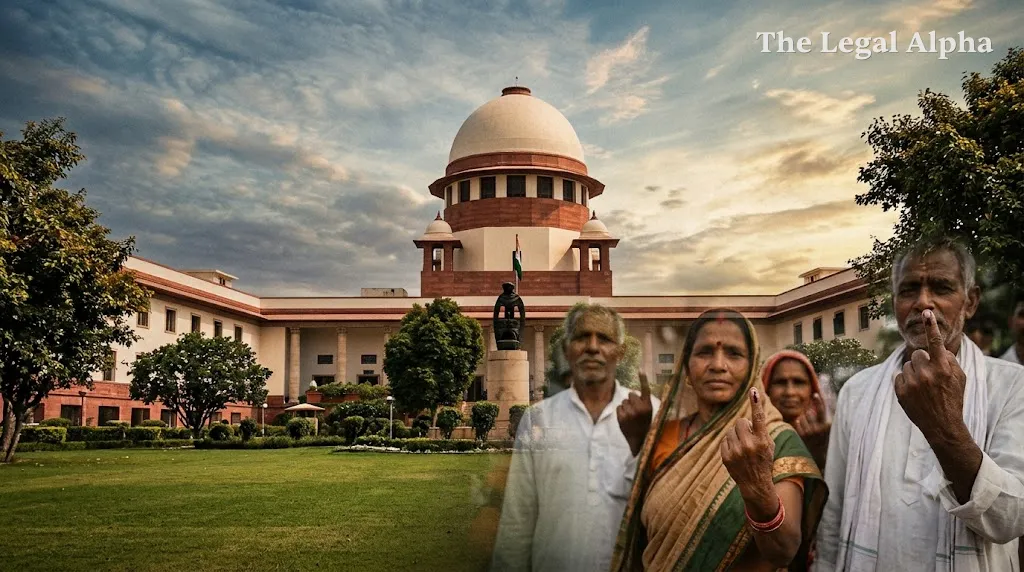
The Supreme Court set aside an order by the Rajasthan State Election Commission that blocked civil society groups from conducting grassroots voter awareness campaigns ahead of the ongoing Panchayati Raj elections.
Social activist Aruna Roy and partner organisations—including the Mazdoor Kisan Shakti Sangathan and Rajasthan Election Watch—had sought formal administrative clearance to hold small-scale, village-level voter literacy sessions. The Rajasthan State Election Commission turned down their application on the grounds that the election authority was already conducting its own voter awareness initiatives and voiced apprehensions that the drive might be influenced by third parties. A three-judge Bench led by Chief Justice of India Surya Kant, alongside Justices Joymalya Bagchi and V. Mohana, quashed the rejection and directed the poll panel to reconsider the request within two days.
Legal Topic
-
Area of Law: Constitutional and Election Law
-
Sub-topic: Democratic Participation / Freedom of Expression / Regulatory Powers of Election Authorities
Core Legal Issue
The controversy centres on whether an election authority possesses exclusive domain or monopoly over voter awareness and civic education initiatives during an election cycle.
The primary question was whether statutory election commissions can preemptively impose blanket prohibitions on independent, non-partisan civil society voter education drives simply because the official poll panel is running its own voter engagement programmes or because broad preventive prohibitory orders are in place.
What Did the Court Decide?
The Supreme Court quashed the Rajasthan State Election Commission’s order dated October 9 and issued a direction instructing the panel to reconsider the petitioners' application to carry out their awareness campaign during Phase 3 of the Panchayati Raj elections within 48 hours.
The Bench explicitly rejected the Commission’s premise of exclusive control, noting that an election watchdog’s mandate to conduct voter outreach does not preclude civil society organisations from running their own initiatives. While the Court held that authorities have full power to step in and penalise corrupt practices or statutory violations should they occur, they cannot enforce an advance embargo on civic awareness. The Bench also clarified that applicants cannot seek open-ended or blanket permissions; civil society groups must specify exact times, dates, and locations when applying for event clearances under public order rules.
Key Legal Points
-
No Monopoly over Voter Education: Official election bodies do not hold an exclusive prerogative over conducting voter awareness; citizen groups and non-partisan bodies possess a legitimate interest and right to participate in democratic voter education.
-
Regulation vs. Prohibition: The regulatory power of an election watchdog enables it to prevent and punish illicit electoral interference or corrupt practices, but it does not empower the regulator to stifle lawful, independent civic engagement in advance.
-
Prohibitory Orders Do Not Mandate Blanket Denials: Preventative administrative orders—such as restrictions issued under Section 163 of the Bharatiya Nagarik Suraksha Sanhita (BNSS)—cannot serve as a default ground to refuse permissions when applicants furnish concrete, regulated schedules and itineraries.
Relevant Law
-
Constitution of India – Article 19(1)(a) & Article 19(1)(b): Protection of freedom of speech, expression, and peaceful assembly without arms.
-
Constitution of India – Article 243K: Superintendence, direction, and control of elections to Panchayats vested in State Election Commissions.
-
Bharatiya Nagarik Suraksha Sanhita, 2023 (BNSS) – Section 163: Power to issue orders in urgent cases of nuisance or apprehended danger (replacing Section 144 of the CrPC).
Arguments of the Parties
-
The Petitioners: Senior Advocate Prashant Bhushan submitted that the petitioners have conducted continuous, non-partisan civic awareness exercises since 2004 to educate rural voters on their democratic rights, the use of None of the Above (NOTA), and the rejection of cash or liquor inducements. He contended that the events involve small, harmless village meetings of no more than 20 people and that the authorities arbitrarily invoked general prohibitory restrictions to reject their repeated requests.
-
The State Election Commission: The Commission contended that it had evaluated the representation and harboured reservations that the exercise could be carried out at the behest of unseen vested interests. It further argued that external campaigns were redundant because the poll watchdog was already actively running official voter awareness drives across the state.
Why Does It Matter?
This ruling establishes a significant check on the creeping administrative overreach of election management bodies. By clarifying that voter education is a collective democratic enterprise rather than a state-owned franchise, the Supreme Court protects the operational space of non-governmental watchdogs and civil society platforms during elections.
The decision prevents local administrations from misusing generic preventive public order statutes, such as Section 163 BNSS, as convenient shields to bar grassroots citizen oversight and civic engagement. At the same time, it establishes a balanced framework: civil society retains the right to inform the electorate, provided groups adhere to standard administrative procedures by disclosing specific dates, times, and locations rather than demanding untethered, blanket waivers.
Legal Takeaway
Election commissions are statutory regulators, not exclusive owners of democratic literacy. While election authorities retain full authority to curb electoral corruption and monitor public order, they cannot prohibit independent, non-partisan voter awareness campaigns on the pretext that they are already handling the task themselves.
Sources
-
Primary Source: Supreme Court of India, Record of Proceedings / Order in Aruna Roy & Anr. v. Union of India & Ors. (Bench comprising Chief Justice Surya Kant, Justice Joymalya Bagchi, and Justice V. Mohana; November 2, 2026).
-
Additional Sources: Bar & Bench, The Indian Express, and The Times of India reporting on the Rajasthan State Election Commission Panchayati Raj campaign proceedings.