Federal Judge Tosses Case Against Ex-FBI Officials Over Hunter Biden Laptop Testimony
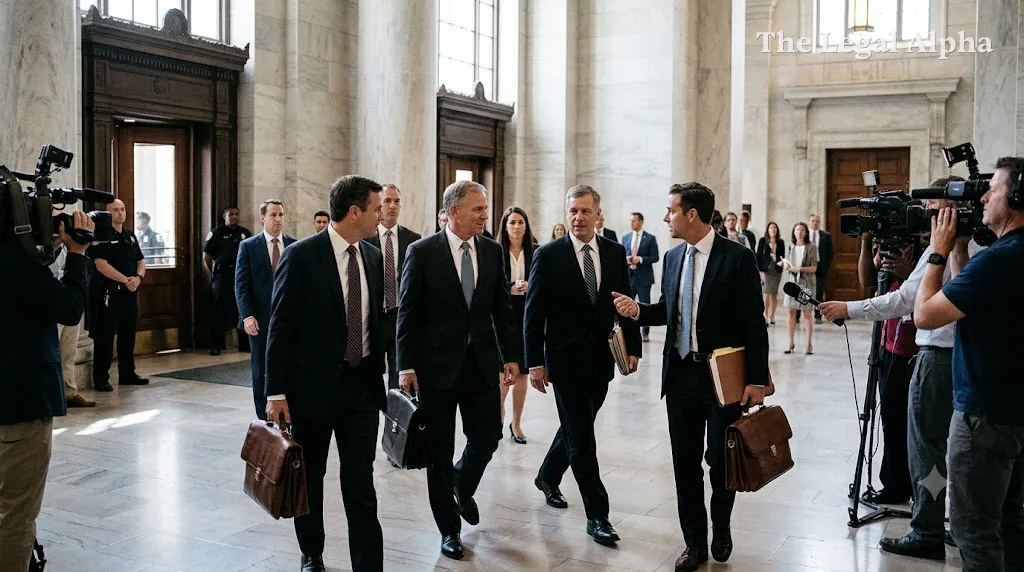
A federal judge has dismissed a criminal complaint brought by the U.S. Department of Justice against two former FBI officials, sharply criticizing prosecutors for lacking evidence and moving forward with a politically fraught case. The defendants—former FBI officials Kevin Floris and Brian Benavides—had been accused by the DOJ of making false statements to Congress during 2023 testimony.
Prosecutors alleged that the two officials downplayed their knowledge regarding a laptop abandoned by Hunter Biden at a Delaware computer repair shop in 2019. The dismissal comes as a significant blow to a high-profile prosecution that critics and defense counsel characterized as a politically motivated effort.
Legal Topic
Area of Law: Criminal Law / Constitutional Law
Sub-topic: False Statements to Congress / Prosecutorial Discretion
Core Legal Issue
The central legal question before the court was whether the DOJ established probable cause to believe that the former officials intentionally made false statements during their congressional testimony that materially impeded an official investigation.
Specifically, the court had to evaluate whether the government provided sufficient direct evidence of criminal intent or motive to deceive, rather than relying on speculation or political grievances, to justify moving forward with criminal charges.
What Did the Court / Authority Decide?
U.S. Magistrate Judge Zia Faruqui dismissed the government's complaint entirely, ruling that prosecutors failed to establish probable cause.
The court found that the DOJ did not present direct evidence that statements made during the 2023 congressional hearings were intentionally false, nor did it show that the testimony actually impeded the legislative inquiry. Emphasizing the total lack of an evident motive to deceive, the judge concluded that the prosecution lacked the foundational evidentiary requirements to proceed. The Justice Department stated it disagreed with the ruling and was evaluating its legal options.
Key Legal Points
-
Probable Cause Standard: Reaffirmed that criminal complaints cannot be sustained on speculative inferences without direct evidence establishing probable cause for every element of an offense.
-
Intent and Motive: Highlighted that proving a false statement offense requires demonstrating a clear intent to deceive and a distinct motive, which were absent in this matter.
-
Judicial Scrutiny of Prosecutional Motive: Demonstrated the willingness of federal courts to closely scrutinize high-profile, politically sensitive indictments for evidentiary deficiencies.
-
Materiality of Testimony: Underscored that the government must prove how alleged misstatements materially obstructed or impeded a congressional proceeding.
Relevant Law
-
False Statements Statute: 18 U.S.C. § 1001 (prohibiting knowingly and willfully making false or fraudulent statements in any matter within the jurisdiction of the executive, legislative, or judicial branch of the Government of the United States).
-
Congressional Investigation Oversight Rules: Applicable procedural rules governing congressional testimonies and legislative subpoenas.
Arguments of the Parties
Petitioner / Applicant / Appellant (The Prosecution)
-
The Department of Justice contended that the former officials deliberately misled lawmakers during 2023 hearings by downplaying their contemporaneous knowledge of the Hunter Biden laptop and internal bureau actions.
-
The government argued that the defendants' statements hindered legislative oversight regarding how the FBI handled information connected to the Biden family.
Respondent / Opposing Party (Defense Counsel)
-
The defense argued that the charges were entirely baseless and constituted a politically motivated smear campaign designed to score points ahead of elections.
-
Counsel maintained that the prosecution distorted routine administrative or investigative realities and that the official statements given to Congress were truthful and lacked any intent to deceive.
Why Does It Matter?
This dismissal serves as an important check on the limits of prosecutorial discretion in politically charged environments. By demanding strict adherence to evidentiary standards, the ruling underscores that the DOJ cannot rely on generalized political narratives or speculative theories to sustain criminal indictments. For federal employees and officials called to testify before legislative bodies, the decision reinforces judicial protection against retaliatory or legally unsupported prosecutions arising from shifting political winds.
Legal Takeaway
Criminal charges for false statements require robust, direct evidence of intent and materiality rather than political conjecture. Courts will not hesitate to toss out indictments that fail to satisfy foundational probable cause requirements.
Sources
Primary Source:
-
U.S. District Court Criminal Complaint and Dismissal Order (United States v. Floris & Benavides)
Additional Sources:
-
Associated Press reporting on the federal court proceedings and judicial dismissal
-
Statements from defense counsel and the Department of Justice