Supreme Court Shields Internet Providers from Automatic Liability for Subscriber Copyright Piracy
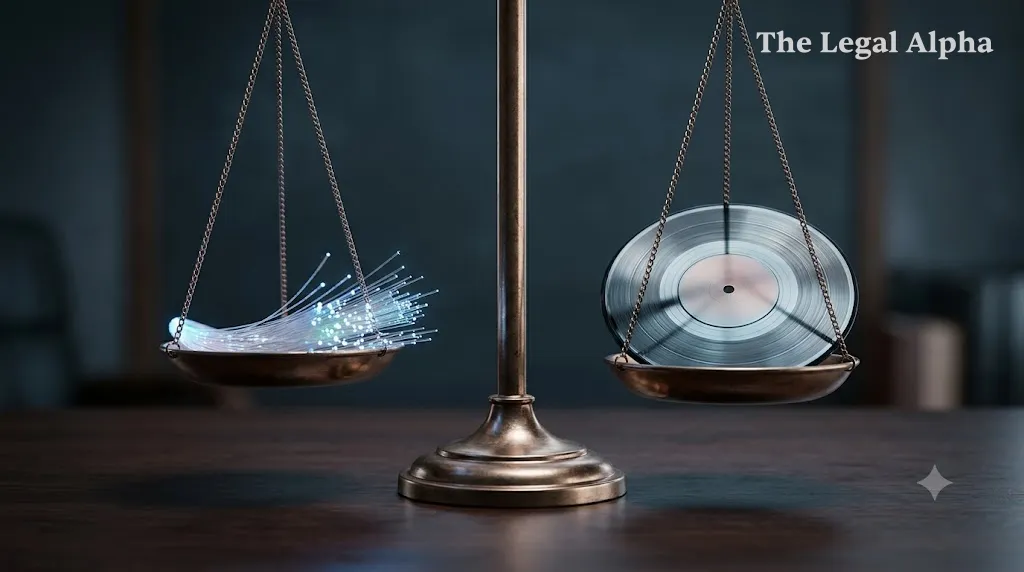
The United States Supreme Court ruled that internet service providers (ISPs) cannot be held contributorily liable for copyright infringement merely because they provide connectivity to subscribers suspected of illegal file-sharing.
The ruling resolves a long-running dispute between major record labels, led by Sony Music Entertainment, and broadband provider Cox Communications. Sony and other rights holders sued Cox after tracking peer-to-peer file-sharing activity to thousands of IP addresses on Cox's broadband network. Despite receiving over 160,000 infringement notices, Cox rarely cut off subscribers' internet connections, leading a jury to hit the company with a $1 billion verdict for willful contributory infringement. Overturning a Fourth Circuit ruling that had upheld Cox's underlying contributory liability, the Supreme Court held that providing general internet access to suspected infringers does not make an ISP legally responsible for their illegal downloads.
Legal Topic
-
Area of Law: Intellectual Property / Internet Law
-
Sub-topic: Copyright Infringement / Secondary & Contributory Liability of Internet Service Providers
Core Legal Issue
The core legal question before the Court was whether an internet service provider commits contributory copyright infringement solely by continuing to provide basic internet access to specific subscriber accounts after receiving notices that those accounts were used for copyright violations.
Specifically, the Court addressed whether "knowledge" of infringement coupled with a failure to terminate service satisfies the standard for contributory infringement, or whether the law requires proof that the service provider affirmatively acted with the intent to facilitate or induce copyright violations.
What Did the Court Decide?
In a unanimous judgment, the Supreme Court vacated the Fourth Circuit's decision and remanded the case.
Writing for the Court, Justice Clarence Thomas held that an ISP is contributorily liable only if it intended for its service to be used for copyright infringement. Such intent requires evidence that the provider actively induced the infringement or provided a service specifically tailored to support unlawful activity. Because general internet access is a neutral tool with substantial non-infringing uses, simply continuing connectivity while possessing knowledge of infringement notices does not amount to secondary copyright infringement.
Justices Sonia Sotomayor and Ketanji Brown Jackson concurred in the judgment only. While agreeing that the evidence against Cox was insufficient to establish liability, the concurring opinion cautioned that the majority’s intent test unnecessarily narrowed traditional secondary liability doctrines.
Key Legal Points
-
Intent Requirement for Secondary Liability: Contributory copyright infringement cannot be established through passive network provision alone; a plaintiff must prove affirmative intent, shown either through active inducement or by designing a service specifically tailored for infringement.
-
Knowledge Alone Is Insufficient: An ISP’s receipt of infringement notices or awareness that certain subscribers are sharing files illegally does not convert ordinary utility-level internet provision into unlawful facilitation.
-
No Common-Law Duty to Terminate: The Court rejected the argument that failure to terminate accounts after receiving infringement notices constitutes actionable material contribution under general copyright law.
-
Limits of DMCA Assumptions: The majority held that rights holders cannot rely on the safe harbor provisions of the Digital Millennium Copyright Act to imply broad, underlying common-law liability for ISPs providing routine connectivity.
Relevant Law
-
17 U.S.C. § 101 et seq. (Copyright Act of 1976): Secondary liability and damages provisions.
-
17 U.S.C. § 512 (Digital Millennium Copyright Act / DMCA): Safe harbor framework for online service providers and repeat-infringer policies.
-
MGM Studios, Inc. v. Grokster, Ltd. (2005): Foundational precedent governing secondary copyright liability through intentional inducement.
-
Sony Corp. of America v. Universal City Studios, Inc. (1984): Principle protecting dual-use technologies with substantial non-infringing uses from copyright liability.
Arguments of the Parties
Petitioner (Cox Communications)
Cox argued that standard broadband access is an essential, multi-use service that cannot constitute material contribution to infringement without proof of affirmative encouragement. The company submitted that an IP address merely identifies a connection, not a specific individual, meaning mandatory service terminations would sever internet access for entire households, schools, or offices based on unadjudicated allegations.
Respondents (Sony Music Entertainment and Record Labels)
Sony contended that Cox operated with willful blindness and deliberate indifference by retaining repeat infringers to protect its subscription revenues. The labels argued that an ISP materially contributes to piracy when it receives thousands of verified notices of ongoing infringement on specific accounts yet chooses to maintain those connections, effectively providing the necessary distribution conduit for illegal file sharing.
Why Does It Matter?
This decision substantially raises the bar for rights holders seeking to hold telecom and internet infrastructure providers responsible for online copyright infringement. By requiring explicit proof of intent or inducement, the ruling eliminates the threat of massive statutory damages for companies offering neutral transit networks.
For consumers and businesses, the judgment removes pressure on ISPs to adopt aggressive "disconnect first" policies, preventing subscribers, dormitories, and shared workplaces from losing essential connectivity over unverified or single-user copyright claims. For the entertainment industry, it restricts enforcement strategies that sought to turn network carriers into automated copyright enforcers, forcing copyright holders to target direct infringers and dedicated piracy platforms rather than broadband intermediaries.
Legal Takeaway
Broadband providers cannot be held liable for their subscribers' piracy simply because they were notified of illegal activity and did not terminate the connection. To establish contributory infringement against a neutral network, copyright owners must prove the provider actively encouraged the infringement or designed its service specifically to facilitate piracy.
Sources
Primary Source:
-
Cox Communications, Inc. v. Sony Music Entertainment, 146 S. Ct. 959 (2026).
Additional Sources:
-
Sony Music Entertainment v. Cox Communications, Inc., 93 F.4th 222 (4th Cir. 2024).
-
U.S. Supreme Court Oral Argument Transcript and Docket Records, No. 24-171 (Argued Dec. 1, 2025; Decided Mar. 25, 2026).