Supreme Court Sets January 2027 Hearing for Constitutional Challenge to Waqf Amendment Act, Orders Pleadings Complete by Year-End
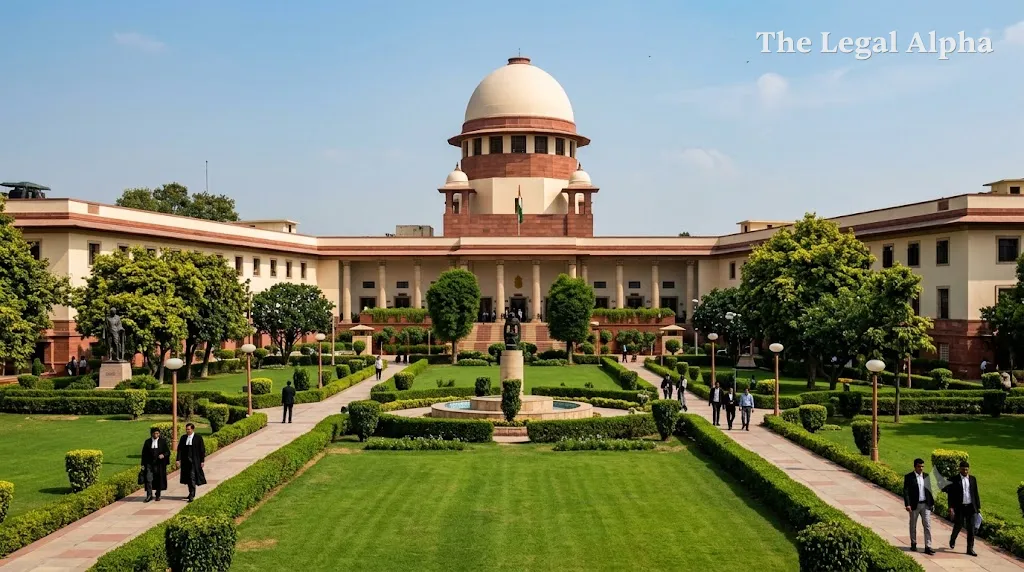
The Supreme Court of India has scheduled the substantive hearing on petitions challenging the constitutional validity of the Waqf (Amendment) Act for January 21, 2027. A Division Bench comprising Justice M.M. Sundresh and Justice P.B. Varale passed procedural directions to streamline the voluminous docket, fixing December 31, 2026, as the hard cutoff for parties to exchange and complete all written pleadings and compilations.
The batch comprises dozens of challenges directed against the legislative changes governing how waqf properties are identified, registered, and managed across the country. To prevent the proceedings from becoming unmanageable, the bench streamlined earlier intervention applications and set a strict mechanism for written submissions before final arguments commence.
Legal Topic
-
Area of Law: Constitutional Law
-
Sub-topic: Legislative Competence / Freedom of Religion and Property Administration
Core Legal Issue
The fundamental legal question before the apex court is whether the amendments introduced under the Waqf (Amendment) Act violate the fundamental rights guaranteed to religious denominations under Part III of the Constitution, particularly Articles 25 and 26.
The court is called upon to decide whether the statutory restructuring of Waqf Boards, altered evidentiary standards for waqf by user, and enhanced administrative intervention by executive officials exceed permissible secular regulation under Article 25(2) and unconstitutionally infringe upon the autonomy of a minority religious community to administer its religious and charitable institutions.
What Did the Court Decide?
The Supreme Court did not adjudicate upon the merits or strike down any statutory clause during this listing. Instead, it issued procedural directions to make the litigation trial-ready:
-
The main hearing on the constitutional validity of the Act is fixed for January 21, 2027.
-
Applicants who had previously submitted interlocutory applications (IAs) and were directed to be treated in that capacity have been granted two weeks to convert their claims into formal writ petitions.
-
Copies of all filings must be served directly on the designated nodal counsel.
-
The nodal counsel is directed to curate a unified, common compilation of all pleadings and judicial precedents cited by the petitioners.
-
The Additional Solicitor General (ASG) and the Union Government have been directed to submit comprehensive written responses to the consolidated submissions.
-
All completion of pleadings across all sides must strictly conclude by December 31, 2026.
Key Legal Points
-
Streamlining High-Volume Public Interest Litigation: The bench reaffirmed the court’s procedural practice of designating lead petitions and nodal counsel to condense over a hundred fragmented applications into a manageable constitutional hearing.
-
Strict Timelines for Pleadings: By placing an absolute deadline of December 31, 2026, the court signaled that no piecemeal or last-minute submissions will be tolerated ahead of the substantive arguments.
-
Pre-Hearing Structural Consolidation: Interlocutory applicants seeking independent relief must establish clear locus standi through substantive writ petitions within a two-week window rather than relying solely on oral interventions.
Relevant Law
-
Waqf Act, 1995 (as amended by the Waqf Amendment Act): Substantive statutory provisions governing dedication, registration, management, and powers of tribunals regarding waqf assets.
-
Article 25 of the Constitution of India: Freedom of conscience and free profession, practice, and propagation of religion.
-
Article 26 of the Constitution of India: Freedom to manage religious affairs, including establishing and maintaining institutions for religious and charitable purposes and administering property in accordance with law.
-
Article 14 of the Constitution of India: Equality before the law and protection against arbitrary state action.
-
Order XXXVIII of the Supreme Court Rules, 2013: Regulating public interest litigation and the submission of written arguments and digital compilations through nodal advocates.
Arguments of the Parties
Petitioners / Challengers The petitioners argue that the statutory amendments interfere excessively with the internal administrative autonomy guaranteed to religious denominations under Article 26. They contend that diluted legal presumptions surrounding historical waqf properties, increased executive discretion in title determination, and modified Board compositions dilute self-governance protections and single out Islamic charitable endowments for disproportionate state surveillance.
The Union of India / Opposing Parties The Central Government, represented by law officers including the Solicitor General and Additional Solicitor General, contends that the amending legislation is well within Parliament’s competence and designed to promote transparency, non-discrimination, and modern institutional accountability. The State maintains that secular administration, prevention of property disputes, and streamlined asset verification do not impinge upon the core religious tenets protected under Articles 25 and 26.
Why Does It Matter?
This litigation represents one of the most consequential property and religious-rights tests before the Supreme Court. The eventual outcome will define the constitutional boundary between the State’s authority to supervise public charitable trusts and the constitutional autonomy enjoyed by religious denominations.
Beyond property ownership and revenue administration, the bench’s approach to standardizing pleadings through nodal compilations highlights how the court manages massive multiparty public interest challenges without allowing litigation delays to indefinitely stall judicial review.
Legal Takeaway
The Supreme Court has set a firm procedural runway for reviewing the Waqf Amendment Act, making December 31, 2026, the final deadline for all written pleadings before oral arguments begin on January 21, 2027. For parties involved in constitutional litigation, the order underscores that substantive adjudication requires strict adherence to standardized compilations and court-mandated procedural deadlines.
Sources
-
Primary Source: Record of Proceedings and Order of the Supreme Court of India in In Re: The Waqf (Amendment) Act (Coram: Hon'ble Mr. Justice M.M. Sundresh and Hon'ble Mr. Justice P.B. Varale, November 3, 2026).
-
Additional Sources: Filings and notices before the Supreme Court of India; Press Trust of India institutional court dispatches.