Federal Judge Cautions Justice Department Over Polling Site Deployments Following NAACP Challenge
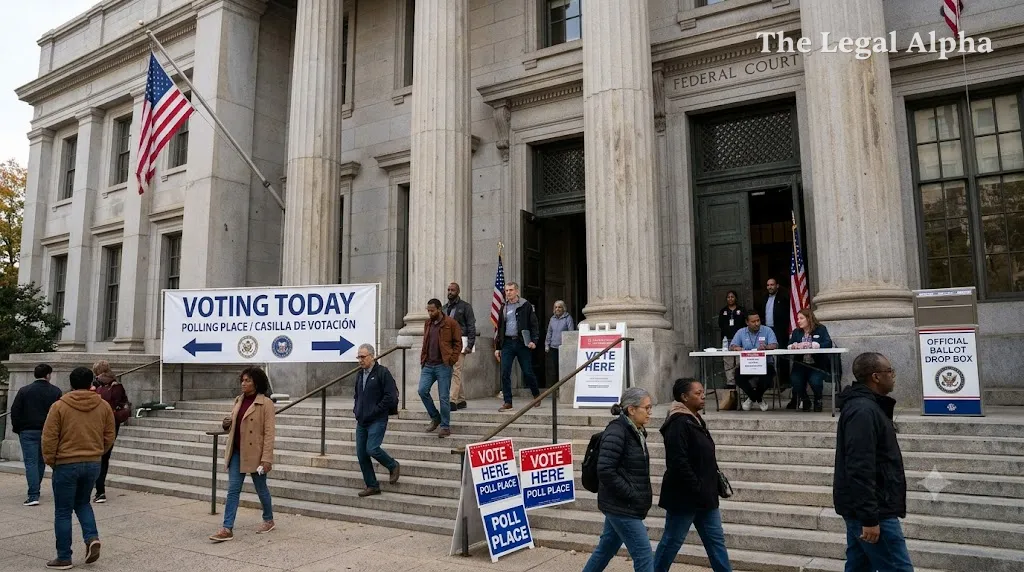
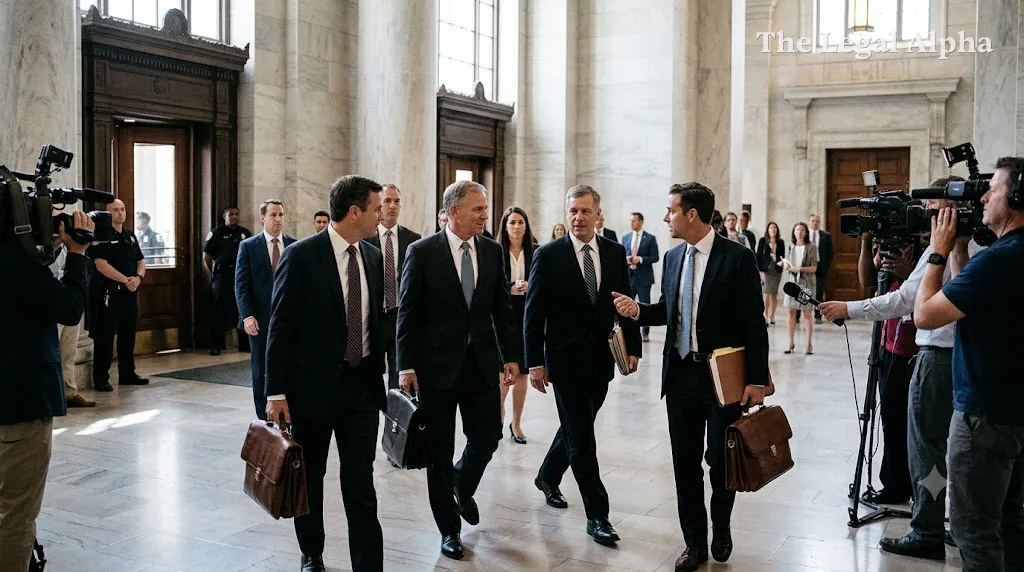
A federal judge in Washington, D.C., issued a stern warning to the U.S. Department of Justice on Monday during an emergency hearing over the department’s plan to deploy hundreds of federal personnel as Election Day poll monitors. U.S. District Judge Reggie B. Walton cautioned Justice Department attorneys that there would be severe repercussions if government counsel misrepresented the nature and law enforcement status of individuals assigned to polling places.
The confrontation unfolded in response to an eleventh-hour motion filed by the NAACP, which sought an emergency restraining order to prevent the federal government from dispatching sworn criminal law enforcement agents—including personnel from agencies such as the DEA, ATF, and Bureau of Prisons—to voting locations. The issue drew immediate scrutiny due to concerns over voter intimidation and conflicting representations regarding whether armed or sworn officers would participate in what the government described as routine civil monitoring.
Legal Topic
Area of Law: Constitutional & Election Law
Sub-topic: Voter Intimidation / Federal Election Monitoring Authority
Core Legal Issue
The primary legal question is whether the Justice Department exceeds its statutory authority under federal voting rights law by stationing federal law enforcement officers and criminal justice personnel as poll monitors, and whether such deployments create an unlawful risk of voter intimidation under federal statutes.
The court was tasked with determining whether the NAACP had established the requisite irreparable injury and legal entitlement for an emergency temporary restraining order to restrict the composition of the federal monitoring force hours before polls opened nationwide.
What Did the Court Decide?
Judge Walton expressed significant unease with the government’s shifting representations and warned the Justice Department of severe judicial sanctions if its disclosures to the bench proved inaccurate. However, the judge noted he was grappling with whether the NAACP had met the demanding evidentiary standard required for an immediate injunction on the eve of the election.
During the hearing, Justice Department counsel conceded that the agency would not object to a judicial order barring sworn federal law enforcement officers from serving as poll observers, stating the government had "no problem" with such a limitation. The court took the matter under immediate consideration without issuing a sweeping halt to the monitoring program as a whole.
Key Legal Points
-
Duty of Candor to the Court: Judge Walton emphasized that federal litigators face immediate judicial repercussions if representations regarding operational agency deployments prove false or misleading.
-
Separation Between Civil Oversight and Law Enforcement: The dispute spotlights the long-standing distinction between deploying non-sworn civil rights attorneys to verify ballot access versus stationing sworn criminal law enforcement personnel inside or near voting sites.
-
High Evidentiary Threshold for Pre-Election Relief: To obtain an emergency restraining order hours before voting begins, civil rights plaintiffs must demonstrate clear, non-speculative, irreparable harm caused by the planned governmental monitoring presence.
-
Scope of Federal Statutory Monitoring: While federal authorities possess statutory mandates to observe voting compliance, courts maintain equitable power to constrain methods of observation that could reasonably result in voter coercion or intimidation.
Relevant Law
-
Voting Rights Act of 1965 (52 U.S.C. §§ 10301 et seq.): Codifies voter protections and sets historical frameworks governing federal election observation and non-discrimination mandates.
-
18 U.S.C. § 594: Makes it a federal crime to intimidate, threaten, or coerce any person for the purpose of interfering with the right to vote.
-
Federal Rule of Civil Procedure 65: Establishes the governing legal standard and equitable criteria for temporary restraining orders and preliminary injunctions.
Arguments of the Parties
The NAACP
The NAACP argued that deploying personnel from agencies like the ATF, DEA, and Bureau of Prisons to polling sites fundamentally departs from historical precedent and serves as a tool of voter intimidation. Counsel submitted that placing law enforcement personnel at polling locations generates an inherently coercive atmosphere—particularly in minority communities—and requested immediate court intervention to keep sworn agents away from voting facilities.
The Justice Department
The government contended that its nationwide deployment of approximately 900 to 1,000 observers constitutes routine civil monitoring designed to ensure compliance with federal voting access laws. While clarifying that the deployed individuals would appear in business attire without agency insignia or weapons and would not speak directly to voters inside polling booths, the government maintained that the plaintiffs failed to show immediate irreparable injury. Nevertheless, the Justice Department stated it would not contest an order formally excluding sworn criminal officers from participating.
Why Does It Matter?
This litigation addresses where the federal government can draw election observers and how visible policing influences ballot box accessibility. Historically, the Civil Rights Division deployed non-uniformed civil attorneys and legal staff rather than criminal investigators to observe poll proceedings. Clarifying whether executive branch law enforcement personnel can be mobilized for polling site surveillance sets a crucial legal boundary for future electoral oversight. It also reinforces judicial expectations of complete transparency from government litigators during emergency election litigation.
Legal Takeaway
Federal courts will scrutinize executive branch attempts to staff election-monitoring operations with law enforcement personnel to ensure such oversight does not compromise statutory protections against voter intimidation. Furthermore, government attorneys risk severe procedural and professional penalties if they provide inaccurate or equivocal accounts of administrative operations during emergency hearings.
Sources
Primary Source:
National Association for the Advancement of Colored People (NAACP) v. Blanche et al., No. 1:26-cv-03626-RBW (U.S. District Court for the District of Columbia, November 2, 2026) (Bench hearing and emergency proceedings before Judge Reggie B. Walton).
Additional Sources:
-
Emergency Motion for Temporary Restraining Order, filings in NAACP v. Blanche, No. 1:26-cv-03626 (D.D.C. 2026).
-
Declaration of the Voting Section, Civil Rights Division, U.S. Department of Justice (October 2026).