Private Surveillance Cannot Encroach Upon Neighbouring Homes, Allahabad High Court Affirms
The Allahabad High Court addressed the increasingly common conflict over domestic surveillance, holding that individuals cannot position private security cameras in a way that infringes on their neighbours' privacy.
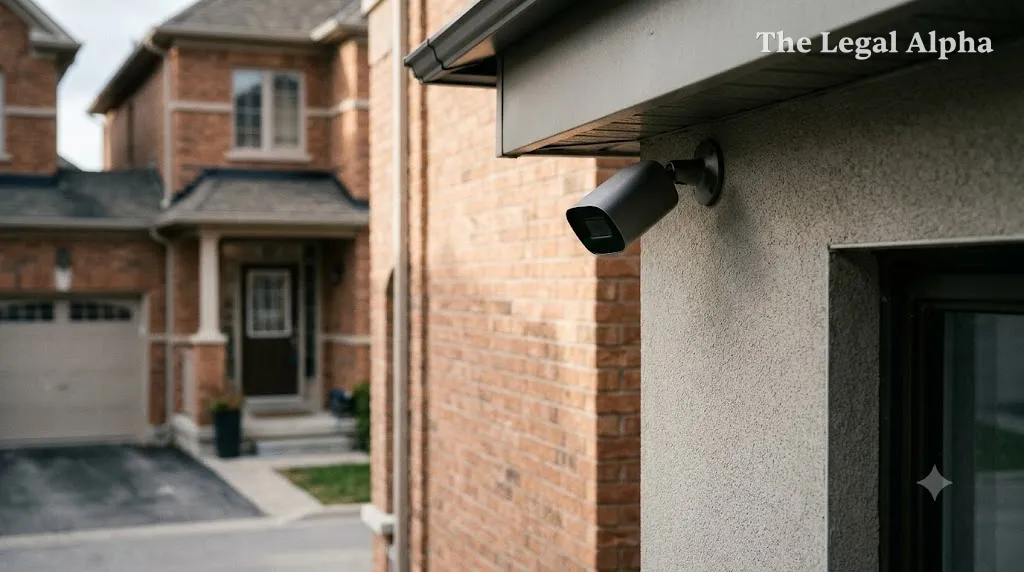
The ruling stems from a dispute brought by a resident, Yogendra Maurya, who objected to the placement of a closed-circuit television (CCTV) unit installed by his neighbour. Maurya approached the High Court after finding that the opposing device was aimed directly at his primary entry and exit ways, effectively cataloguing anyone entering or exiting his domestic premises.
Legal Topic
-
Area of Law: Constitutional Law / Civil Law & Torts
-
Sub-topic: Right to Privacy / Private Nuisance & Domestic Surveillance
Core Legal Issue
The matter required the court to examine the balance between a property owner's legitimate interest in securing their premises and an adjacent resident's fundamental expectation of privacy.
Specifically, the court considered whether the mounting and angle of a privately owned CCTV camera—when capturing ingress, egress, and daily movements around an adjoining household—crosses the threshold from permissible self-defence into an actionable invasion of privacy.
What Did the Court Decide?
A Division Bench comprising Justice Ajit Kumar and Justice Garima Prashad delivered the order, explicitly stating that private surveillance equipment must not compromise a neighbour's personal sphere.
Rather than issuing a peremptory mandamus or ordering police intervention to dismantle or alter the camera directly, the Bench disposed of the writ petition with procedural directions. The court granted the petitioner liberty to submit a formal representation to the jurisdictional District Magistrate, directing the administrative authority to examine and decide the grievance within one month of receipt.
Key Legal Points
-
Limits of Private Surveillance: Property owners have the right to secure their property, but that entitlement does not extend to monitoring adjacent private premises or recording the personal movements of neighbours.
-
Protection of Entry Points: Surveillance cameras aimed at access gates and entry/exit passages of neighbouring homes interfere with privacy expectations.
-
Administrative Redress First: The High Court declined to act as an immediate enforcement body for private domestic disputes, instead referring factual assessment and localized enforcement to the District Magistrate.
-
Time-Bound Executive Adjudication: The designated executive authority must resolve such grievances within a defined thirty-day window.
Relevant Law
-
Article 21 of the Constitution of India: The fundamental right to life and personal liberty, which encompasses the right to privacy as recognized in K.S. Puttaswamy v. Union of India.
-
Common Law of Private Nuisance: Principles prohibiting unreasonable interference with the use, enjoyment, and quiet occupancy of domestic property.
Arguments of the Parties
The petitioner contended that the neighbour's CCTV camera was deliberately angled to track his doorway and courtyard, capturing every arrival and departure. He submitted that this continuous monitoring constituted an impermissible violation of his family's personal privacy and reasonable autonomy.
The State counsel represented the administration, maintaining procedural positions on alternative administrative remedies and executive oversight available under local administrative law.
Why Does It Matter?
As inexpensive digital surveillance and smart home cameras become ubiquitous across dense residential neighbourhoods, boundary disputes over camera angles have surged.
This decision reinforces judicial recognition that private technology cannot be deployed recklessly in residential settings. By routing the matter to the District Magistrate under a strict thirty-day deadline, the High Court outlines an accessible administrative avenue for homeowners seeking relief from intrusive neighbours without having to endure protracted civil suits.
Legal Takeaway
Installing security cameras on private property is lawful, but positioning them to capture a neighbour's home or entry points constitutes an impermissible invasion of privacy. Aggrieved residents can approach their local District Magistrate for time-bound administrative intervention to realign or remove intrusive surveillance equipment.
Sources
-
Primary Source: Allahabad High Court Order dated October 26, 2026, in Yogendra Maurya v. State of U.P. and Others (Bench of Justice Ajit Kumar & Justice Garima Prashad).
-
Additional Sources: High Court of Judicature at Allahabad Case Information System; reporting records from LiveLaw and Hindustan Times.