Scrutiny Over White House Press Secretary Katie Zacharia’s Credentials Prompts California Bar Regulatory Complaint
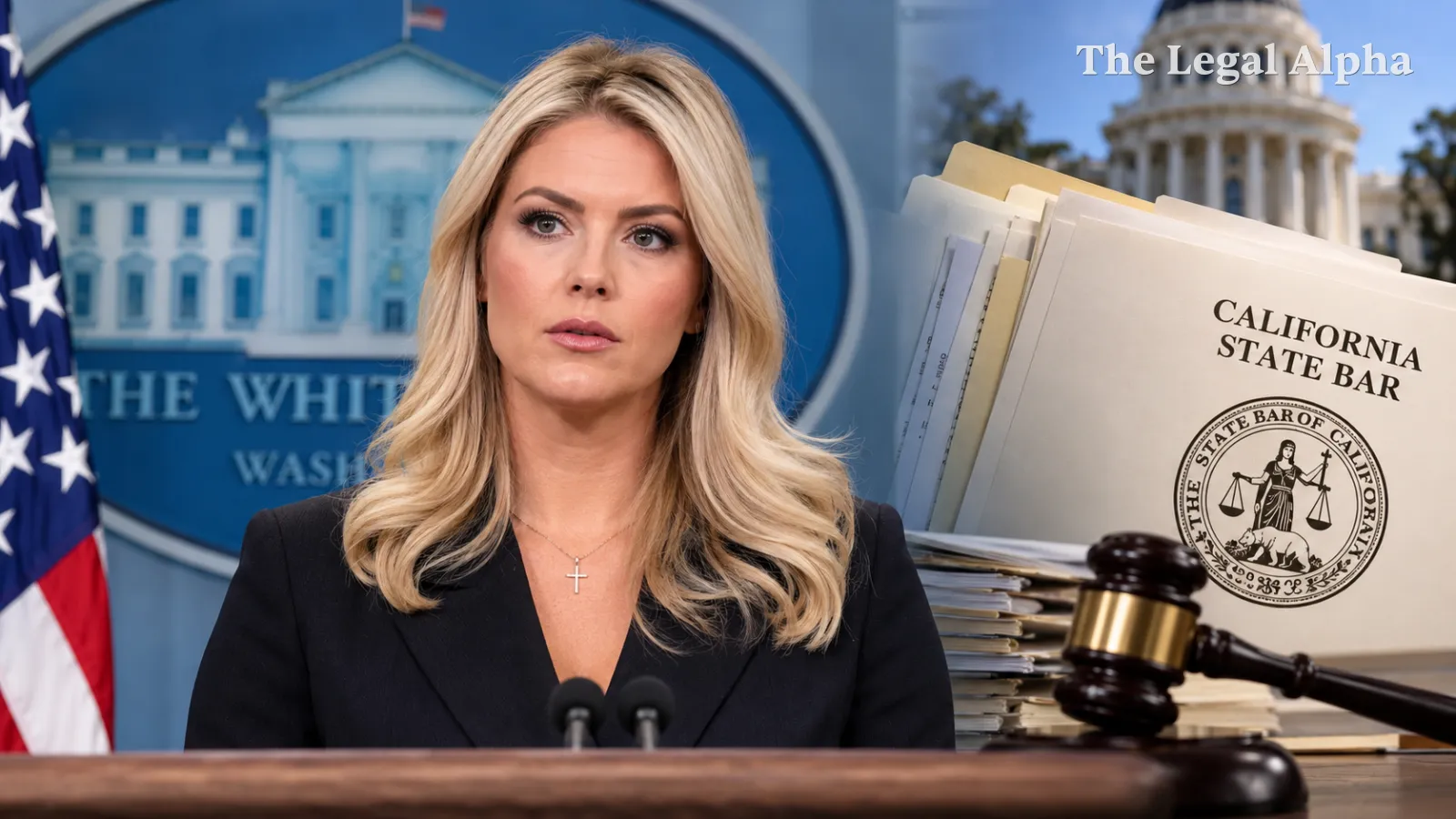
White House Press Secretary Katie Zacharia is facing legal scrutiny and a regulatory complaint following disclosures that she has never been licensed as an attorney, despite repeatedly identifying herself as a lawyer and previously listing her role as “general counsel” for an advocacy organization.
The controversy intensified after Zacharia gave evasive responses to reporters regarding where she passed the bar exam following her initial press briefing. State licensing records confirmed that Zacharia has never been admitted to practice law in California or any other U.S. jurisdiction. Following reports that she sat for and failed the California bar exam after graduating from Pepperdine University Caruso School of Law in 2011, government ethics watchdog Campaign for Accountability submitted a formal complaint to the State Bar of California. The complaint urges regulators to investigate whether Zacharia violated state statutes governing the unauthorized practice of law and public misrepresentation of professional credentials.
Legal Topic
Area of Law: Professional Responsibility / Legal Ethics
Sub-topic: Unauthorized Practice of Law (UPL) & Professional Credential Misrepresentation
Core Legal Issue
The principal issue is whether an individual who holds a Juris Doctor (J.D.) degree but is not admitted to any state bar violates state legal practice prohibitions by holding themselves out to the public as a "lawyer" or serving under the title of "general counsel".
In legal ethics jurisprudence, jurisdiction turns on whether public descriptions mislead the public into believing an individual is authorized to practice law, and whether holding corporate or advocacy positions labeled "counsel" constitutes the unauthorized practice of law under state statutes.
What Did the Court / Authority Decide?
No court or disciplinary body has issued a formal adjudication or penal ruling on the matter yet.
The State Bar of California confirmed on record that it possesses no licensing history for Zacharia under her married or maiden names. The regulatory agency noted that while admissions records are public, examination attempts and disciplinary investigation files remain confidential until formal disciplinary charges are initiated. The complaint lodged by Campaign for Accountability is currently pending administrative review with the State Bar's Office of Chief Trial Counsel, which determines whether probable cause exists to launch an enforcement inquiry.
Key Legal Points
-
Distinction Between Academic Degree and Professional License: Under U.S. jurisprudence, earning a Juris Doctor demonstrates academic qualification but confers no license or entitlement to hold oneself out as a practicing legal professional.
-
Statutory Thresholds for "Holding Out": California law strictly regulates not just the direct courtroom representation of clients, but also advertising, public statements, and professional designations that imply an entitlement to practice law.
-
Corporate and In-House Counsel Exemptions: In jurisdictions such as California, serving as in-house or general counsel without an active state license requires registration under registered in-house counsel provisions; unauthorized execution of legal titles can trigger regulatory review.
-
Jurisdictional Reach of Bar Associations: While state bars do not have direct criminal prosecution powers, they maintain statutory authority to investigate unauthorized practice, issue cease-and-desist notices, and refer intentional violations to local prosecutors.
Relevant Law
-
California Business and Professions Code § 6125: Mandates that no person shall practice law in California unless the person is an active licensee of the State Bar.
-
California Business and Professions Code § 6126(a): Establishes that any person advertising or holding themselves out as practicing or entitled to practice law without active bar licensure is guilty of a misdemeanor.
-
California Rules of Court, Rule 9.46: Governs registered in-house counsel requirements and limitations for non-California admitted attorneys.
-
ABA Model Rule 5.5(b): Forbids a lawyer not admitted in a jurisdiction from holding out to the public that the lawyer is admitted to practice law in that jurisdiction.
Arguments of the Parties
Complainant and Critics
Watchdog groups and regulatory complainants argue that Zacharia’s public assertions on television broadcasts, social media profiles, and resume entries labeling herself as a “lawyer” and “general counsel” constituted deliberate public representations of legal authority. They contend that under California Business and Professions Code § 6126, actively projecting entitlement to practice law without licensure exceeds rhetorical puffery and warrants civil enforcement or criminal referral.
White House and Respondent Position
Zacharia and administration representatives maintain that she possesses legitimate legal training from an accredited law school and acted appropriately within non-licensure bounds. Zacharia stated that she worked in international transactional advisory matters abroad and followed academic guidance that distinguished conversational references to being a law graduate from using protected titles like "attorney at law" or "esquire". The administration contends there was no intent to deceive or engage in unauthorized client representation within domestic courtrooms.
Why Does It Matter?
The controversy underscores an ongoing debate across state bars regarding the everyday vocabulary used around legal education. While lay public perception often treats "lawyer" and "attorney" interchangeably, statutory definitions in states like California treat the public assumption of legal status seriously to protect consumers and organizations from unvetted counsel.
Furthermore, this scenario highlights compliance risks for political campaigns, non-profits, and private corporations that assign titles like "General Counsel" or "Legal Director" to law graduates who have not achieved bar admission. The regulatory handling of this complaint may clarify the threshold between casual resume presentation and statutory violations of legal practice acts.
Legal Takeaway
Graduating from an accredited law school confers a degree, not a license to practice or publicly advertise legal credentials. In states with stringent unauthorized practice statutes like California, holding oneself out as a lawyer or general counsel without active bar admission exposes individuals and organizations to formal regulatory complaints and potential misdemeanor liability.
Sources
Primary Source:
-
Regulatory Complaint filed by Campaign for Accountability with the State Bar of California (October 2026).
-
Official Licensure Registry & Records Division, State Bar of California.
Additional Sources:
-
California Business and Professions Code §§ 6125, 6126.
-
Pepperdine University Caruso School of Law Academic Records Verification.
-
White House Press Office Official Statements and Briefing Transcripts (October 2026).