Inert Explosives Cannot Constitute Terror Under UAPA, Sachin Waze Submits to Bombay High Court
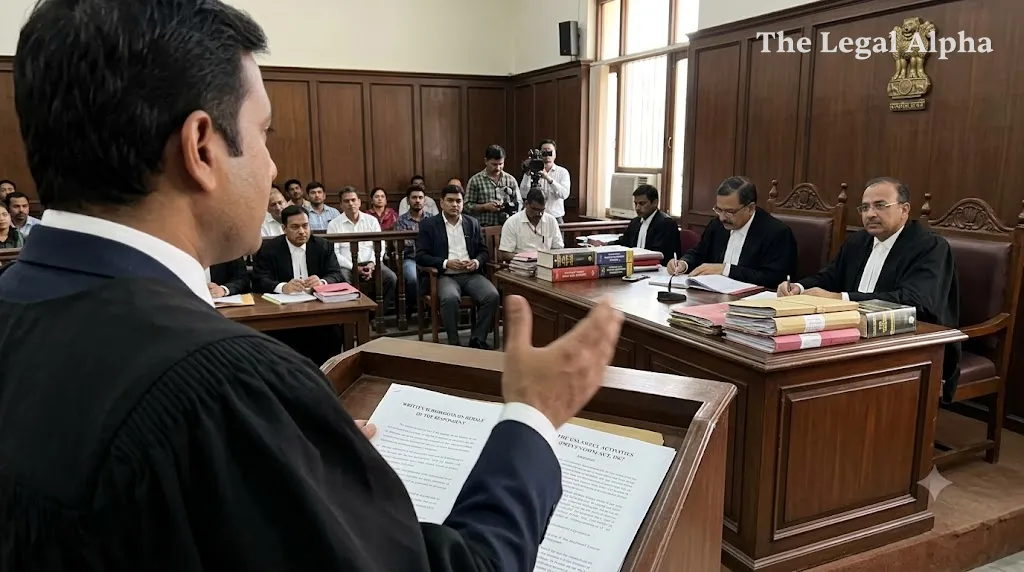
Dismissed Mumbai Police officer Sachin Waze has filed written submissions before the Bombay High Court arguing that the planting of gelatin sticks near industrialist Mukesh Ambani’s residence does not meet the threshold of a "terrorist act" under anti-terror law.
The submissions come in response to an appeal filed by the National Investigation Agency (NIA), which challenged a special court’s decision granting Waze bail in the high-profile 2021 Antilia bomb scare and Mansukh Hiran murder case. Waze maintains that because the explosives lacked detonators or an ignition mechanism, the episode cannot be categorised as terrorism under statutory definitions.
Legal Topic
-
Area of Law: Criminal Law / Anti-Terror Jurisprudence
-
Sub-topic: Statutory Interpretation of "Terrorist Act" under UAPA and Thresholds for Bail
Core Legal Issue
The principal question before the High Court is whether planting non-rigged, inert explosive substances—incapable of immediate detonation without an accompanying trigger device—amounts to an offence under the Unlawful Activities (Prevention) Act, 1967.
A secondary legal issue is whether the strict bail restrictions under Section 43D(5) of the UAPA apply when prima facie material fails to demonstrate intent to strike terror or commit an act using lethal explosive devices.
What Did the Court / Authority Decide?
The Bombay High Court is currently examining the NIA’s appeal and has stayed the implementation of Waze's bail order while hearings continue.
Earlier, on September 29, 2026, the Special NIA Court granted Waze bail, ruling that the prosecution failed to demonstrate a prima facie case of terrorism under the UAPA. Special Judge Chakor S. Baviskar observed that no statements were recorded from the Ambani family to demonstrate terror, the gelatin sticks lacked detonators, and the alleged murder of Mansukh Hiran constituted an independent offence under the Indian Penal Code rather than a direct terrorist act.
The matter remains pending before a Division Bench of the High Court, where final arguments on the stay and bail appeal are underway.
Key Legal Points
-
Absence of Detonator and Functional Lethality: The defence contends that gelatin sticks unaccompanied by detonators or a detonating cord cannot cause an explosion, negating the statutory ingredient of using explosive substances to threaten security.
-
Applicability of Stringent Bail Bar: Under Section 43D(5) of the UAPA, bail can only be denied if the court finds accusations prima facie true. If terror charges do not stand prima facie, ordinary bail principles under general criminal procedure apply.
-
Separation of IPC Offences from Terror Charges: The special court previously reasoned that homicide under Section 302 of the IPC (regarding Hiran's death) cannot automatically be subsumed into a UAPA charge unless it directly forms an act of terror.
-
Evidentiary Evaporation of Terror Intent: The defence argued that without evidence showing extortion demands, traceable purchase of explosives, or verified terror communications, invoking severe anti-terror statutes is legally unsustainable.
Relevant Law
-
Section 15, Unlawful Activities (Prevention) Act, 1967: Defines a "terrorist act", requiring an intent to threaten the unity, integrity, security, economic security, or sovereignty of India or strike terror in people by using bombs, dynamite, or explosive substances.
-
Section 43D(5), Unlawful Activities (Prevention) Act, 1967: Bars regular bail if the accusation against an accused is prima facie true based on the case diary or charge sheet.
-
Section 302, Indian Penal Code, 1860: Offence of murder, cited in connection with the custodial and operational investigation into Mansukh Hiran’s death.
-
Sections 161 & 164, Code of Criminal Procedure, 1973: Police examinations and recorded judicial confessions/statements.
Arguments of the Parties
Petitioner / NIA
-
The NIA submitted that Waze orchestrated a calculated conspiracy by placing a Mahindra Scorpio laden with gelatin sticks and a threat note outside Antilia to create widespread panic and intimidate high-profile industrialists.
-
The agency argued that the subsequent homicide of Mansukh Hiran was directly tied to the conspiracy to eliminate evidence and preserve the scheme, justifying terror conspiracy charges.
-
The central agency highlighted the gravity of the offences and questioned Waze's conduct, asserting that trial proceedings should be expedited rather than granting relief.
Respondent / Sachin Waze
-
Waze, through his legal team, argued that gelatin sticks alone—devoid of detonators, fuses, or firing pins—cannot produce a blast or constitute an operational explosive device under Section 15 of the UAPA.
-
His submissions pointed out that the NIA failed to establish the procurement chain for the gelatin sticks or show that any monetary extortion took place.
-
He also challenged the credibility of digital claims by elusive channels like "Jaish-Ul-Hind", arguing that unverified electronic messages cannot support severe national security indictments.
Why Does It Matter?
This litigation addresses a critical recurring question in Indian anti-terror jurisprudence: what is the evidentiary baseline required for prosecuting authorities to elevate an intimidation or extortion offence into a statutory terrorist act under the UAPA?
Investigating agencies frequently rely on the strict bail hurdles of Section 43D(5). If superior courts reaffirm that non-functional explosives and unmanifested threats cannot attract UAPA provisions, it will establish clearer checks against charging individuals under anti-terror statutes in cases lacking evidence of functional weaponry or formal terrorist association.
Legal Takeaway
For charges under Section 15 of the UAPA to survive initial judicial scrutiny, the prosecution must show both the actual capacity of an explosive device to cause damage and tangible evidence of an intent to cause terror. Merely possessing or placing inert explosive material without a trigger mechanism weakens the state’s prima facie justification for withholding bail under special anti-terror provisions.
Sources
-
Primary Source: Submissions and Proceedings before the Bombay High Court; Bail Order of the Special NIA Court, Greater Mumbai (Special Judge Chakor S. Baviskar).
-
Additional Sources: Filings and written submissions by Advocate Sajal Yadav on behalf of Sachin Waze; Court reporting records and charge sheet citations in National Investigation Agency v. Sachin Hindurao Waze.