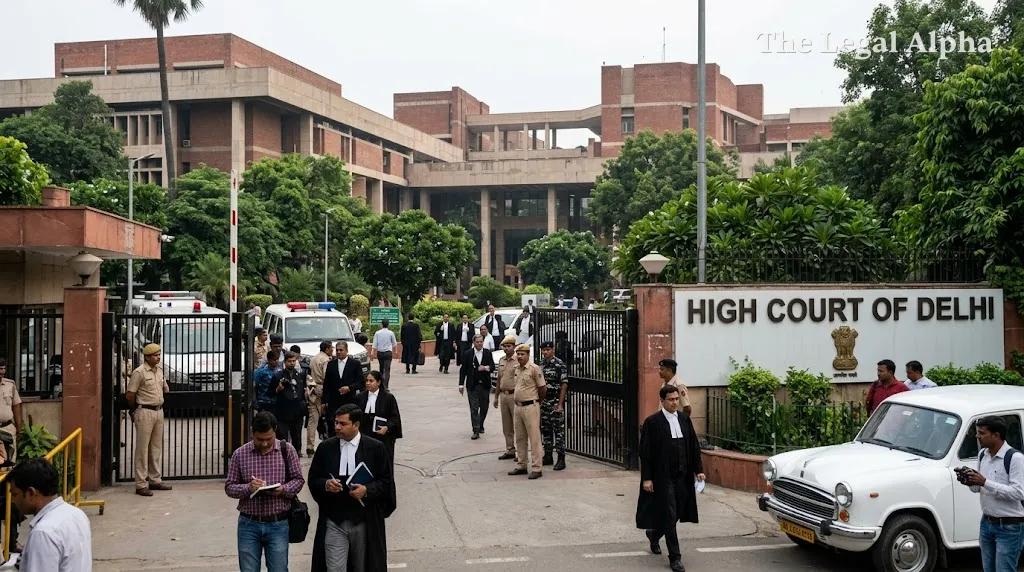
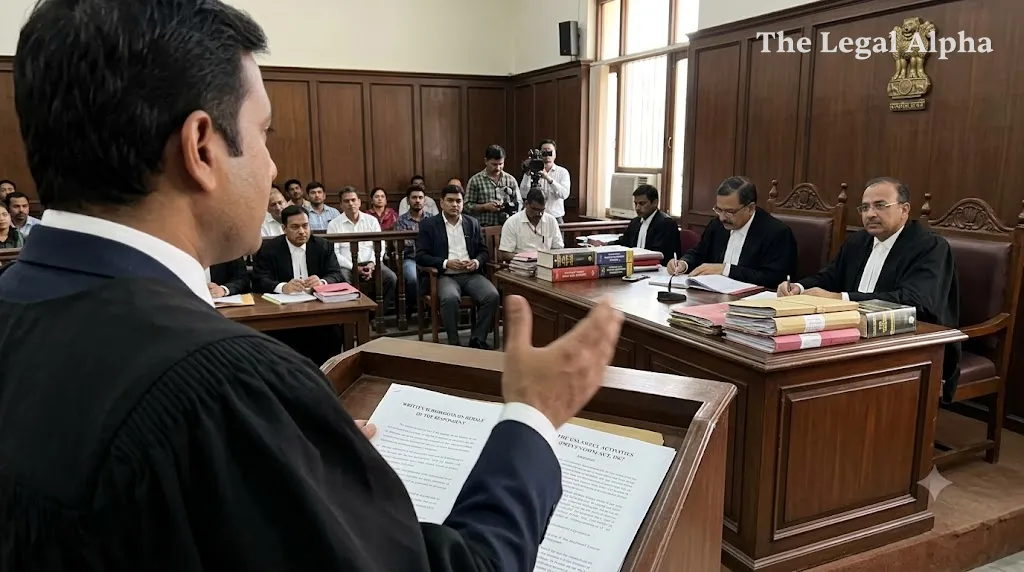
Supreme Court Restores ₹8,415 Crore AT1 Bonds in Setback to Yes Bank Reconstruction Move

The Supreme Court of India upheld a Bombay High Court verdict that invalidated Yes Bank’s March 2020 decision to write down ₹8,415 crore of Additional Tier-1 (AT1) bonds.
A Bench comprising Justices Dipankar Datta and Augustine George Masih dismissed appeals filed by Yes Bank, the Reserve Bank of India (RBI), and the Central Government. The decision confirms that the administrator appointed by the central bank acted beyond statutory powers when wiping out the high-yield capital instruments during the lender's state-backed bailout. The ruling paves the way for institutional and retail bondholders to pursue recovery or debt restructuring options.
Legal Topic
Area of Law: Banking and Corporate Insolvency Law
Sub-topic: Statutory Bank Reconstruction and Debt Hierarchy
Core Legal Issue
The fundamental legal question before the Supreme Court was whether an administrator appointed under the Banking Regulation Act can unilaterally write down loss-absorbing debt instruments after the Central Government has officially notified a final reconstruction scheme that omitted any clause sanctioning such a write-down.
Secondary considerations involved whether contractual loss-absorbency clauses under Basel III norms operate independently or remain subordinate to the final statutory reconstruction scheme framed under Section 45 of the Banking Regulation Act.
What Did the Court Decide?
The Supreme Court affirmed the Bombay High Court's January 2023 judgment, holding that the March 14, 2020 write-off notice issued by the Yes Bank administrator was legally invalid.
The Court affirmed:
-
The final Yes Bank Reconstruction Scheme took effect on March 13, 2020, formally reconstituting the bank.
-
Because the specific write-off provision present in the draft scheme was removed from the final gazetted notification approved by the Union Cabinet, the administrator possessed no unilateral authority to extinguish the bonds the following day.
-
The appeals filed by Yes Bank, the Union of India, and the RBI stand dismissed, vacating the interim stay that had been in place since March 2023.
Key Legal Points
-
Supremacy of the Final Sanctioned Scheme: When a statutory reconstruction scheme is notified under Section 45 of the Banking Regulation Act, its terms strictly define the bounds of the administrator's powers. Administrative authorities cannot restore draft clauses that the executive deliberately excluded from the final gazette notification.
-
Hierarchy in Bail-ins: While Basel III guidelines permit AT1 bond write-downs, statutory resolution actions must adhere strictly to due process, especially when equity holders' interests are preserved or protected while subordinated debt holders face total extinction.
-
Administrative Functus Officio: Once the reconstituted bank structure was brought into force by the sanctioned scheme, the administrator had no jurisdiction to independently alter the capital base without express statutory or regulatory authorization within the scheme itself.
Relevant Law
-
Section 45 of the Banking Regulation Act, 1949: Powers of the Reserve Bank of India to apply to the Central Government for suspension of business and to frame schemes for reconstitution or amalgamation.
-
Yes Bank Limited Reconstruction Scheme, 2020: The central government notification dated March 13, 2020, governing the restructuring of the bank.
-
RBI Master Circulars on Basel III Capital Regulations: Regulatory norms defining loss-absorption mechanisms (write-down vs. equity conversion) at pre-specified trigger points.
Arguments of the Parties
Appellants (Yes Bank, RBI, and Union of India):
Counsel for the bank and the regulators argued that AT1 bonds are perpetual debt instruments specifically designed under Basel III guidelines to absorb losses during acute financial distress. They contended that the administrator's action was necessary to protect the bank's core capital, rescue depositors, and ensure financial system stability, operating within the contractual risk framework accepted by the bondholders.
Respondents (Axis Trustee Services and Bondholder Associations):
The trustees and investors submitted that the draft scheme initially proposed a write-down, but the final, legally binding scheme notified by the Central Government conspicuously excised that clause. Consequently, the administrator lacked jurisdiction to write off the bonds under the guise of the scheme. They further argued that extinguishing subordinated debt while leaving common equity intact violated settled principles of corporate insolvency and creditor hierarchy.
Why Does It Matter?
This ruling establishes a significant precedent for statutory bank resolutions and capital-raising mechanisms across India:
-
Clarity on Resolution Authority: Regulators and government-appointed administrators must operate strictly within the formal parameters of a final sanctioned scheme, checking executive overreach during emergency interventions.
-
Capital Market Certainty: AT1 bonds carry perpetual risk, but this verdict confirms that contractual loss absorption cannot be exercised arbitrarily or outside sanctioned legal procedures.
-
Balance Sheet Realities: Yes Bank must now account for these reinstated liabilities or structure commercial settlements with bondholders, creating tangible legal clarity for institutional funds and individual investors who saw their investments wiped out in 2020.
Legal Takeaway
Statutory emergency powers do not grant bank administrators a blank cheque to alter debt obligations outside a finalized government reconstruction scheme. For lenders and regulators, the verdict reinforces that loss-absorption provisions must strictly comply with statutory procedures and finalized notifications before wiping out subordinated creditors.
Sources
Primary Source:
Supreme Court of India, Yes Bank Ltd. v. Axis Trustee Services Ltd. & Ors. (Civil Appeals arising from Bombay High Court Writ Petition No. 785 of 2020), Bench of Justices Dipankar Datta and Augustine George Masih, Judgment delivered October 15, 2026.
Additional Sources:
-
High Court of Judicature at Bombay, Judgment in Axis Trustee Services Ltd. v. Reserve Bank of India & Ors. (January 20, 2023).
-
Ministry of Finance, Government of India, Yes Bank Limited Reconstruction Scheme, 2020 (Gazette Notification S.O. 1057(E), March 13, 2020).