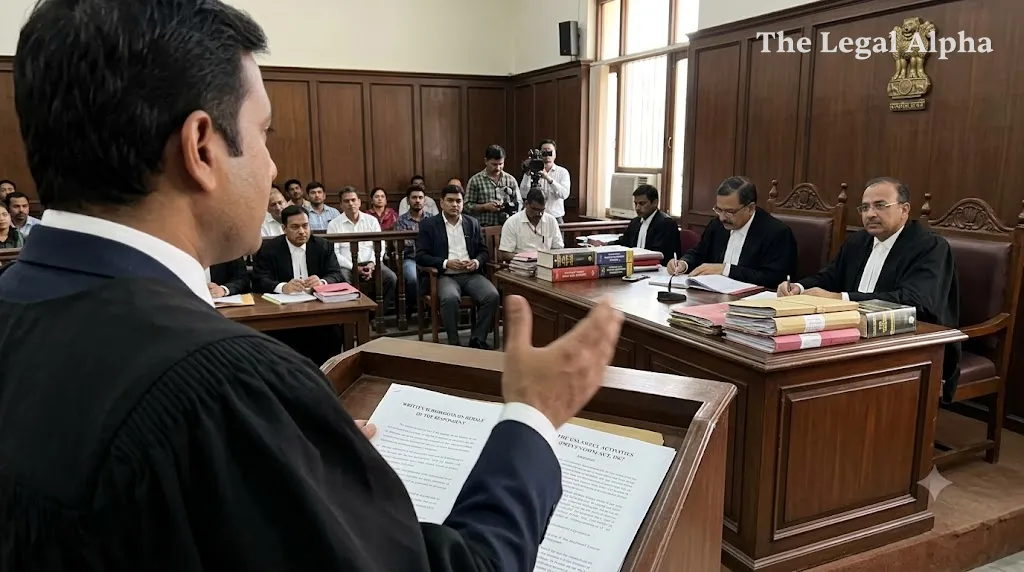
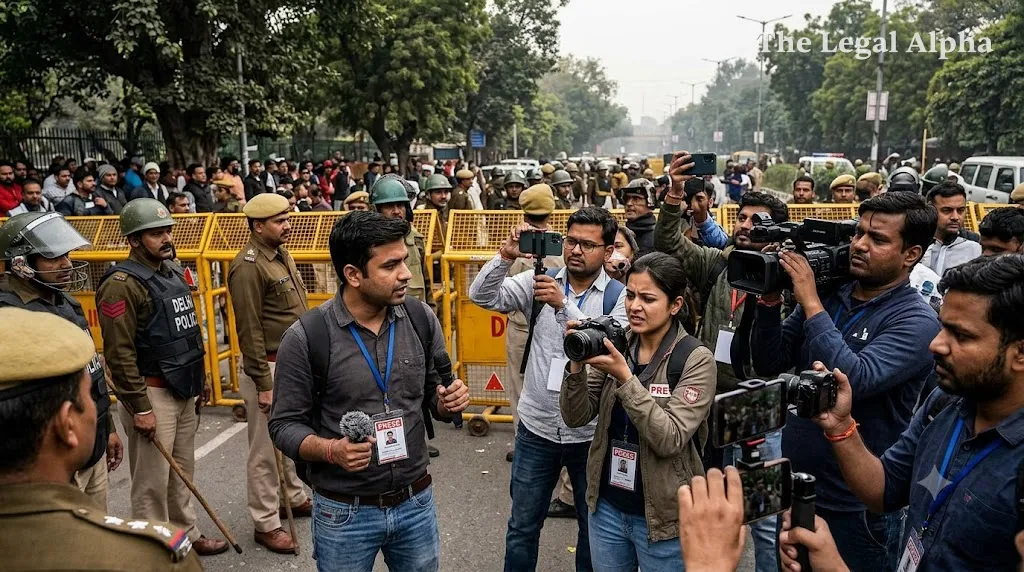
Delhi High Court Declines Same-Day Listing for Journalist Seeking Protection in Cross-Complaint Dispute with Senior Police Officer
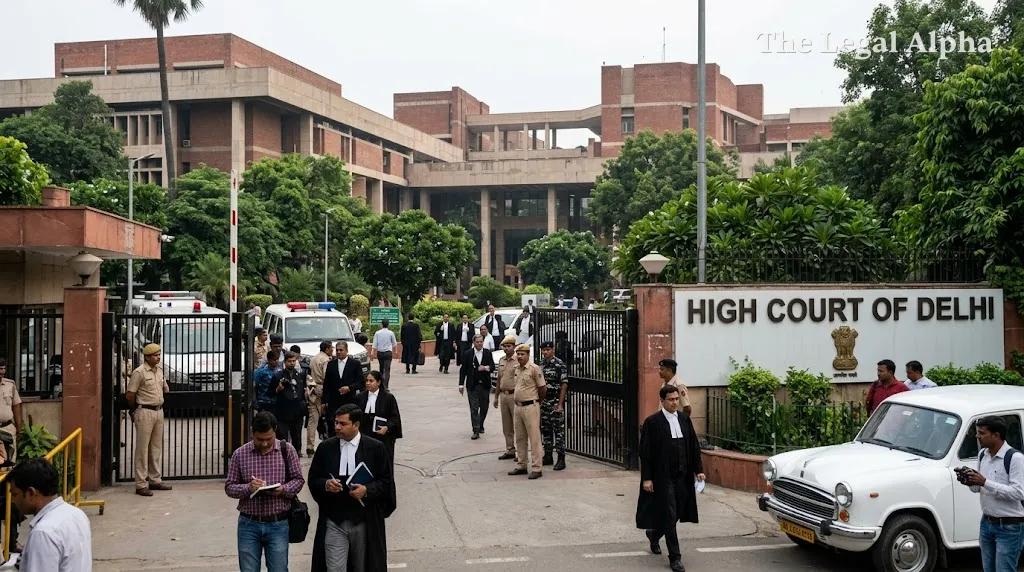
The Delhi High Court declined an urgent, same-day hearing for an independent woman journalist who approached the court seeking interim protection against coercive action, including potential arrest.
The matter arises from an escalating conflict stemming from an October 3 demonstration near Jantar Mantar in New Delhi. The journalist initially lodged a formal complaint accusing Assistant Commissioner of Police (ACP) Vivek Bhagat of molestation and inappropriate contact while she was recording the detention of demonstrators. In response, the officer filed a cross-complaint, leading to the registration of a First Information Report against the journalist and her associates under anti-atrocity legislation and criminal obstruction provisions.
Apprehending immediate arrest under the statutory bar on anticipatory relief in caste-related offences, the journalist mentioned the petition for an emergency listing before the High Court.
Legal Topic
Area of Law: Criminal Law and Constitutional Procedure
Sub-topic: Pre-Arrest Interim Relief and the SC/ST (Prevention of Atrocities) Act
Core Legal Issue
The primary issue concerns the threshold for invoking the High Court's discretionary powers under writ or inherent jurisdiction to shield an accused from immediate arrest when statutory bars restrict ordinary anticipatory bail.
The court must ultimately determine whether the FIR registered against the journalist represents a bona fide case of caste-based harassment and lawful duty obstruction, or if it constitutes a retaliatory action designed to neutralise a prior sexual harassment complaint made against a senior law enforcement official.
What Did the Court Decide?
A division bench comprising Acting Chief Justice Nitin Wasudeo Sambre and Justice Sanjay Sharma declined the oral request for an extraordinary, same-day hearing.
The bench did not reject the plea on merits or dismiss the petition. Instead, the court adhered to routine listing procedure and scheduled the matter for regular consideration the following day. All substantive questions—including the grant of interim protection from arrest, stay of investigation, or calling for status reports from Delhi Police—remain pending for formal adjudication.
Key Legal Points
-
Procedural Regularity over Exigent Relief: The High Court maintained that listing requests must adhere to the normal court calendar unless an exceptional emergency is established on the record.
-
Statutory Bail Hurdles: Offences invoked under the Scheduled Castes and the Scheduled Tribes (Prevention of Atrocities) Act curtail ordinary remedies under Section 482 of the Bharatiya Nagarik Suraksha Sanhita (equivalent to Section 438 CrPC), often necessitating constitutional writ intervention for protection against arbitrary detention.
-
Scrutiny of Cross-Complaints: The judiciary exercises heightened scrutiny when criminal counter-proceedings are initiated by police personnel immediately following complaints of misconduct or harassment against them.
-
Discretionary Shielding: The court has deferred deciding whether to exercise its inherent or writ powers to grant interim immunity while the jurisdictional facts of the FIR are probed.
Relevant Law
-
Bharatiya Nyaya Sanhita, 2023 (BNS):
-
Section 221 (obstructing a public servant in discharge of public functions)
-
Section 356(2) (defamation)
-
Section 3(5) (acts done by several persons in furtherance of common intention)
-
-
Scheduled Castes and the Scheduled Tribes (Prevention of Atrocities) Act, 1989:
-
Sections 3(1)(p), 3(1)(q), 3(1)(r), and 3(1)(s) (prohibiting instituted false cases, public humiliation, and casteist slurs)
-
Section 18 / 18A (statutory limitation on granting anticipatory bail)
-
-
Constitution of India:
-
Article 226 (power of High Courts to issue certain writs, including orders for personal liberty)
-
Arguments of the Parties
Petitioner
Counsel for the journalist submitted that there was an immediate and grave apprehension of coercive action and unlawful arrest by the police. The petitioner argued that the criminal case lodged under the SC/ST Act was retaliatory and mala fide, registered only after she filed a formal grievance against the police officer alleging sexual harassment during her reporting work. On these grounds, counsel pressed for same-day urgent intervention to safeguard personal liberty.
Respondent / State
According to the complaint filed by ACP Vivek Bhagat, the journalist and her associates publicly hurled caste-based slurs, questioned his official rank by referencing his caste background, and deliberately disrupted official operations while police were clearing detained protesters. The complaint alleges that when the officer continued discharging his public duties, the journalist raised false accusations of physical misconduct to obstruct him and subsequently circulated defamatory assertions online.
Why Does It Matter?
This development highlights a persistent structural dilemma in Indian criminal procedure: the interplay between stringent special penal laws and the procedural rights of accused persons facing counter-allegations.
Because the SC/ST Act contains strict statutory bars against pre-arrest bail, any FIR under the Act instantly exposes an accused to potential arrest before judicial scrutiny of the facts occurs. When such provisions are invoked amid mutual allegations between state officials and citizens or working press members, the constitutional court's threshold for urgent intervention becomes critical. The upcoming hearing will clarify the level of preliminary verification the High Court requires before granting ad-interim protection against coercive measures in cross-complaint disputes involving law enforcement officers.
Legal Takeaway
A procedural refusal to grant an emergency, same-day hearing does not reflect a decision on the merits of an interim protection petition. When statutory bars restrict conventional anticipatory bail, the High Court retains constitutional discretion to restrain coercive action, but parties must still satisfy the registry and bench procedures for scheduling urgent relief.
Sources
Primary Source:
Proceedings and Oral Mentioning before the Division Bench of Acting Chief Justice Nitin Wasudeo Sambre and Justice Sanjay Sharma, High Court of Delhi (October 15, 2026).
Additional Sources:
-
First Information Report registered by Delhi Police under Sections 221, 356(2), 3(5) of the Bharatiya Nyaya Sanhita and relevant provisions of the SC/ST (Prevention of Atrocities) Act.
-
Written complaints submitted to Delhi Police regarding the October 3, 2026 incident near Jantar Mantar, New Delhi.