Hampshire Protester Pleads Not Guilty After Wearing Burqa to Dock in Identity-Concealment Dispute
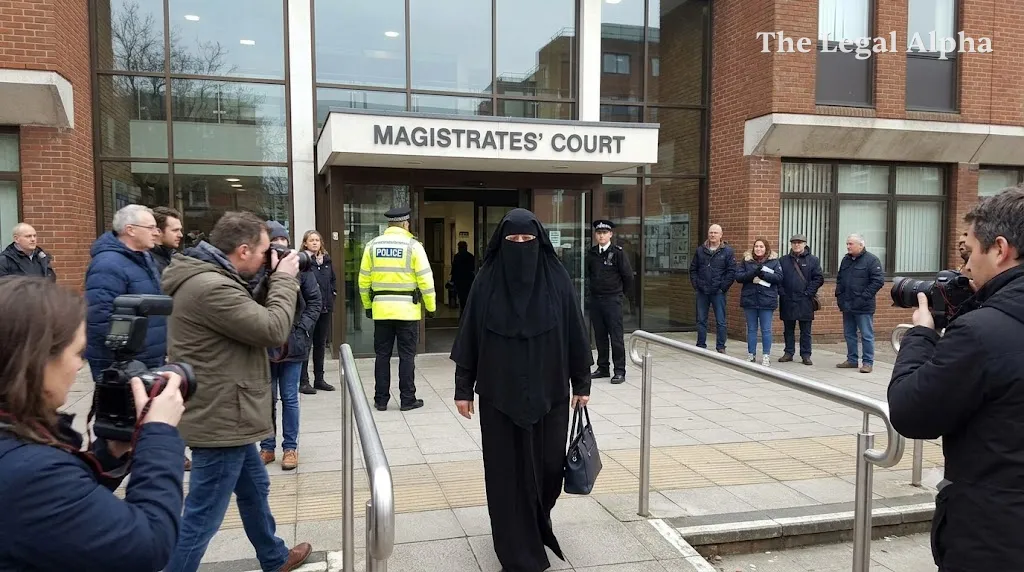
A 76-year-old pensioner, Timothy Miller of Hedge End, Southampton, entered a plea of not guilty at Portsmouth Magistrates' Court to criminal charges stemming from his use of a face covering during a public demonstration. The defendant arrived at court wearing a full-face burqa and carrying a handbag, repeating the appearance that originally led to his arrest.
The underlying incident took place during an anti-immigration demonstration in Portsmouth city centre. Hampshire Police had authorised emergency powers requiring individuals to remove face coverings. Officers arrested Miller after alleging he utilised the traditional Islamic veil specifically to disguise his appearance in violation of police directions. At his initial plea hearing, Miller confirmed his identity from the dock before entering his plea, stating that his face was already recorded across police cameras and maintaining that his arrest was unlawful.
Legal Topic
-
Area of Law: Criminal Law / Public Order Law
-
Sub-topic: Police Powers / Face-Covering Dispersal Orders / Religious Dress Exemptions
Core Legal Issue
The case turns on the statutory boundary between legitimate religious attire and items worn deliberately to disguise an individual’s identity during a public gathering governed by police dispersal powers.
The court must determine whether a person who adopts full-face religious clothing solely as a political statement, protest device, or tactical measure can be prosecuted for refusing or failing to remove an item worn mainly to conceal identity, or whether statutory safeguards for religious and cultural dress protect the wearer regardless of personal belief or sincere religious practice.
What Did the Court Decide?
Portsmouth Magistrates’ Court made procedural and bail determinations without ruling on the substantive legal merits of the charge:
-
The court accepted Miller’s formal plea of not guilty after confirming his identity.
-
District judicial proceedings formally listed the matter for a summary trial scheduled for 16 February.
-
Miller was granted unconditional bail until the scheduled trial date.
-
The substantive determination of whether an offence was committed under statutory public order powers remains pending before the summary court.
Key Legal Points
-
Application of Section 60AA Orders: Under UK public order legislation, senior police officers can issue temporary orders empowering constables to demand the removal of any item they reasonably believe is being worn wholly or mainly to conceal identity.
-
Requisite Mental Element (Mens Rea): The prosecution must prove that the garment was worn with the specific objective or primary purpose of concealing identity, rather than for protected or incidental reasons.
-
Statutory Protections for Religious Attire: Public order provisions restricting face coverings contain specific exemptions protecting clothing worn in good faith for religious, cultural, or medical reasons.
-
Judicial Verification of In-Dock Identity: Courts retain the inherent common law power to verify the identity of an accused person appearing before the bench, independent of any external public order order.
Relevant Law
-
Section 60AA, Criminal Justice and Public Order Act 1994: Grants police constables the power to require the removal of face coverings and seize items if an authorisation is in force and the officer reasonably believes the item is worn mainly to conceal identity.
-
Section 60AA(4), Criminal Justice and Public Order Act 1994: Establishes the summary criminal offence for failing or refusing to comply with a constable's direction to remove a face covering.
-
Article 9 and Article 10, European Convention on Human Rights (Human Rights Act 1998): Enshrines the freedom of thought, conscience, and religion, alongside the freedom of expression and political protest.
Arguments of the Parties
Defendant / Accused
Miller contended that his arrest was unlawful, arguing that he had not committed an offence by donning the garment. The defense indicated that he was entitled to an exemption associated with religious clothing and maintained that he was not concealing his identity from authorities, noting that his likeness was already extensively documented on police monitoring equipment.
Prosecution / Hampshire Police
The prosecution maintains that a lawful Section 60AA order was operational in the designated protest area, giving officers lawful authority to instruct attendees to uncover their faces. The State’s position rests on the assertion that the defendant, an anti-immigration activist, was using the garment primarily as an instrument of concealment or provocation during a demonstration, thereby failing to satisfy the legal standard for a genuine religious exemption.
Why Does It Matter?
The proceedings highlight an evolving tension in the practical enforcement of public order legislation during high-friction demonstrations. Police forces across England and Wales frequently rely on Section 60AA powers to manage rival protest groups and counter-protest assemblies. However, the statute explicitly seeks to avoid infringing on genuine cultural and religious expression.
When a protester adopts traditional religious attire ostensibly as satire, defiance, or political theatre, magistrates are forced to evaluate the subjective intent and objective purpose behind the garment. The trial outcome could offer practical guidance for operational policing, clarifying how officers on the ground and prosecutors must assess face-covering exemptions when an individual asserts religious dress protections in non-traditional or protest-driven settings.
Legal Takeaway
An exemption designed to protect genuine religious or cultural dress cannot automatically be asserted to bypass lawful police orders if the court finds the item was worn primarily as a means to disguise identity or provoke authorities. In upcoming proceedings under Section 60AA of the Criminal Justice and Public Order Act 1994, the trial court will weigh the wearer's genuine purpose against the statutory mandate empowering police to prevent identity concealment in designated public zones.
Sources
Primary Source:
-
Plea and Case Management Proceedings, R v. Timothy Miller, Portsmouth Magistrates' Court (14 October 2026).
Additional Sources:
-
Section 60AA, Criminal Justice and Public Order Act 1994 (c. 33).
-
Hampshire Constabulary Operational Press Release and Case Filings (September–October 2026).
-
Local Court Reporting, The News (Portsmouth) and Daily Echo (October 2026).