Delhi High Court to Hear Urgent Challenge Against Planned Connaught Place Demonstration Post Supreme Court Proceedings
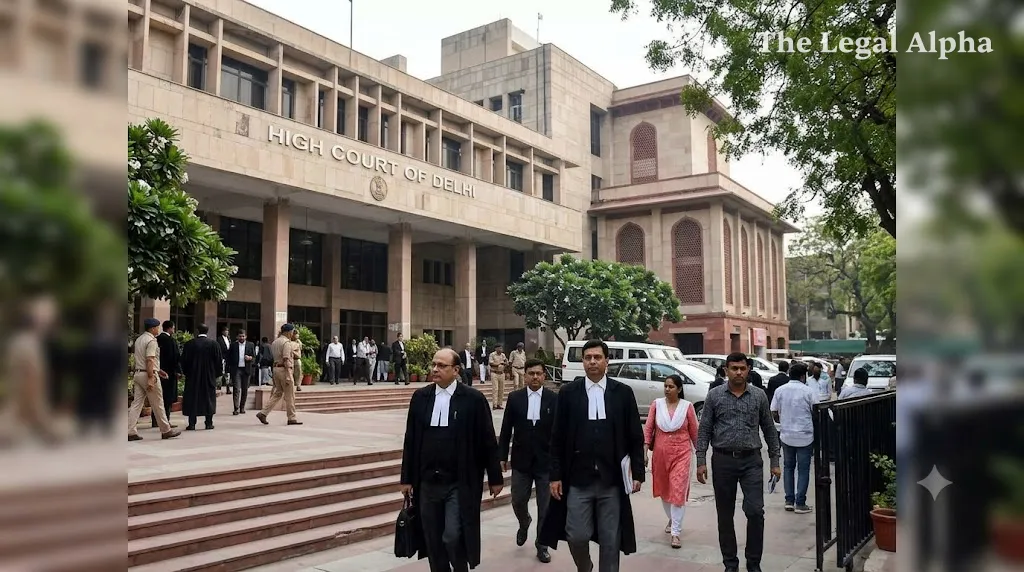
The Delhi High Court agreed to urgently take up a petition seeking to prohibit a planned demonstration by the Cockroach Janta Party (CJP) at Central Park in Connaught Place. Mentioned before a Division Bench comprising Acting Chief Justice Nitin Wasudeo Sambre and Justice Sanjay Sharma, the plea urges judicial intervention to restrain CJP founder Abhijit Dipke from convening a public gathering titled 'Lehra do Tiranga' scheduled for October 16.
Counsel representing local traders and affected citizens pushed for an immediate stay, arguing that an unpermitted assembly in a major commercial district would shut down business activity during the festive Dussehra weekend. Noting that the Supreme Court is actively adjudicating interconnected writ petitions challenging police restrictions, assembly bans, and detentions arising from the ongoing Special Intensive Revision (SIR) agitation, the High Court directed the petitioner’s counsel to notify the opposite parties and return at 2:30 PM with orders issued by the apex court.
Legal Topic
Area of Law: Constitutional Law / Public Order
Sub-topic: Regulation of Right to Peaceful Assembly and Public Nuisance
Core Legal Issue
The controversy turns on the constitutional balancing act between the fundamental freedom of assembly guaranteed under Article 19(1)(b) of the Constitution and the state's authority to impose reasonable restrictions under Article 19(3) in the interest of public order, commercial access, and public convenience.
Specifically, the court must address whether an unapproved gathering can be enjoined when planned in a non-designated, high-density public and commercial zone, particularly while related questions concerning designated demonstration venues—such as the recent denotification of Jantar Mantar—remain sub judice before the Supreme Court.
What Did the Court Decide?
The Division Bench declined to pass an ex-parte ad-interim restraint during the morning mentioning. Instead, the court:
-
Agreed to list and hear the petition at 2:30 PM on the same day.
-
Instructed the petitioner’s counsel to serve advance notice on the respondents.
-
Directed the counsel to apprise the bench of any relevant developments, directions, or orders emerging from the concurrent Supreme Court hearing on SIR-related protest petitions.
The substantive merits of the prayer to restrain the gathering remain pending for determination in the post-lunch session.
Key Legal Points
-
Coordination Between Constitutional Courts: High Courts may calibrate the timing of interim hearings to maintain institutional comity when overlapping issues concerning public order and assembly curbs are actively being considered by the Supreme Court.
-
Non-Designated Assembly Zones: Public assemblies conducted outside officially notified demonstration sites (such as the denotified Jantar Mantar) heighten judicial scrutiny regarding disruption to civilian movement, traffic corridors, and local trade.
-
Procedural Fairness in Urgent Relief: Even when urgent interim injunctions are sought against impending demonstrations, courts ordinarily insist on putting the opposing parties on notice before imposing blanket assembly bans.
Relevant Law
-
Article 19(1)(b), Constitution of India: Guarantees the fundamental right to assemble peaceably and without arms.
-
Article 19(3), Constitution of India: Empowers the State to impose reasonable restrictions on the right to assemble in the interests of the sovereignty, integrity of India, or public order.
-
Section 163, Bharatiya Nagarik Suraksha Sanhita, 2023 (BNSS) / Section 144, CrPC: Regulatory powers invoked by executive authorities to issue prohibitory orders against unlawful gatherings and breaches of public peace.
-
Himmat Lal K. Shah v. Commissioner of Police (1973): Established that the state may regulate public meetings on streets and public grounds to preserve traffic flow and order, provided the power is not exercised arbitrarily.
Arguments of the Parties
Petitioner / Moving Party
-
The petitioner submitted that Connaught Place Central Park is a prime commercial, transit, and retail hub rather than an earmarked venue for mass political assemblies.
-
Counsel contended that a mass mobilization during the peak festive period of the Dussehra weekend would trigger commercial paralysis, business losses, and traffic gridlock.
-
It was urged that without immediate injunctive intervention, the assembly would result in widespread public inconvenience and compromise public order.
Respondent / State & Affected Organizers
-
While the organizers were not represented during the preliminary morning mentioning, public statements from the organizers maintain that holding the national flag and peaceful gathering constitute constitutionally protected forms of non-violent dissent.
-
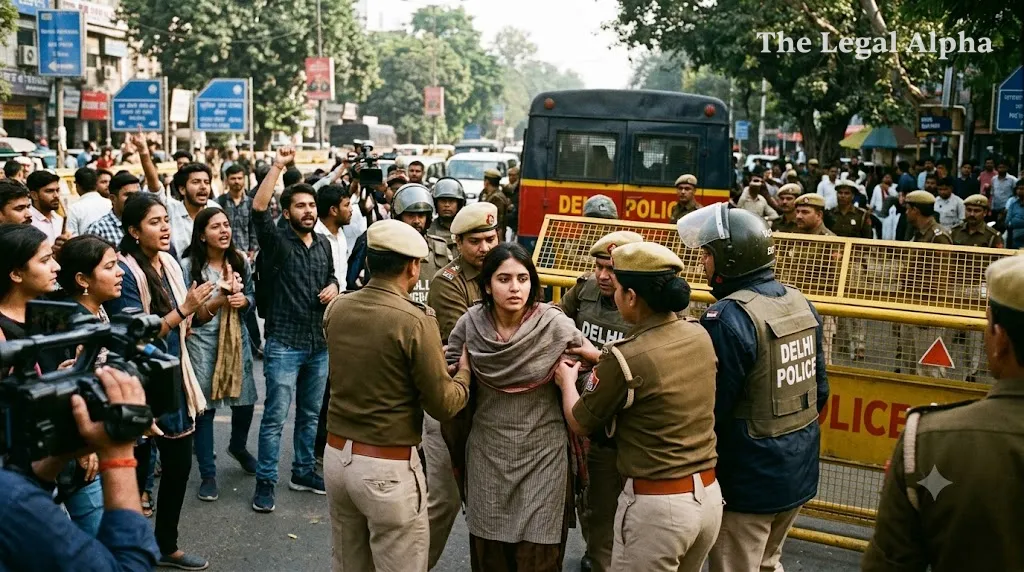
Organizers have argued that recent state actions, including the preventive detention and judicial remand of key activists under peace bonds, represent an unlawful suppression of democratic assembly rights.
Why Does It Matter?
This dispute underscores an escalating friction between civil liberties and municipal order in the national capital. As administrative authorities continue to restrict or denotify historic demonstration venues like Jantar Mantar, activist groups increasingly shift public protests into central commercial plazas and urban spaces.
The outcome of these proceedings will provide practical clarity on whether civic and trader associations can obtain preventative judicial injunctions against political gatherings in commercial sectors, or whether regulatory control must remain an executive policing decision evaluated against strict constitutional necessity.
Legal Takeaway
The right to assemble peaceably under Article 19(1)(b) remains subject to reasonable geographic and public-order regulations; commercial hubs cannot be repurposed as protest venues without balancing the rights of traders and pedestrians. Litigants seeking urgent injunctive relief against planned assemblies must establish immediate harm while ensuring adequate procedural notice to the organizers.
Sources
Primary Source:
-
Oral mentioning proceedings and procedural order before the Division Bench of Acting Chief Justice Nitin Wasudeo Sambre and Justice Sanjay Sharma, High Court of Delhi (October 15, 2026).
Additional Sources:
-
Case filings and status reports concerning public protest regulations and commercial petitions in the High Court of Delhi.
-
Supreme Court of India proceedings on Special Intensive Revision (SIR) and right to protest writ petitions.