Conversion to Islam Does Not Automatically Guarantee Backward Class Quota Benefits, Rules Supreme Court
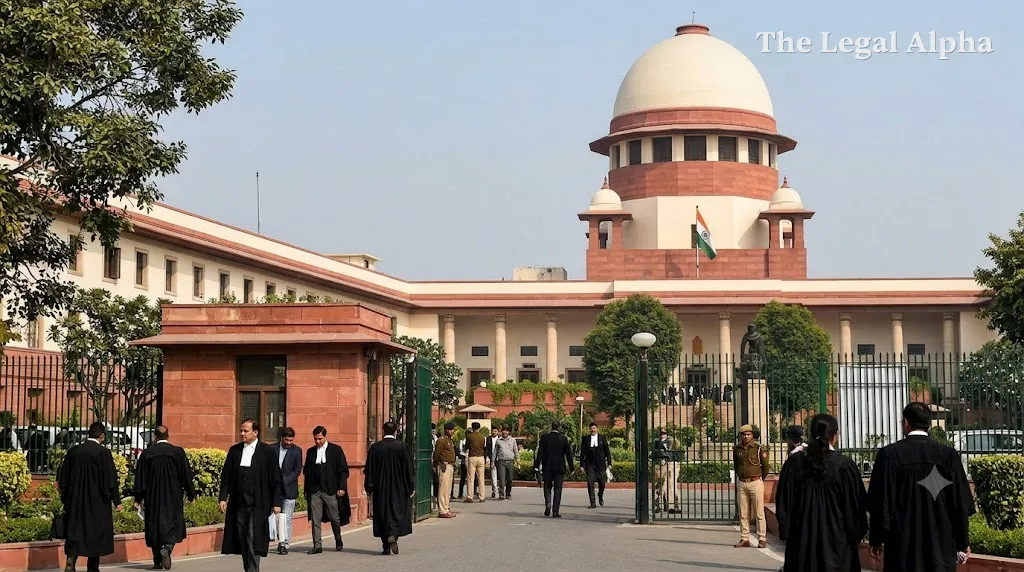
The Supreme Court of India dismissed an appeal filed by the Tamil Nadu government against a Madras High Court judgment that had set aside the State’s executive notification extending Backward Class (Muslim) [BC(M)] reservation benefits to individuals who convert to Islam. A division bench comprising Justice Prashant Kumar Mishra and Justice Shree Chandrashekhar held that social backwardness within the Hindu social hierarchy cannot be presumed to automatically transfer into a non-Hindu social order upon religious conversion.
The ruling directly addresses whether converts from Hindu Backward Classes (BC), Most Backward Classes (MBC), Denotified Communities (DNC), and Scheduled Castes (SC) can claim entry into the designated 3.5% BC(M) reservation pool purely by virtue of formal conversion.
Legal Topic
-
Area of Law: Constitutional Law / Administrative Law
-
Sub-topic: Affirmative Action, Caste Reservations, and Equal Protection Under Article 15 and Article 16
Core Legal Issue
The controversy centres on whether an individual who belongs to an identified backward class within the Hindu fold continues to retain that backward status—or automatically acquires entry into a specific, notified backward class within Islam—solely by embracing a new faith.
The legal question before the Court was whether the executive branch can extend targeted reservation benefits to religious converts without empirical verification and statutory social assessment showing that the act of conversion embeds the individual into an existing, recognized backward class community within the receiving religion.
What Did the Court Decide?
The Supreme Court affirmed the Madras High Court’s ruling quashing the Tamil Nadu government notification, declaring that the high court’s order called for no interference.
The Bench observed that blanket executive orders granting reservation based merely on religious conversion create an "artificial group" lacking statutory foundation. The Court clarified that conversion alone does not assimilate a person into an existing, notified backward community. Consequently, the State’s appeal was dismissed.
Key Legal Points
-
No Transferred Backwardness Across Faiths: Social and institutional backwardness experienced within the Hindu caste hierarchy cannot be presumed to automatically carry over into an entirely different religious order upon conversion.
-
Statutory Investigation Required: Inclusion within a designated backward community under Article 15(4) or Article 16(4) requires demonstrable, empirical evidence and mandatory statutory checks by an expert commission, rather than unilateral executive presumption.
-
Rejection of Artificial Classes: Creating an umbrella category that confers backward-class benefits strictly upon the occurrence of conversion leads to an unconstitutional classification that dilutes the entitlements of historically marginalized communities already identified within that quota.
Relevant Law
-
Article 14, Constitution of India: Equality before the law and equal protection of the laws.
-
Article 15(4) & Article 16(4), Constitution of India: Enabling provisions authorizing the State to create special provisions and reservations in appointments for backward classes of citizens not adequately represented in State services.
-
Tamil Nadu Backward Class (Muslims) Act, 2007 (and relevant State Government Orders): Statutory provisions governing the 3.5% separate reservation earmarked for notified backward Muslim communities in the State.
-
The Constitution (Scheduled Castes) Order, 1950: Limiting SC recognition to specified religious groups and barring claims where conversion severs the underlying constitutional status.
Arguments of the Parties
Appellant (State of Tamil Nadu) The State contended that executive policy had been formulated on the basis of recommendations by an expert commission to address ground realities of socio-economic distress. It argued that conversion to another faith does not instantly erase historical marginalization, educational backwardness, or systemic deprivation, and the State was within its constitutional competence to ensure affirmative protection does not cease upon the exercise of religious freedom.
Respondents / Opposing Intervenors The respondents argued that the BC(M) quota was framed specifically for historical, identifiable communities within Islam in Tamil Nadu. Permitting individuals from various other social and caste backgrounds to access this quota merely upon conversion distorts the classification, penalizes naturally identified backward Muslims, and bypasses the constitutional requirement of rigorous empirical proof of backwardness within the new faith.
Why Does It Matter?
This verdict reinforces strict judicial scrutiny over state executive actions that attempt to reconfigure reservation categories across religious lines. By holding that backwardness does not automatically jump the boundary of religious conversions, the Supreme Court curtails the tendency of executive orders to bypass rigorous empirical studies.
For state governments, the judgment establishes that creating or modifying quotas for converts cannot rely on administrative discretion alone; it demands measurable, statutory proof that the convert is genuinely integrated into, and subject to the disadvantages of, an existing backward community.
Legal Takeaway
Religious conversion does not automatically transport prior backward-class privileges into a newly adopted faith. Any extension of affirmative action benefits to converts must be backed by empirical evidence demonstrating systemic social disadvantage within the new religious group, rather than established solely by executive notification.
Sources
-
Primary Source: Supreme Court of India — State of Tamil Nadu v. Madras High Court Judgment (Special Leave Petition / Civil Appeal), Bench comprising Justice Prashant Kumar Mishra and Justice Shree Chandrashekhar (Operative order pronounced on October 15, 2026).
-
Additional Sources: Madras High Court Division Bench records on the Tamil Nadu BC(M) executive notification; The Hindu, The Economic Times, NDTV Legal Bureau.