Remarriage Is a Ground to Modify, Not Extinguish, Permanent Alimony: Karnataka High Court Scales Down Award from ₹25 Lakh to ₹10 Lakh
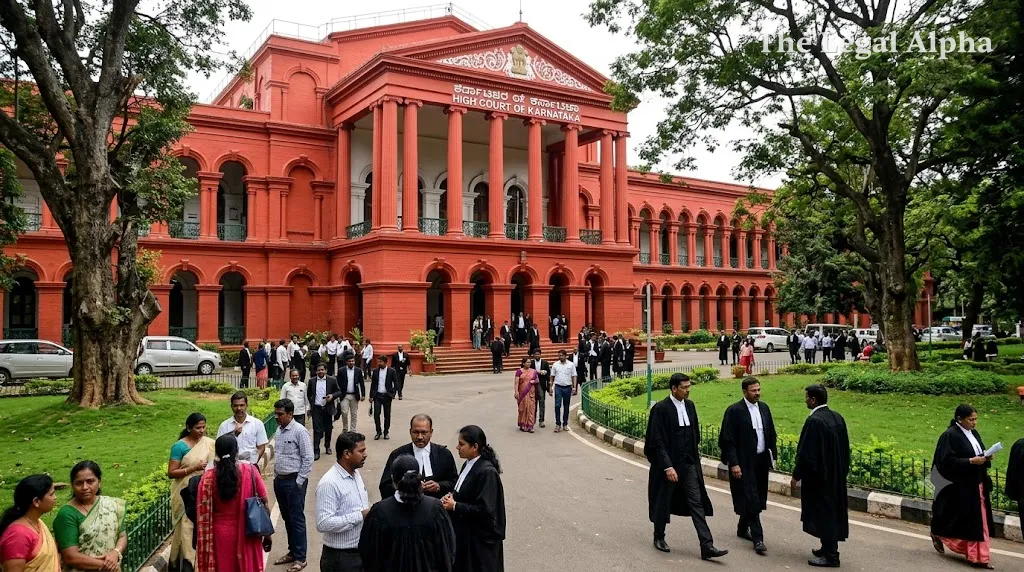
The High Court of Karnataka partly allowed an appeal brought by a husband against a divorce court decree that had directed him to pay ₹25 lakh in permanent alimony to his former wife. While the appeal was pending before the High Court, the wife remarried, placing formal evidence of the subsequent marriage on record before the bench.
A Division Bench comprising Justice D.K. Singh and Justice H. Shanthi Bhushan held that while a former spouse’s remarriage does not operate as an automatic statutory bar that wipes out an entitlement to permanent alimony, it constitutes a material change in circumstances that warrants a reassessment of the quantum. Accounting for the new marriage alongside the parties' marital history, the bench scaled down the permanent alimony amount to ₹10 lakh, treating the ₹10 lakh already deposited during appellate proceedings as complete satisfaction of the award.
Legal Topic
Area of Law: Family Law
Sub-topic: Matrimonial Relief / Permanent Alimony and Modification under Hindu Marriage Act
Core Legal Issue
The dispute centered on whether a divorced wife’s subsequent remarriage during the pendency of an appeal automatically extinguishes her entitlement to permanent alimony awarded under Section 25 of the Hindu Marriage Act, 1955, or whether it operates as an altered circumstance that requires the court to recalculate and vary the quantum of the financial relief.
What Did the Court Decide?
The High Court partly allowed the husband's appeal by modifying the monetary decree passed by the Mysuru Family Court. The bench rejected both extreme positions: it declined to hold that remarriage immediately nullifies past entitlement to support, but it firmly ruled that an award cannot continue unabated once the financial dependencies of marriage change.
Specifically, the Court:
-
Slashed the permanent alimony payable to the respondent wife from ₹25 lakh to ₹10 lakh.
-
Directed that the interim deposit of ₹10 lakh previously made by the appellant husband be appropriated towards the final alimony award, ruling that no further monetary liability remains under the decree.
-
Clarified that courts must balance past matrimonial realities against subsequent events to avoid converting a protective financial measure into an undeserved monetary windfall.
Key Legal Points
-
Purpose of Alimony: The bench observed that permanent alimony is intended to provide reasonable maintenance, support, and financial security to a spouse; it is neither a prize, a bounty, nor an automatic unconditional entitlement that survives unchanged through substantial life transitions.
-
Effect of Remarriage under Section 25: Remarriage does not create an absolute or automatic bar that extinguishes the initial right to seek alimony, but it serves as a critical, material factor that directly alters the quantum to be paid.
-
Appellate Consideration of Subsequent Events: Appellate courts have statutory competence under Section 25(2) and Section 25(3) of the Hindu Marriage Act to adjust, modify, or vary alimony orders when significant subsequent events—such as entering into a new wedlock—alter the economic standing and support needs of the claimant.
-
Evidentiary Threshold for Income Claims: Unsupported oral claims regarding non-disclosure of income or heavy familial liabilities cannot be entertained unless backed by a properly filed affidavit of disclosure of assets and liabilities.
Relevant Law
-
Section 25 of the Hindu Marriage Act, 1955: Deals with the grant of permanent alimony and maintenance at the time of passing a matrimonial decree or subsequent thereto.
-
Section 25(2) and 25(3) of the Hindu Marriage Act, 1955: Empowers the court to modify, vary, or rescind an alimony order upon showing a change in the circumstances of either party, specifically referencing remarriage.
-
Judicial Precedents: Rajnesh v. Neha (2020) on mandatory financial disclosure affidavits; and Sharath Cariappa K.S. v. Smt. Sharin N.S. (2024) concerning alimony reduction following remarriage during appeal.
Arguments of the Parties
Appellant (Husband)
The husband challenged the Family Court’s direction awarding ₹25 lakh, contending that the trial court had imposed an excessive and disproportionate financial burden on him. During the appeal, he underscored that because the respondent had remarried and established a new marital home, the underlying purpose of continuing long-term economic sustenance from her former partner had fundamentally lapsed, warranting cancellation or substantial reduction of the amount.
Respondent (Wife)
The wife placed her marriage certificate on record through a formal memo and maintained that her subsequent remarriage did not wash away the mental and physical cruelty suffered during the subsistence of the marriage, nor did it erase the economic disadvantages she incurred prior to her remarriage. She submitted that an alimony award granted at the time of dissolving the marriage ought not to be dismissed simply because she had moved forward with her life.
Why Does It Matter?
This ruling provides valuable practical guidance on the evolving interpretation of Section 25(3) of the Hindu Marriage Act in matrimonial appellate litigation. It establishes that courts will avoid both rigid extremes: they will not punish a divorced spouse for rebuilding their life by completely stripping them of relief for past marital disruption, nor will they permit a former spouse to treat past marriage as a continuous economic asset after securing new domestic support.
For matrimonial litigants and family lawyers, the decision demonstrates that subsequent changes in marital status during an appeal cannot be ignored by the bench. It also highlights that financial claims and counterclaims regarding maintenance or dependents will fail unless backed by transparent asset and liability disclosures.
Legal Takeaway
Remarriage by a divorced spouse is not an automatic bar that cancels out permanent alimony entirely, but it is a decisive change of circumstances that empowers courts to reassess and scale down the quantum to prevent maintenance from turning into a windfall.
Sources
Primary Source:
Judgment of the High Court of Karnataka in Bharath N. Padasale v. Smt. Amulya G. [reported also as B v. Smt. A], Miscellaneous First Appeal No. 1557/2023 (FC), Neutral Citation: 2026:KHC:51576-DB, decided on 18 September 2026.
Additional Sources:
-
Section 25 of the Hindu Marriage Act, 1955.
-
Relevant precedents: Rajnesh v. Neha (2020) and Sharath Cariappa K.S. v. Smt. Sharin N.S. (2024).