J&K High Court Rejects Technical Objection to Ad-Hoc Regularisation, Upholds Service Parity for Prisons Department Staff
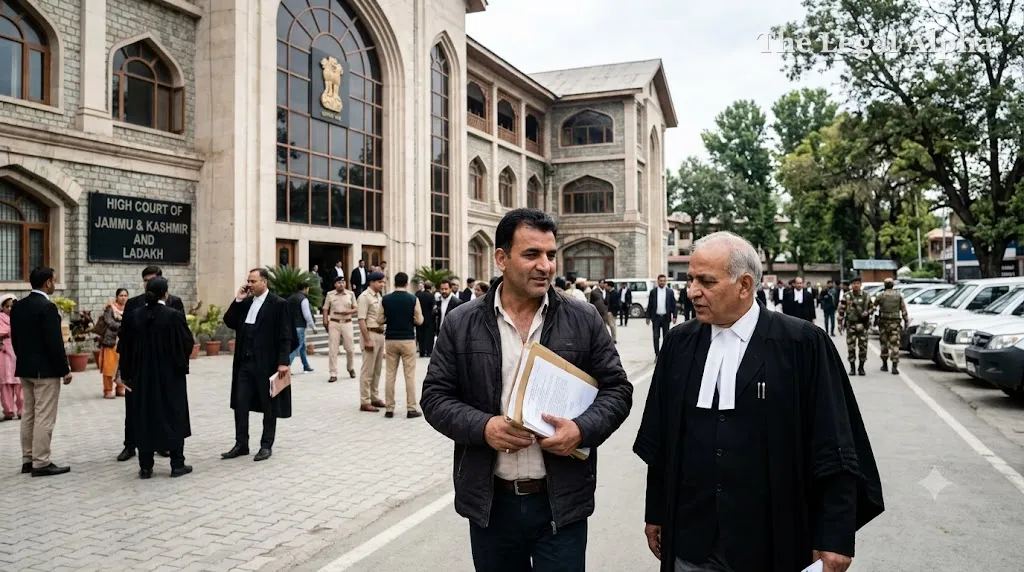
The High Court of Jammu & Kashmir and Ladakh affirmed an order requiring the Union Territory administration to regularise an ad-hoc prisons department employee retroactively from May 21, 2016, alongside all associated service and seniority benefits.
Susheel Kumar had served continuously as an ad-hoc Junior Assistant in the Prisons Department since September 2001. While three of his departmental peers were granted permanent status in May 2016, authorities refused his regularisation on the sole ground that he had not furnished a formal typing-speed certificate at his initial appointment. After the Jammu and Kashmir Reorganisation Act, Kumar's challenge was transferred to the Central Administrative Tribunal (CAT), which ruled in his favour. The Division Bench of Justices Sanjeev Kumar and M. A. Chowdhary dismissed the UT administration's appeal against the CAT ruling, condemning the administration's stance as discriminatory against a similarly situated employee.
Legal Topic
-
Area of Law: Service Law / Constitutional Law
-
Sub-topic: Ad-Hoc Regularisation / Article 14 Non-Discrimination / Mandatory vs. Directory Recruitment Qualifications
Core Legal Issue
The dispute turned on whether an employer can deny regularisation to a long-serving ad-hoc employee solely due to the absence of an institutional typing certificate at the time of original engagement, even when the underlying recruitment rules mandate typing proficiency rather than production of a formal diploma or certificate.
The court had to determine whether Kumar's exclusion from the May 2016 regularisation exercise violated the constitutional guarantee of equality under Article 14 when compared to his similarly placed co-workers.
What Did the Court Decide?
The High Court dismissed the UT administration's writ petition and confirmed the CAT directive granting Kumar regularisation with effect from May 21, 2016.
The Bench directed the authorities to grant all consequential service benefits, including proper pay fixation, increments, and seniority adjustments on par with the three junior assistants regularised on that date. The court observed that the departmental authorities had Kumar's typing certificate on record when evaluating ad-hoc workers for absorption and improperly overlooked the relaxation recommended by an empowered committee.
Key Legal Points
-
Proficiency vs. Certification: Recruitment rules requiring a typing speed of 35 words per minute demand functional proficiency, not the production of a commercial or institutional certificate as a mandatory eligibility condition.
-
No Presumption of Incompetence: The mere lack of an initial certificate does not establish that an employee who performed junior assistant tasks continuously for over two decades lacked typing skills.
-
Parity and Non-Discrimination: Treating an ad-hoc employee differently from colleagues who entered service on similar terms amounts to arbitrary discrimination in breach of Article 14.
-
Arbitrary Omission of Relaxations: State authorities cannot withhold regularisation without addressing formal relaxation recommendations issued by screening and empowered committees.
Relevant Law
-
Constitution of India: Articles 14 (Equality Before Law) and 16 (Equality of Opportunity in Public Employment)
-
Jammu and Kashmir Civil Services Rules: Specific departmental recruitment provisions governing Junior Assistants and skill criteria
-
Jammu and Kashmir Reorganisation Act, 2019: Transfer and jurisdiction of pending service disputes to the Central Administrative Tribunal
Arguments of the Parties
The Petitioner / UT Administration The administration argued that Kumar was ineligible for regularisation from the 2016 cut-off because he failed to submit an accredited typing certificate showing a speed of 35 words per minute when engaged in September 2001. The state contended that satisfaction of entry qualifications at the point of initial engagement is a condition precedent for permanent absorption.
The Respondent / Employee Kumar submitted that he had performed the responsibilities of a junior assistant continuously since 2001 without any performance-related complaint. He established that the typing certificate was submitted and available to the authorities during the regularisation screening, and that denying him equal treatment alongside three colleagues regularised in May 2016 was discriminatory and unjustified.
Why Does It Matter?
This decision reins in the tendency of government departments to rely on hyper-technical paper deficiencies to block long-term ad-hoc workers from regularisation. By clarifying that statutory requirements for typing proficiency evaluate actual capability rather than third-party paperwork, the ruling stops administrative bodies from converting directory qualifications into mandatory disqualifiers. It provides legal support for temporary public servants who have rendered years of uninterrupted service and face arbitrary exclusions during departmental regularisation drives.
Legal Takeaway
Public employers cannot read formal certification requirements into recruitment rules that only mandate practical skill proficiency. Where an ad-hoc employee has completed the requisite continuous service and demonstrated the requisite competence, the absence of an initial paper certificate cannot serve as a ground to deny parity with regularised colleagues.
Sources
-
Primary Source: Judgment of the High Court of Jammu & Kashmir and Ladakh at Jammu in UT of J&K & Ors. v. Susheel Kumar, DB Bench comprising Justice Sanjeev Kumar and Justice M. A. Chowdhary.
-
Additional Sources: Proceedings before the Central Administrative Tribunal (Jammu Bench); High Court Registry Case Records.