Municipal Recruitment Money Laundering Case: Calcutta High Court Denies Bail to Former West Bengal Minister Sujit Bose

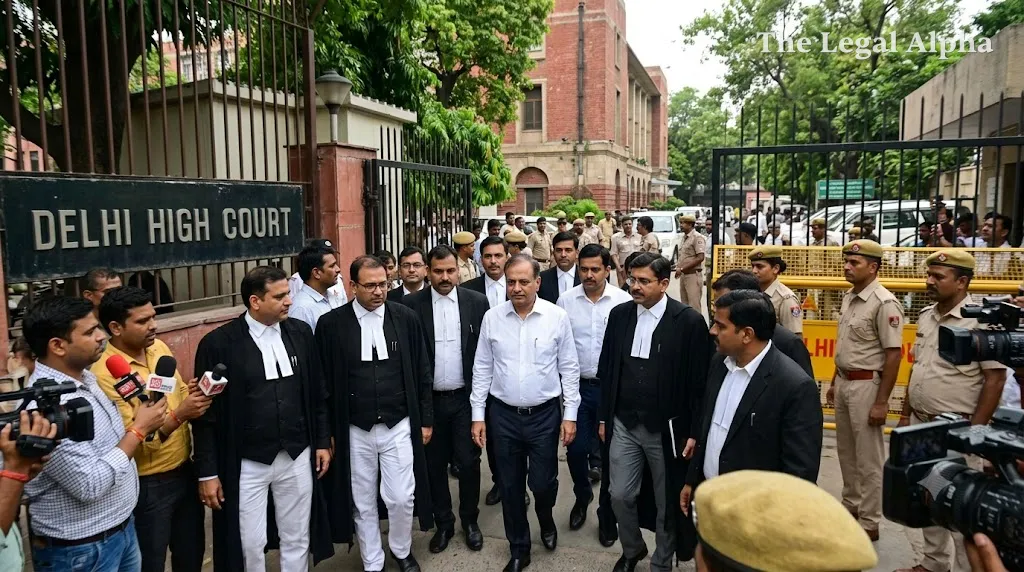
The Calcutta High Court rejected the regular bail application filed by former West Bengal Minister Sujit Bose in connection with an Enforcement Directorate (ED) investigation into alleged recruitment irregularities across municipal bodies in the State.
Bose, who previously served as Vice-Chairman of the South Dum Dum Municipality and later held ministerial portfolios including Fire and Emergency Services, was arrested by the agency after an Enforcement Case Information Report (ECIR) was initiated following a predicate case registered by the Central Bureau of Investigation (CBI). While Bose sought regular bail under Section 483 of the Bharatiya Nagarik Suraksha Sanhita, 2023 (BNSS), the High Court determined that he failed to satisfy the mandatory dual conditions set out under anti-money laundering legislation, particularly at a juncture when investigators are actively probing newly unearthed assets.
Legal Topic
-
Area of Law: Criminal Law / Economic Offences
-
Sub-topic: Prevention of Money Laundering / Bail Jurisprudence
Core Legal Issue
The primary question before the High Court was whether an accused charged under the Prevention of Money Laundering Act, 2002 (PMLA) can be granted regular bail solely because a formal prosecution complaint has been submitted, or whether ongoing multi-property asset tracing constitutes an active, crucial phase of inquiry that triggers and reinforces the statutory bar under Section 45 of the PMLA.
Additionally, the Court evaluated whether the absence of the petitioner’s name in the initial CBI First Information Report (FIR) and the delay between the initiation of the ECIR and his arrest could overcome the twin statutory tests requiring a prima facie satisfaction of innocence.
What Did the Court Decide?
Justice Tirthankar Ghosh dismissed the bail petition, holding that the petitioner had not cleared the statutory rigours prescribed under Section 45 of the PMLA.
The Court observed that:
-
The mere submission of a prosecution complaint does not automatically entitle an accused to bail, particularly when law enforcement has identified around 45 properties linked to the transactions during custody and the probe remains at a sensitive, active stage.
-
Custodial findings, witness statements, and digital records recovered during raids established a sufficient prima facie nexus between the petitioner and the alleged recruitment process, precluding the Court from recording a finding that he is not guilty of the offence at this stage.
-
All pending interim applications connected to the petition were formally disposed of, and the Court clarified that its observations are confined strictly to the question of bail without impacting the merits of the upcoming trial.
Key Legal Points
-
Filing of Prosecution Complaint Is Not an Automatic Passport to Bail: The completion of an initial complaint does not negate the necessity of continued custody if supplementary investigations into proceeds of crime and property trails are actively progressing.
-
Applicability of Section 45 PMLA: In the absence of reasonable grounds to believe that the accused is not guilty and is unlikely to commit any offence while on bail, statutory bars continue to operate regardless of political stature.
-
Predicate Offence Naming Not Mandatory for PMLA Action: The fact that an individual was not initially arraigned in the scheduled offence FIR registered by the CBI does not insulate them from being proceeded against if proceeds of crime are subsequently traced to them.
-
Gravity and Public Influence in Scam Investigations: Where an influential public figure faces allegations involving institutional recruitment fraud and proxy beneficiary appointments, the threshold for establishing liberty without tampering risks remains high.
Relevant Law
-
Section 45, Prevention of Money Laundering Act, 2002 (PMLA): Statutory dual conditions for grant of bail in money-laundering offences.
-
Section 3 & Section 4, Prevention of Money Laundering Act, 2002: Definition of the offence of money laundering and corresponding punishment.
-
Section 483, Bharatiya Nagarik Suraksha Sanhita, 2023 (BNSS): Special powers of the High Court and Court of Session regarding bail.
Arguments of the Parties
Petitioner / Applicant
-
Senior counsel appearing for Sujit Bose argued that the petitioner was never named in the CBI’s predicate FIR and that municipal recruitment selection committees did not officially include him during the periods under question.
-
It was submitted that there was an unexplained delay of nearly three years between the registration of the ECIR and the petitioner's arrest, showing that contemporaneous custodial necessity was absent.
-
The defence relied on established jurisprudence to argue that gravity alone cannot justify open-ended pre-trial detention when there is no genuine flight risk or potential to tamper with records.
Respondent / Directorate of Enforcement
-
The Additional Solicitor General contended that Bose held influential positions across municipal and state administration, using his standing to place favoured candidates in municipal positions.
-
The agency pointed to digital records and statements of aides to establish that appointments were routed through intermediaries, resulting in illicit proceeds of crime.
-
The ED emphasized that approximately 45 properties had come under scrutiny during custody, demonstrating that the money trail was expansive and the ongoing investigation would be jeopardized if bail were granted.
Why Does It Matter?
This ruling reinforces the strict standard applied by constitutional courts when dealing with high-profile public corruption and white-collar crimes under the PMLA. It confirms that an accused cannot circumvent the twin conditions of Section 45 simply by relying on delays in arrest or by highlighting that the primary agency (CBI) did not name them in the opening FIR. Furthermore, the judgment affirms that when investigating agencies uncover ongoing financial trails—such as extensive undisclosed immovable assets—the formal filing of a complaint does not freeze the agency's right to resist bail during active follow-up inquiries.
Legal Takeaway
Under the PMLA framework, the completion of an initial prosecution complaint does not create an automatic right to bail if substantial aspects of the financial trail remain under active investigation. Unless an applicant can positively satisfy the court of their prima facie innocence under Section 45, custodial detention will be maintained in complex money laundering cases.
Sources
-
Primary Source: High Court at Calcutta, Sujit Bose v. Directorate of Enforcement, C.R.M. (R) 58 of 2026, Judgment dated October 13, 2026 (Bench of Hon'ble Justice Tirthankar Ghosh).
-
Additional Sources: Directorate of Enforcement Case Information Report ECIR/KLZO-II/15/2023; Central Bureau of Investigation FIR RC 0102023A0005.