2008 Ahmedabad Blasts: Supreme Court Halts Hanging of Death Row Convict Mohammad Tanvir, Calls for Jail Behaviour and Psychiatric Reports
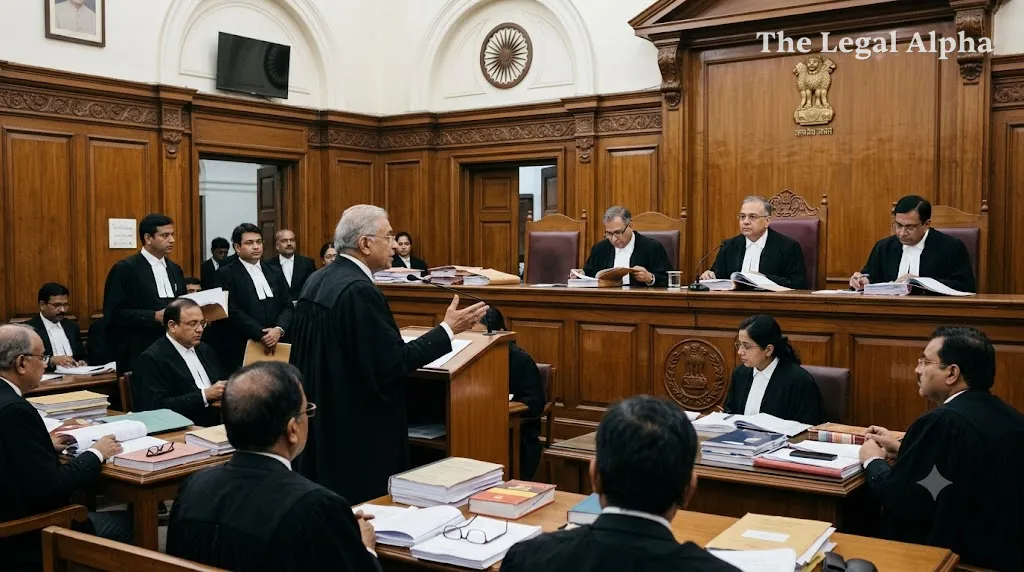
The Supreme Court of India stayed the execution of capital punishment awarded to Mohammad Tanvir, an operative associated with the Indian Mujahideen who was sentenced to death in connection with the 2008 Ahmedabad serial bomb explosions.
The blasts, which ripped through 20 locations across Ahmedabad within an hour on July 26, 2008, claimed 56 lives and left over 200 injured. In February 2022, a designated Special Court convicted 49 individuals and sentenced 38 to death—marking an unprecedented single instance of mass capital sentencing. The Gujarat High Court subsequently confirmed the capital sentences on July 7.
Tanvir moved the Supreme Court challenging the High Court’s confirmation. A three-judge bench of Justices Vikram Nath, Sandeep Mehta, and Aparesh Kumar Singh formally admitted the appeal, stayed the execution, and requisitioned comprehensive psychiatric and conduct evaluations before the matter is heard on merits.
Legal Topic
Area of Law: Criminal Law / Constitutional Jurisprudence
Sub-topic: Capital Sentencing Procedure / Mitigation and Reformative Evaluation
Core Legal Issue
The core legal question centers on whether the procedural safeguards governing capital sentencing—specifically the mandatory collection and consideration of mitigating circumstances, reformative potential, psychological condition, and prison conduct—were strictly adhered to prior to confirming a death penalty in a multi-accused terror trial.
The court is examining if an individual death row convict’s constitutional right to a fair sentencing process requires a granular, individualized assessment of conduct and psychiatric health, independent of the collective gravity of the terrorist act.
What Did the Court Decide?
The Supreme Court issued an interim stay on the execution of Tanvir’s death sentence and called for the trial court and High Court original records.
Rather than addressing guilt at this preliminary juncture, the bench issued concrete directions focused on mitigating evidence:
-
The State of Gujarat must submit comprehensive reports prepared by all relevant Probation Officers concerning Tanvir within eight weeks.
-
The concerned prison superintendent must place on record a report detailing Tanvir’s work history, daily conduct, and behavioral patterns during his incarceration within eight weeks.
-
The prison authorities must arrange an independent psychological evaluation through a government medical hospital and file the report within eight weeks.
-
The matter has been scheduled for further hearing after 12 weeks.
The order does not alter the underlying conviction; it solely stays the enforcement of the capital sentence pending detailed appellate review.
Key Legal Points
-
Institutional Restraint in Capital Appeals: The Supreme Court routinely halts executions upon admitting a special leave petition in a death reference to prevent the irreversible frustration of constitutional appeal rights.
-
Institutionalization of Mitigating Inquiries: In line with contemporary death penalty jurisprudence, courts must gather objective material on reformability—including prison conduct and mental health evaluations—before deciding if the alternative of life imprisonment is unquestionably foreclosed.
-
Individualized vs. Collective Sentencing: Even in broad conspiracy and terror trials involving multiple casualties, capital sentencing requires discrete evidentiary evaluation of each accused person’s role, mindset, and background rather than a collective assessment.
Relevant Law
-
The Code of Criminal Procedure, 1973 (CrPC): Section 354(3) (mandating "special reasons" for capital punishment), Section 366 (submission of death sentences to the High Court for confirmation), and Section 415 (postponement of death execution in case of appeal to the Supreme Court).
-
The Constitution of India: Article 136 (special leave to appeal) and Article 21 (right to life and fair procedural justice).
-
Judicial Precedents: Bachan Singh v. State of Punjab (1980) (establishing the "rarest of rare" doctrine and weighing aggravating vs. mitigating circumstances) and Manoj v. State of Madhya Pradesh (2022) (prescribing mandatory pre-sentencing psychiatric evaluations and probation officer reports for death row prisoners).
Arguments of the Parties
Appellant (Mohammad Tanvir):
Counsel for the appellant argued that both the trial court and the High Court erred in confirming the death sentence without properly factoring in individual mitigating variables and the potential for reformation. It was contended that the sheer scale of the incident overshadowed individual culpability and that execution must remain stayed while the apex court examines the procedural and evidentiary record.
Respondent (State of Gujarat):
The State contended that the 2008 serial blasts represented a premeditated war against the public, meticulously planned by the Indian Mujahideen to inflict mass civilian casualties. The prosecution maintained that the High Court rightly upheld the capital sentence in view of the severe criminal antecedents, conspiracy, and grave threat to national security, leaving no scope for leniency.
Why Does It Matter?
This development reinforces that capital penalty jurisprudence admits no exceptions to procedural rigor, regardless of how heinous or politically charged the offense is.
By ordering probation reports and independent hospital-led psychological assessments, the Supreme Court signals that institutional compliance with Manoj v. State of MP remains non-negotiable. For the remaining death row convicts in the Ahmedabad blasts case, this order establishes an important procedural benchmark: even confirmed terror sentences will undergo granular judicial scrutiny concerning behavioral reform and prison history prior to any final decision on capital punishment.
Legal Takeaway
A death sentence cannot be executed while an appellate court is examining the case, and mass-casualty terror cases do not dilute the requirement for individual mitigation. Before capital punishment can stand, courts must systematically obtain independent psychiatric evaluations and prison conduct reports to verify whether the possibility of reformation is genuinely extinguished.
Sources
Primary Source:
Supreme Court of India, Record of Proceedings in Mohd. Tanvir @ Talha Mohd. Akhtar Pathan v. State of Gujarat (Order dated October 9, 2026; Bench of Justices Vikram Nath, Sandeep Mehta, and Aparesh Kumar Singh).
Additional Sources:
-
Special Court Judgment (Ahmedabad), February 2022.
-
Gujarat High Court Confirmation Order, July 7, 2026.