Contempt, Free Speech, and Institutional Sanctity: Row Over Politician’s Post Citing Violent Foreign Unrest Sparks Legal Debate
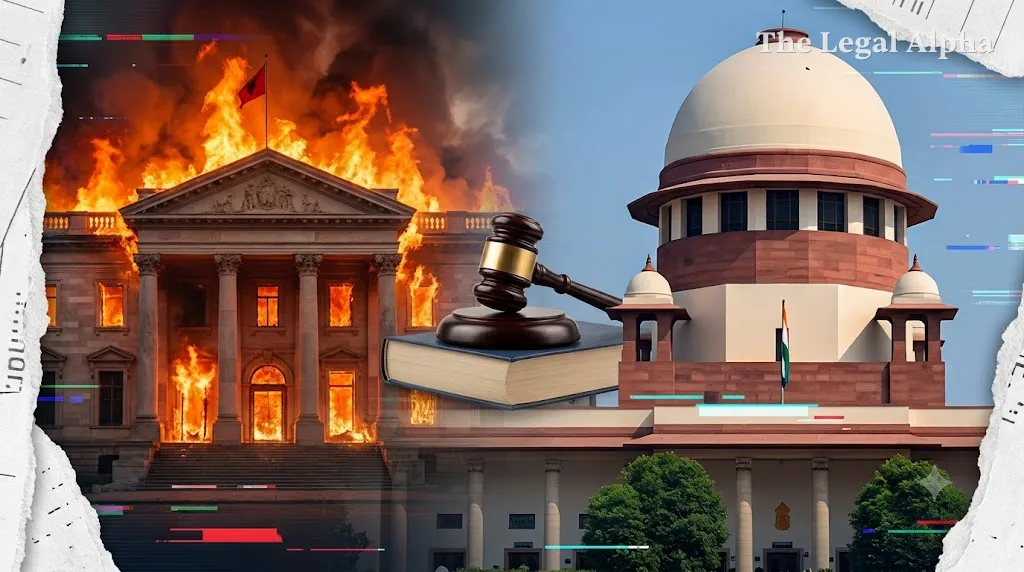
A major political and constitutional controversy erupted after Shiv Sena (UBT) Member of Parliament Sanjay Raut shared video footage of violent anti-government unrest in Albania, where demonstrators stormed and torched administrative buildings including the judicial complex. In his post, the lawmaker remarked that institutions in India should "learn a lesson" from the developments.
The Bharatiya Janata Party (BJP) launched a sharp counteroffensive, characterizing the remarks as an indirect threat against India's constitutional authorities and the judiciary. The episode unfolds in the immediate shadow of ongoing legal tensions surrounding comments on judicial integrity, coming shortly after the Supreme Court Bar Association initiated contempt proceedings against the parliamentarian following statutory consent from the Attorney General of India. The dispute has triggered significant scrutiny regarding the legal boundaries separating political rhetoric from criminal contempt and public incitement.
Legal Topic
Area of Law: Constitutional Law & Criminal Jurisprudence
Sub-topic: Criminal Contempt of Court / Freedom of Speech and Incitement
Core Legal Issue
The primary legal controversy centers on where the constitutional protection of political commentary under Article 19(1)(a) ends and actionable misconduct begins under statutory contempt and criminal law.
The core inquiry is whether publicly analogizing violent foreign arson attacks against court buildings to domestic judicial scrutiny crosses the threshold into criminal contempt by lowering institutional authority, or constitutes incitement prejudicial to public tranquility and constitutional order.
What Did the Court / Authority Decide?
No judicial bench has yet adjudicated the specific statement referencing Albania. However, formal legal mechanisms governing attacks on judicial institutions have already been activated in related matters:
-
Contempt Action Initiated: The Supreme Court Bar Association (SCBA) has already approached the Supreme Court with a criminal contempt petition against Sanjay Raut following formal written consent from Attorney General R. Venkataramani under Section 15 of the Contempt of Courts Act, 1971.
-
Notices Issued: The apex court previously issued notices in associated contempt petitions concerning alleged disparaging and misleading statements made against the office of the Chief Justice of India.
-
Executive Stance: Central government ministers and ruling party representatives have framed such statements not as protected political discourse, but as deliberate attempts to delegitimize constitutional institutions and foster unrest.
Key Legal Points
-
Test for Criminal Contempt: Under Section 2(c) of the Contempt of Courts Act, 1971, criminal contempt includes publications or public acts that scandalize or tend to lower the authority of any court, or prejudice the administration of justice.
-
Reasonable Restrictions on Expression: Fundamental rights under Article 19(1)(a) are subject to Article 19(2), which expressly permits reasonable legislative restrictions in relation to contempt of court, public order, and incitement to an offence.
-
Consent Requirement: Invoking criminal contempt proceedings by private parties or bar bodies before the Supreme Court mandates statutory compliance with Section 15, requiring prior written consent from the Attorney General or Solicitor General.
-
Distinction Between Fair Criticism and Coercion: Established jurisprudence strictly distinguishes robust public criticism of rulings from public statements that intimidate, delegitimize, or incite hostility toward judicial institutions.
Relevant Law
-
The Constitution of India: Article 19(1)(a) (Freedom of Speech and Expression), Article 19(2) (Reasonable Restrictions), Article 129 (Supreme Court’s inherent power to punish for contempt).
-
The Contempt of Courts Act, 1971: Section 2(c) (Definition of Criminal Contempt), Section 5 (Fair criticism of judicial acts), Section 15 (Cognizance on information and Attorney General's consent).
-
The Bharatiya Nyaya Sanhita, 2023 (BNS): Provisions addressing statements conducing to public mischief, intentional insult intended to provoke a breach of the peace, and incitement against public institutions.
Arguments of the Parties
Ruling Party and Complainants
The BJP contended that referencing violent insurgencies—where apex courts and legislative offices are set ablaze—amounts to an alarming attempt to intimidate Indian constitutional institutions and undermine public confidence in the rule of law. They maintained that framing violent mob rule as a "lesson" exceeds legitimate democratic criticism, effectively inciting unrest and attacking institutional independence.
Opposition Lawmaker and Defence
The lawmaker argued that political commentary highlighting foreign public grievances against executive overreach and corruption serves as a legitimate political warning, not a literal call to domestic violence. From this viewpoint, the rhetoric falls squarely within constitutional guarantees of free speech, reflecting public dissatisfaction rather than a statutory intent to scandalize the judiciary or commit a criminal offense.
Why Does It Matter?
This controversy highlights the fragile intersection between aggressive political speech and institutional protection in India's legal landscape. While public criticism of state authorities is protected under constitutional jurisprudence, invoking images of targeted arson and violent resistance against apex judicial buildings raises serious questions about judicial delegitimization.
Legally, it underscores how the courts and the Attorney General's office navigate the high standard required to establish criminal contempt. It provides a litmus test for whether rhetorical posturing on social media can be held criminally actionable when it invokes violence against institutional symbols of justice.
Legal Takeaway
Article 19(1)(a) shields vigorous political critique, but speech that invites or normalizes physical intimidation against judicial institutions risks crossing into criminal contempt and incitement. The legal threshold hinges on whether the communication reasonably tends to scandalize the court or weaken institutional authority in the eyes of the public.
Sources
-
Primary Source: Contempt proceedings initiated pursuant to Section 15 consent under the Contempt of Courts Act, 1971; Official public statements by the Supreme Court Bar Association and Union Ministry representatives.
-
Additional Sources: Media coverage and verified reports from NDTV India, Times Now, and Prabhasakshi.