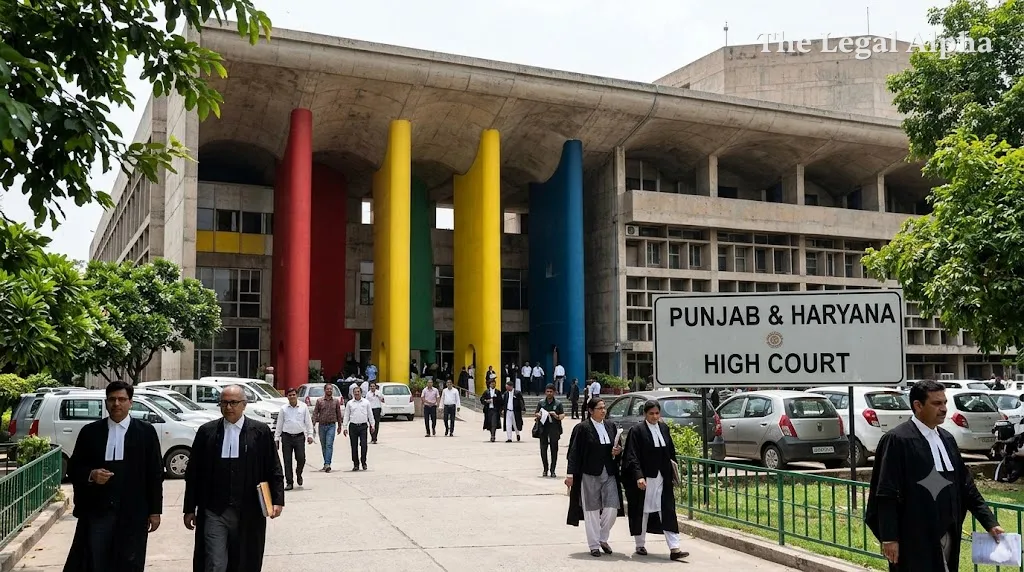
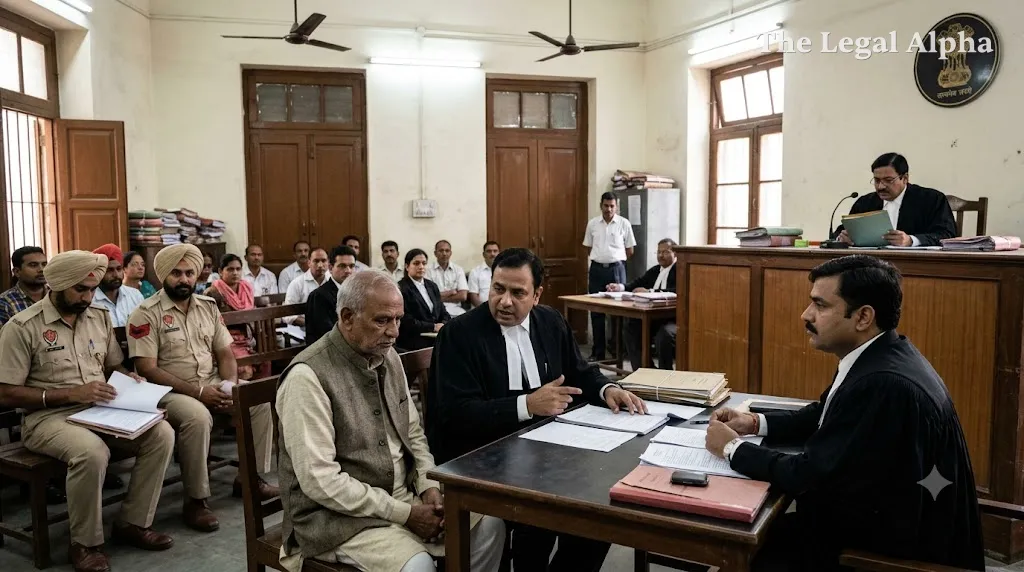
Bribe Solicitations Fall Outside Official Duties: Supreme Court Rules Section 17A Shield Does Not Bar Corruption Probes
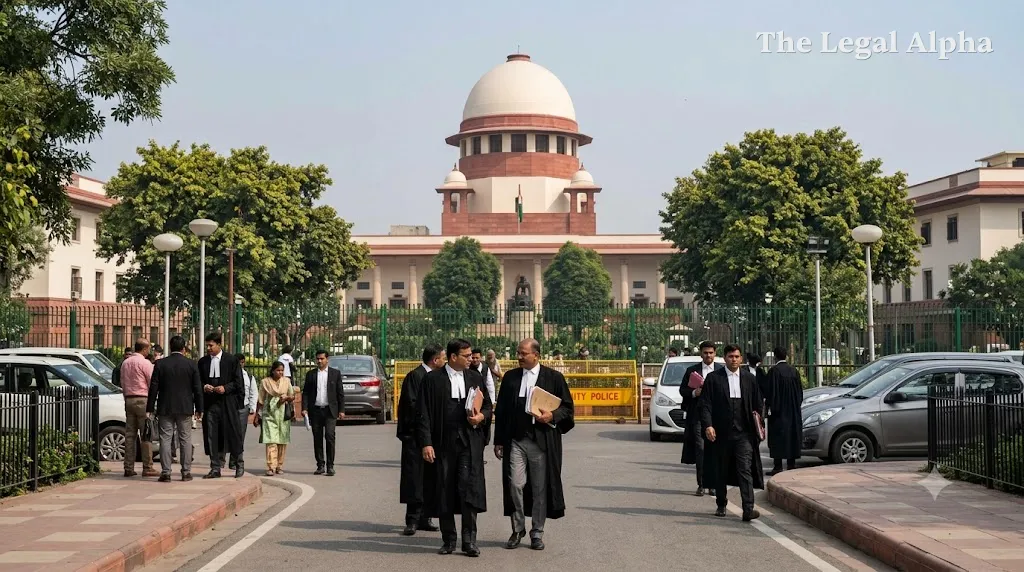
The Supreme Court of India refused to halt corruption proceedings against a Rajasthan police constable accused of soliciting an illegal gratification of ₹1.5 lakh. The accused police personnel challenged the framing of criminal charges, asserting that investigative agencies failed to obtain mandatory prior government approval under Section 17A of the Prevention of Corruption Act, 1988, before initiating the enquiry.
A Bench comprising Justice S.V.N. Bhatti and Justice N.V. Anjaria dismissed the officer's appeal, ruling that Section 17A does not afford blanket immunity to public servants facing bribery allegations. Because demanding a bribe has no nexus with legitimate public functions or administrative decision-making, the absence of prior approval does not vitiate the criminal trial.
Legal Topic
Area of Law: Criminal Law / Anti-Corruption Law
Sub-topic: Prevention of Corruption Act / Prior Statutory Approval for Investigation
Core Legal Issue
The core question before the bench was whether demanding an illegal bribe qualifies as an act relatable to a "recommendation made or decision taken" by a public servant in the discharge of official functions, thereby triggering the protective requirement of prior approval under Section 17A of the Prevention of Corruption Act.
The Court had to resolve whether procedural defects in obtaining prior sanction or approval can invalidate anti-corruption proceedings when the underlying conduct constitutes a pure criminal act disconnected from statutory duties.
What Did the Court Decide?
The Supreme Court dismissed the appeal and sustained the order of the Rajasthan High Court, allowing the trial court to proceed with the prosecution under Section 7 of the Prevention of Corruption Act.
The Bench clarified that Section 17A cannot be given an omnibus application to shield public officers from inquiry in graft matters. Demanding a bribe constitutes an independent criminal offence that bears no legitimate relationship to public decision-making. The Court also clarified that pending constitutional challenges or references regarding Section 17A before larger benches have no bearing on cases where the provision itself does not apply. Additionally, any alleged delay in obtaining prosecution sanction under Section 19 amounts to a curable procedural irregularity that does not derail proceedings prior to trial on merits.
Key Legal Points
-
Section 17A of the Prevention of Corruption Act operates conditionally, applying strictly to decisions taken or recommendations formulated in the lawful discharge of public functions.
-
Demanding illegal gratification is an independent criminal offence devoid of any legitimate official duty, placing it outside the threshold protection of Section 17A.
-
Requiring prior administrative sanction to conduct surprise traps or register bribery complaints would defeat the legislative intent of anti-corruption enforcement.
-
When a statutory shield does not apply to the subject conduct, trial proceedings need not be stayed pending larger-bench constitutional determinations on that provision.
-
Belated sanction for prosecution under Section 19 of the Act constitutes a procedural irregularity that does not automatically invalidate a trial on its merits.
Relevant Law
-
Section 17A, Prevention of Corruption Act, 1988: Mandates prior approval from the competent authority before conducting an inquiry, inquiry, or investigation into offences relatable to official recommendations or decisions.
-
Section 7, Prevention of Corruption Act, 1988: Penalises public servants taking, obtaining, or attempting to obtain undue advantages with dishonest intent.
-
Section 19, Prevention of Corruption Act, 1988: Governs previous sanction necessary for a court to take cognizance of offences.
-
Judicial Precedents: CBI v. Santosh Karnani (2023) and Anil Daima v. State of Rajasthan (2026), establishing that bribe demands do not constitute official duties under Section 17A.
Arguments of the Parties
Appellant (Accused Police Constable)
The appellant argued that the statutory protection under Section 17A was designed to insulate public servants from malicious prosecutions, requiring investigating agencies to secure prior approval before embarking on any inquiry. The defence contended that the failure to secure such prior sanction vitiated the initiation of the case, and further submitted that proceedings ought to await clarity from the larger bench examining the constitutional scope of Section 17A.
Respondent (State of Rajasthan)
The State contended that Section 17A was enacted solely to protect bona fide administrative decision-making, not to insulate officers soliciting bribes. The prosecution argued that demanding an illegal payment is completely divorced from official duty and that applying Section 17A to direct bribery demands would effectively disable anti-corruption agencies from registering trap cases or acting on immediate extortion.
Why Does It Matter?
This ruling prevents the misuse of parliamentary amendments intended to safeguard honest civil servants. By reaffirming that Section 17A does not cover core bribery charges, the Supreme Court ensures that trap proceedings, spontaneous corruption complaints, and extortion inquiries are not bogged down in bureaucratic gatekeeping.
The decision provides clarity for investigating bodies such as the CBI and State Anti-Corruption Bureaus, affirming that rogue officers cannot rely on procedural delays or pending constitutional challenges to shield themselves from immediate prosecution.
Legal Takeaway
Public servant status alone does not trigger statutory protection under Section 17A of the Prevention of Corruption Act. Because demanding a bribe has no connection to official duties or legitimate public decision-making, investigating agencies do not need prior governmental approval to register graft charges or initiate a criminal prosecution.
Sources
Primary Source:
Supreme Court of India, Tejram / Tejaram v. State of Rajasthan, Criminal Appeal No. 4988 of 2026 (arising out of SLP (Crl.) No. 11709 of 2025), neutral citation 2026 INSC 1147, decided on October 16, 2026 (Bench of Justices S.V.N. Bhatti and N.V. Anjaria).
Additional Sources:
Prevention of Corruption Act, 1988 (Sections 7, 17A, and 19); Central Bureau of Investigation v. Santosh Karnani (2023 SCC OnLine SC 427); Anil Daima v. State of Rajasthan (2026 SCC OnLine SC 807).