Authorities Cannot Take Down Social Media Handles Without Notifying Account Owners, Rules Punjab and Haryana High Court
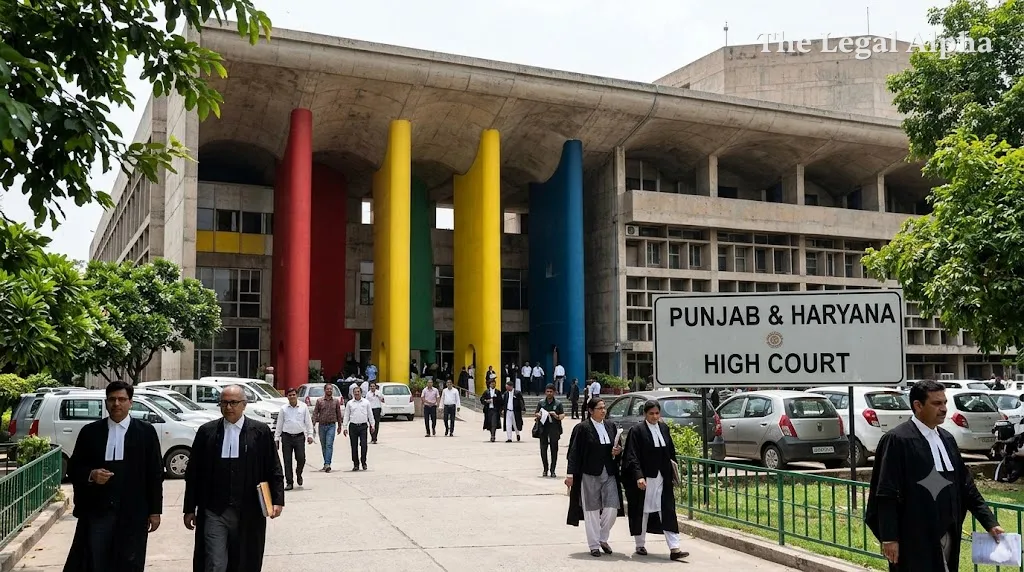
The Punjab and Haryana High Court ruled that regulatory and enforcement agencies ordering the takedown or blocking of a social media page must simultaneously serve a copy of the takedown communication to the affected account holder.
The decision came in a petition filed by digital news outlet Haryana 24 News Network Private Limited. The company approached the court after its Facebook page was abruptly taken down following an official direction, leaving it unable to publish news or ascertain why the action was taken. Setting aside the unilateral blocking, the High Court ordered Meta (Facebook) to restore the news outlet’s access and established that content creators cannot be kept in the dark when their online presence is suspended.
Legal Topic
-
Area of Law: Information Technology & Media Law
-
Sub-topic: Online Censorship / Intermediary Guidelines & Natural Justice
Core Legal Issue
The dispute centered on whether government bodies and law enforcement agencies have the authority to instruct social media intermediaries to take down or block an originator's page without providing prior or concurrent notice to the creator.
The core question was whether procedural fairness and the principles of natural justice must be read into digital takedown procedures under the Information Technology framework, ensuring that account holders know the grounds of an adverse order and possess the information required to mount a legal challenge.
What Did the Court Decide?
Justice Tribhuvan Dahiya held that providing a copy of the takedown communication to the affected user is an indispensable obligation grounded in natural justice.
The Court directed that whenever competent authorities issue directions to a platform to suspend or restrict an account or content, a copy of that notice must simultaneously be transmitted to the affected user. In the immediate case, finding that the petitioner was denied this procedural safeguard, the High Court directed Facebook to restore the news organization's blocked page.
Key Legal Points
-
Natural Justice Built into IT Rules: The requirement to notify the creator is an inherent duty derived from principles of natural justice and must be read into the enforcement of information technology regulations.
-
Right to Meaningful Remedy: An affected party cannot meaningfully defend their speech or access legal remedies under Article 226 if they are not provided the specific legal grounds and official notices underlying a ban.
-
Simultaneous Transmission Mandated: Transmitting takedown requisitions solely to the intermediary platform while excluding the primary content producer fails procedural fairness standards.
-
Platform Restoration: Where authorities bypass essential disclosure safeguards, the resultant blocking orders are vulnerable to invalidation, warranting direct orders to intermediaries to restore platform access.
Relevant Law
-
Information Technology Act, 2000: Provisions governing content moderation and blocking powers.
-
Information Technology (Intermediary Guidelines and Digital Media Ethics Code) Rules, 2021: Due diligence standards and notice requirements for intermediaries and digital publishers.
-
Constitution of India: Article 19(1)(a) (freedom of speech and expression), Article 19(1)(g) (right to practice a trade or profession), and Article 14 (procedural fairness and non-arbitrariness).
Arguments of the Parties
-
The Petitioner argued that the sudden blocking of its page amounted to arbitrary administrative action that violated its freedom of the press and right to carry on business. It contended that it was given no opportunity to be heard, nor was it ever provided a copy of the directive that prompted the intermediary to pull down the channel.
-
The State authorities contended that enforcement agencies are empowered to issue directives to intermediary platforms in the interest of law, order, and regulatory compliance, and that compliance mechanisms primarily govern relations between the statutory authority and the intermediary platform.
Why Does It Matter?
For years, social media users, independent journalists, and digital content creators have faced "silent" takedowns—instances where an account or page vanishes pursuant to confidential administrative notices, leaving the creator with no official paper trail to challenge before a court.
By ruling that takedown notices must be supplied directly to account holders, the High Court curbs administrative opacity in digital enforcement. The ruling introduces a vital check against summary de-platforming, ensuring that news publishers and ordinary citizens alike have the documentation required to assert their constitutional rights against state-mandated online removals.
Legal Takeaway
State agencies cannot execute online takedowns in complete secrecy. Any official direction ordering an intermediary to restrict or remove an online account must be served concurrently on the affected creator, safeguarding the fundamental right to know the case against them and seek judicial review.
Sources
-
Primary Source: Judgment of the High Court of Punjab and Haryana in Haryana 24 News Network Private Limited v. Union of India and Others (Bench of Justice Tribhuvan Dahiya).
-
Additional Sources: Information Technology (Intermediary Guidelines and Digital Media Ethics Code) Rules, 2021; Information Technology Act, 2000.