Delhi High Court Grants Regular Bail to Former RCOM Director Punit Garg in Enforcement Directorate Money Laundering Case
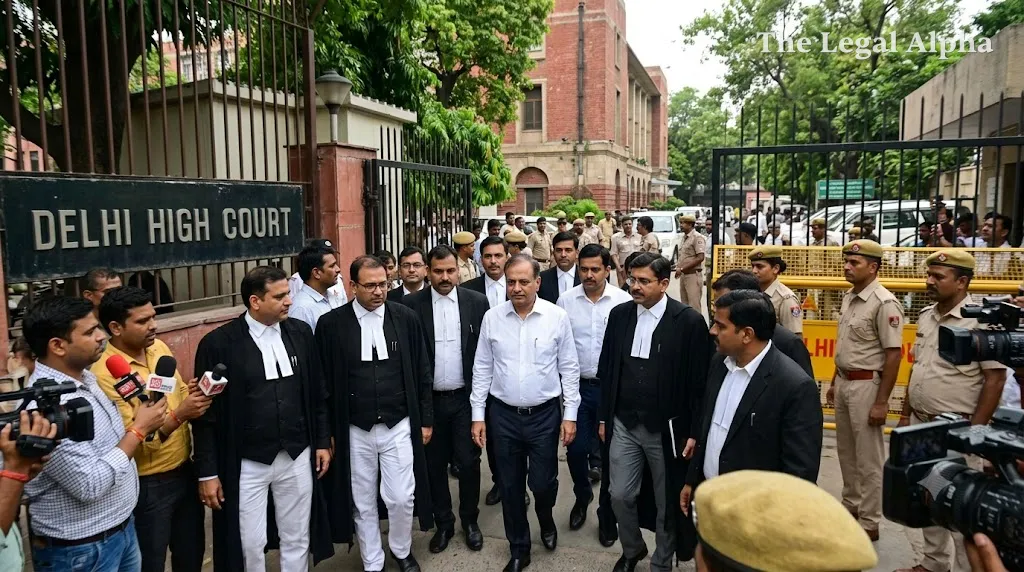
The Delhi High Court granted regular bail to Punit Narendra Garg, a former executive director of Reliance Communications Limited (RCOM), in connection with a money laundering investigation conducted by the Directorate of Enforcement (ED). The probe forms part of a wider investigation into alleged irregularities, bank fraud, and diversion of credit facilities involving RCOM and its affiliates. Garg was arrested by the ED on January 29, 2026, following allegations that portions of loan funds obtained by the telecom company were siphoned and used for personal assets and expenditures, including foreign properties, a yacht transaction, and overseas educational expenses.
After a special CBI/PMLA court at Rouse Avenue dismissed his regular bail plea in June 2026, Garg approached the High Court seeking relief. A single-judge bench presided over by Justice Sanjeev Narula allowed his bail application, observing that the investigation against him had culminated in a prosecution complaint, crucial electronic and documentary records were already secured, and pre-trial detention could not become punitive.
Legal Topic
Area of Law: Criminal Law / Prevention of Money Laundering
Sub-topic: Twin Conditions for Regular Bail / Corporate Officer Liability / Article 21 Rights
Core Legal Issue
The principal question before the court was whether the applicant met the stringent statutory threshold for bail under Section 45 of the Prevention of Money Laundering Act, 2002 (PMLA), particularly when read alongside the constitutional guarantee of personal liberty under Article 21 of the Constitution of India.
The court had to determine whether there were reasonable grounds to believe the accused was not guilty of the alleged money laundering offense at this preliminary stage, whether he posed any genuine risk of tampering with documentary evidence or fleeing justice, and whether continued pre-trial incarceration remained justified when primary records were already in custody and trial was unlikely to conclude swiftly.
What Did the Court Decide?
The High Court admitted Punit Narendra Garg to regular bail upon furnishing a personal bond of ₹1,00,000 with two sureties of the like amount.
The court held that while the allegations involved complex financial transactions—including overseas remittances, refinancing arrangements, and asset transfers—the primary evidence relied upon by the agency consists of banking channels, commercial records, email trails, and seized electronic devices. With the prosecution complaint already filed and the documentary material in the custody of the investigating agency, the risk of evidence tampering was found to be minimal.
To safeguard the trial process, the court imposed standard conditions:
-
The applicant must surrender his passport and refrain from leaving the country without prior permission from the trial court.
-
He must not contact witnesses, tamper with evidence, or induce any person acquainted with the case.
-
He must regularly attend trial proceedings unless specifically exempted.
Key Legal Points
-
Harmonising Section 45 with Article 21: The statutory restrictions on bail under Section 45 of the PMLA do not operate as an absolute barrier where prolonged incarceration threatens the constitutional right to a speedy trial and personal liberty.
-
Documentary Nature of Economic Offenses: When the core of an alleged money laundering scheme is based on audited transactions, bank statements, and seized electronic drives, the apprehension of witness tampering or destruction of records diminishes significantly once the complaint is filed.
-
Individual Attribution of Proceeds of Crime: In corporate debt defaults and refinancing structures, the court must carefully evaluate the specific proceeds of crime directly attributed to an individual director versus general company liabilities.
-
Pre-trial Detention is Not Punitive: Judicial custody during the pendency of trial cannot be converted into advance punishment, especially when proceedings involve extensive documentation and multiple witnesses.
Relevant Law
-
Section 45, Prevention of Money Laundering Act, 2002: Mandatory twin conditions governing bail for offenses under the Act.
-
Section 3 & Section 4, Prevention of Money Laundering Act, 2002: Definition and punishment for money laundering.
-
Section 439, Code of Criminal Procedure, 1973 (read with Bharatiya Nagarik Suraksha Sanhita, 2023 provisions): Special powers of the High Court regarding regular bail.
-
Article 21, Constitution of India: Protection of life and personal liberty, including the right to a speedy and fair trial.
Arguments of the Parties
Petitioner / Applicant
Senior counsel representing Punit Garg submitted that the applicant had cooperated with the agency and that the investigation with respect to his role stood concluded with the filing of the prosecution complaint. The defense argued that the transactions cited by the agency—including refinancing facilities with international banking consortia and related corporate operations—were legitimate business decisions executed in the ordinary course of RCOM’s affairs rather than deliberate diversion. It was further contended that the personal expenditures highlighted by the agency were explainable through legitimate income and contractual remuneration, that all relevant digital and banking records were already secured by investigators, and that continued incarceration served no investigative purpose.
Respondent / Directorate of Enforcement
The Directorate of Enforcement opposed the grant of regular bail, arguing that the applicant held a senior managerial and executive position at RCOM and actively participated in diverting funds derived from massive bank consortium loans. The agency argued that loan refinancing mechanisms and overseas entities were utilized to layer and route public money for unauthorized personal purposes, including personal acquisitions and expenses. The agency maintained that the statutory embargo under Section 45 of the PMLA applied in full force, as the applicant could not satisfy the court of prima facie innocence given the magnitude of the proceeds of crime under investigation.
Why Does It Matter?
This decision reflects the evolving judicial approach in economic offense cases involving large corporate defaults and multi-layered bank borrowings. While investigative agencies routinely invoke the overall quantum of defaulted corporate loans to emphasize the gravity of an offense, courts are increasingly examining the tangible, individual culpability and direct proceeds of crime attributable to specific officers.
Furthermore, the ruling reinforces the settled position that statutory bail restrictions in special statutes like the PMLA cannot entirely override constitutional safeguards under Article 21. For corporate executives facing scrutiny in legacy corporate debt probes, the order underscores that once primary documentary and digital evidence is securely in judicial or agency custody, pre-trial detention cannot be extended indefinitely under the assumption of unmitigated tampering risks.
Legal Takeaway
The statutory twin conditions under Section 45 of the PMLA cannot be used as an automatic ground to keep an accused incarcerated indefinitely when the investigation is complete, the case turns entirely on secured documentary evidence, and trial conclusion is distant. In large corporate money laundering prosecutions, personal liberty under Article 21 remains an overriding constitutional consideration against punitive pre-trial detention.
Sources
Primary Source:
-
Judgment / Order of the High Court of Delhi in Punit Narendra Garg v. Directorate of Enforcement, Bail Application No. 2495/2026 (Neutral Citation: 2026:DHC:9285).
Additional Sources:
-
Prosecution Complaint and Orders of the Special Court (PMLA / CBI), Rouse Avenue District Courts, New Delhi, in the matter of Reliance Communications Limited.
-
The Prevention of Money Laundering Act, 2002 (Act No. 15 of 2003).