Special MCOCA Bench Enforces Strict Procedural Decorum as High-Profile Organised Crime Trials Converge in Mumbai Sessions Court
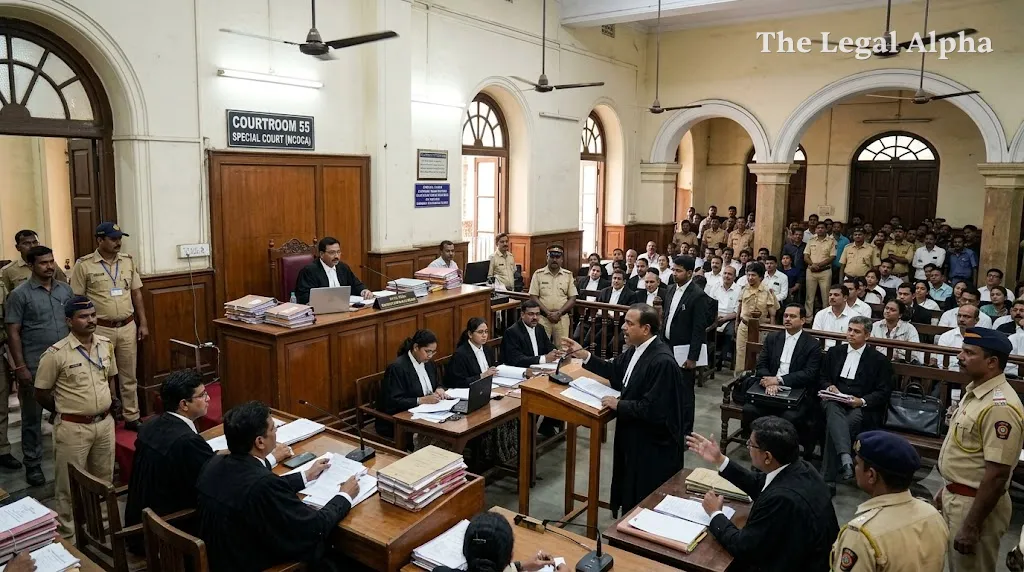
Mumbai’s City Civil and Sessions Court has witnessed heightened security and tight judicial oversight as a string of major organised crime trials converge before a single special bench. Presided over by Special Judge Satyanarayan Ramjivan Navandar in Courtroom 55, the special court designated under the Maharashtra Control of Organised Crime Act (MCOCA) has become the focal legal venue for ongoing proceedings linked to inter-state syndicate operations, extortion conspiracies targeting entertainment industry figures, and related high-profile violence—including the Galaxy Apartments firing incident and the Baba Siddique murder trial.
With prominent names, extensive witness lists, and public curiosity turning the courtroom into a high-stakes environment, Judge Navandar has clamped down on disruptions, enforcing strict courtroom decorum, procedural discipline, and stringent crowd and access controls to keep trials focused squarely on statutory rules and due process rather than public spectacle.
Legal Topic
Area of Law: Criminal Law / Organised Crime Jurisprudence
Sub-topic: Special Court Procedure, Witness Safety, and Trial Management under MCOCA
Core Legal Issue
The primary legal issue centres on the administration of justice and trial management within designated special courts dealing with syndicated crime: how can a special judge maintain fair, uninterrupted, and secure judicial proceedings when high-profile trials attract heavy media attention, crowded galleries, and heightened security risks without compromising the statutory guarantees of an open court trial and the defense's right to adequate representation?
A collateral legal question involves balancing open-court principles with the presiding judge's inherent statutory discretion under criminal procedure to regulate access, prevent witness intimidation, and maintain courtroom security during MCOCA prosecutions.
What Did the Court / Authority Decide?
Special Judge Navandar has instituted firm bench management protocols inside Courtroom 55:
-
Regulated gallery access, permitting only advocates on record, authorized law enforcement personnel, accused individuals, and accredited observers to minimize security hazards.
-
Strictly controlled the production of accused persons, relying on stringent security arrangements and videolink/in-person hybrid measures where necessary to avert security threats.
-
Maintained procedural efficiency by prioritizing scheduled witness testimonies and curbing delay tactics in ongoing charge-framing and trial stages.
-
Emphasized that high-profile publicity cannot compromise the solemnity of criminal trials, warning that procedural decorum must remain standard across all MCOCA matters regardless of celebrity links.
Key Legal Points
-
Presiding Judge’s Inherent Regulatory Powers: Under procedural law, a presiding judge retains absolute authority to control courtroom entry and maintain order to ensure a fair and safe trial environment.
-
Open Court vs. Regulated Access: While judicial proceedings are presumptively public under statutory criminal law, the special court can restrict general access whenever safety, decorum, or the integrity of sensitive witness testimony demands it.
-
Stringency of Special Statutes: MCOCA carries onerous bail bars, distinct evidentiary rules—such as the admissibility of confessions made to senior police officers—and elevated security mandates that require tighter court oversight than regular magistrate or sessions trials.
-
Separation of Evidence and Public Attention: Judicial evaluation of syndicated crime relies strictly on continuous unlawful activity, documented charge-sheets, and verified pecuniary links, insulating judicial reasoning from external public interest.
Relevant Law
-
Maharashtra Control of Organised Crime Act, 1999 (MCOCA):
-
Section 3 (Punishment for organised crime and syndicate activities)
-
Section 5 (Designation and jurisdiction of Special Courts)
-
Section 6 (Jurisdiction over MCOCA offences)
-
Section 16 (Protection of witnesses and in-camera proceedings)
-
-
Code of Criminal Procedure, 1973 / Bharatiya Nagarik Suraksha Sanhita, 2023 (BNSS):
-
Provisions concerning the open-court doctrine and the presiding judge's discretion to restrict general public access during sensitive proceedings.
-
Arguments of the Parties
-
Prosecution / State (Mumbai Police Crime Branch):
The State contends that the accused operate as part of organized crime syndicates carrying out targeted attacks, extortion, and intimidation. Given the threats posed to witnesses, complainants, and public order, the prosecution urged rigorous security measures, expedited custody proceedings, and regulated access inside the court to preserve witness protection and avoid interference with justice.
-
Defence / Accused:
Counsel representing the accused maintain that tight courtroom restrictions must not infringe upon the accused’s right to a fair, transparent trial. They argue that unrestricted consultation with legal counsel, prompt supply of prosecution documents, and compliance with mandatory procedural safeguards are non-negotiable rights that must not be diluted by security concerns or heightened public attention.
Why Does It Matter?
When syndicated crime networks cross paths with popular culture and high-profile figures, judicial proceedings risk turning into public spectacles. The strict procedural control exercised in Courtroom 55 highlights the systemic challenges faced by special anti-gangland benches across India.
This judicial approach sets a precedent for handling sensationalised gangland trials: it shows that special courts can handle high-risk accused, public galleries, and intense media scrutiny without letting trial dignity slip. For the legal system, it reaffirms that regardless of the parties' celebrity status, special statutory trials must proceed methodically on documentary and oral evidence rather than sensationalism.
Legal Takeaway
Special courts under anti-syndicate laws possess full authority to enforce strict courtroom management and security protocols to preserve trial integrity. Even amidst widespread public and media focus, the legal process remains strictly anchored in procedural discipline, witness safety, and substantive evidence.
Sources
-
Primary Source: Mumbai City Civil and Sessions Court, Cause Lists and Proceedings of Special Judge Satyanarayan Ramjivan Navandar (Courtroom 55, Greater Mumbai).
-
Additional Sources: Court proceedings records and reporting from The Times of India covering Mumbai Sessions Court MCOCA trials (October 2026).