Nobel Peace Prize 2026 Conferred on Jurist Navi Pillay for Championing International Rule of Law and Accountability
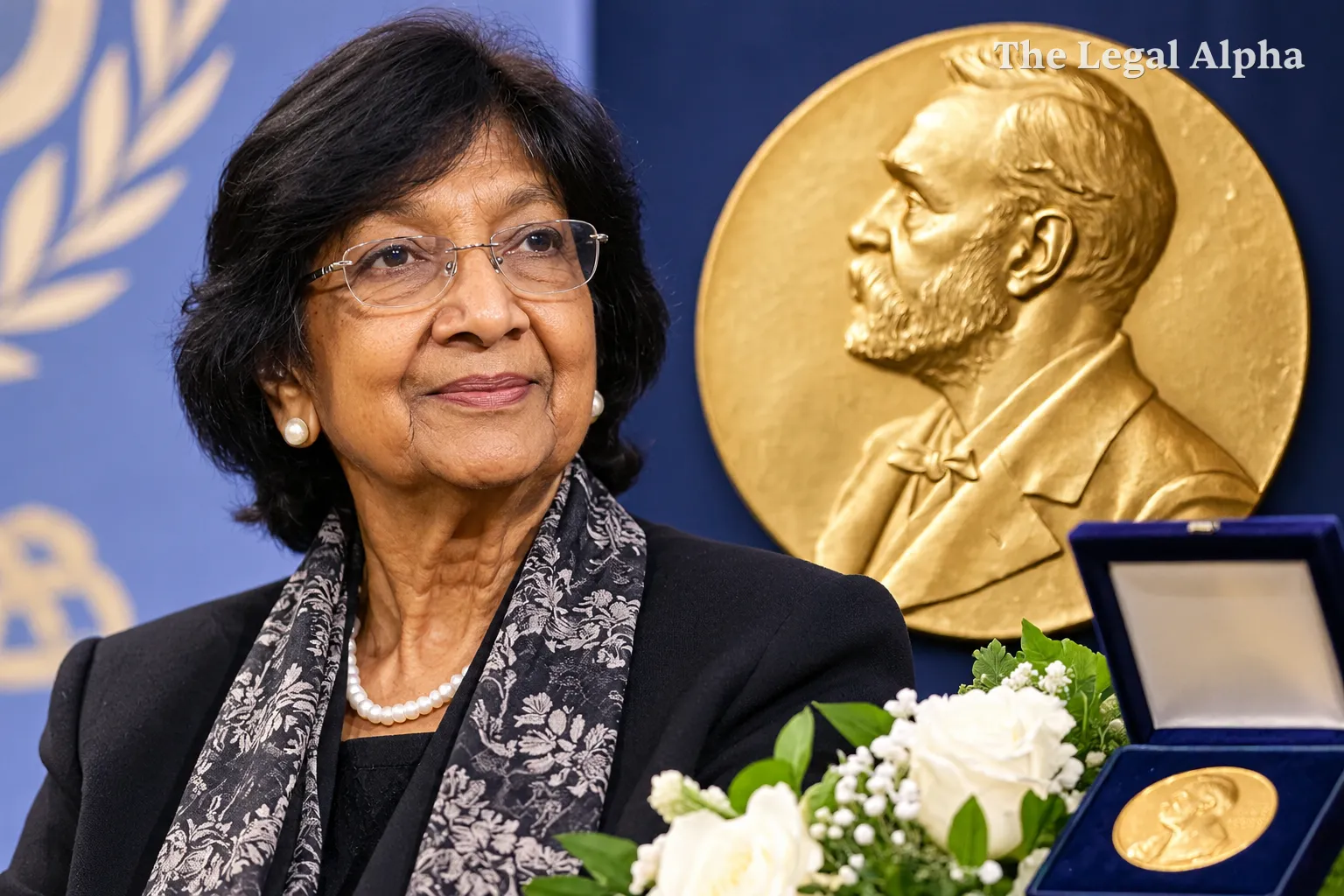
The Norwegian Nobel Committee awarded the 2026 Nobel Peace Prize to veteran South African jurist and former United Nations High Commissioner for Human Rights Navanethem "Navi" Pillay. The award recognises her decades-long contribution to advancing international criminal justice, codifying jurisprudence against atrocity crimes, and upholding the global rule of law amid geopolitical challenges.
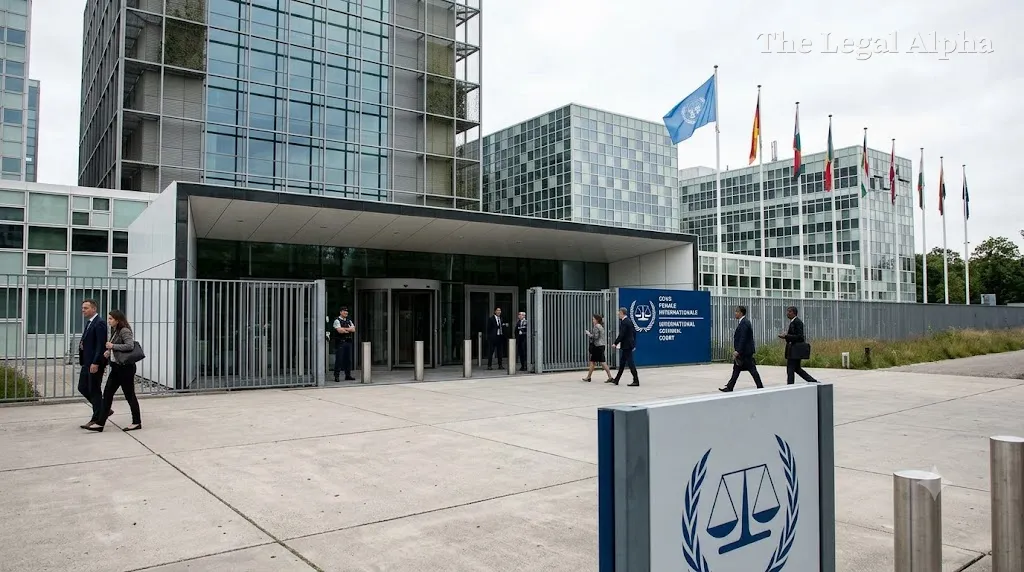
Pillay, who broke racial and gender barriers during apartheid in South Africa before serving on top international benches—including the International Criminal Tribunal for Rwanda (ICTR) and the International Criminal Court (ICC)—was honoured at a moment of acute scrutiny for international accountability mechanisms.
Legal Topic
Area of Law: Public International Law
Sub-topic: International Humanitarian Law / International Criminal Law & Human Rights
Core Legal Issue
The underlying legal principle at stake concerns the enforcement and institutional integrity of the rules-based international order, specifically whether international accountability mechanisms, war crimes adjudication, and universal human rights standards can withstand political pressure from sovereign nation-states.
The Nobel Committee directly framed the award around the doctrine that sustainable peace cannot be decoupled from legal justice and universal accountability, re-affirming international legal norms over pure realpolitik.
What Did the Authority Decide?
The Norwegian Nobel Committee formally resolved to bestow the 2026 Peace Prize on Pillay for her sustained efforts to establish enforceable legal norms against war crimes, crimes against humanity, and genocide.
The Committee underscored her foundational role in developing international criminal jurisprudence, particularly her tenure as an international judge presiding over seminal war crimes tribunals and her stewardship of independent UN investigative bodies tasked with fact-finding in active armed conflicts.
Key Legal Points
-
Jurisprudential Precedent on War Crimes: Pillay contributed significantly to the landmark Jean-Paul Akayesu ruling at the ICTR, which judicially established that systematic sexual violence and rape can constitute acts of genocide under international criminal law.
-
Institutional Primacy of the Rule of Law: The citation affirms that global peace frameworks rest on international treaties, multilateral conventions, and judicial institutions rather than discretionary bilateral arrangements.
-
Independent Fact-Finding Mandates: The award highlights the role of international commissions of inquiry established under UN auspices in documenting treaty violations, establishing evidence chains, and recommending legal accountability before permanent tribunals.
Relevant Law
-
Convention on the Prevention and Punishment of the Crime of Genocide (1948): Governing the prohibition and prosecution of acts intended to destroy protected groups in whole or in part.
-
Rome Statute of the International Criminal Court: Establishing individual criminal responsibility for genocide, crimes against humanity, and war crimes.
-
Statute of the International Criminal Tribunal for Rwanda (ICTR): Governing ad hoc international adjudication of mass atrocities and defining the scope of international criminal jurisdiction.
-
Charter of the United Nations: Providing the mandate for the protection of international human rights and the maintenance of international peace and security.
Arguments of the Parties
Supporters and the United Nations:
UN Secretary-General António Guterres and current UN High Commissioner for Human Rights Volker Türk welcomed the decision, arguing that international law requires steadfast independence and that human rights enforcement forms the baseline requirement for enduring security rather than a hindrance to diplomacy.
State Opponents and Critics:
Conversely, state governments subject to inquiries led by Pillay—most notably Israel regarding findings issued by the UN Independent International Commission of Inquiry on the Occupied Palestinian Territory—have previously disputed the jurisdictional neutrality and substantive impartiality of such commissions, contending that international fact-finding panels exceed procedural mandates and exhibit systemic bias.
Why Does It Matter?
The decision serves as an institutional endorsement of international legal infrastructure at a juncture when multilateral courts and UN human rights bodies face non-cooperation and political attacks.
By elevating a career jurist known for strict statutory interpretation and independent investigation over diplomatic political actors, the award reinforces the standard that violations of international humanitarian law must carry procedural and penal accountability regardless of state power. It validates the work of international tribunals, human rights defenders, and legal evidentiary standards as indispensable pillars of international peace.
Legal Takeaway
Sustainable peace requires the consistent enforcement of international humanitarian and criminal law rather than deference to power politics. The award underscores that global accountability mechanisms—grounded in independent fact-finding, judicial precedent, and treaty law—remain non-negotiable foundations for international order.
Sources
Primary Source:
Official Citation and Announcement, The Norwegian Nobel Committee (October 2026).
Additional Sources:
-
United Nations News Centre, Official Briefing on the 2026 Nobel Peace Prize.
-
Office of the United Nations High Commissioner for Human Rights (OHCHR) Statement.