Chief Justice of India Steps In After Delhi Police Detain Advocates During Protest March Near Supreme Court
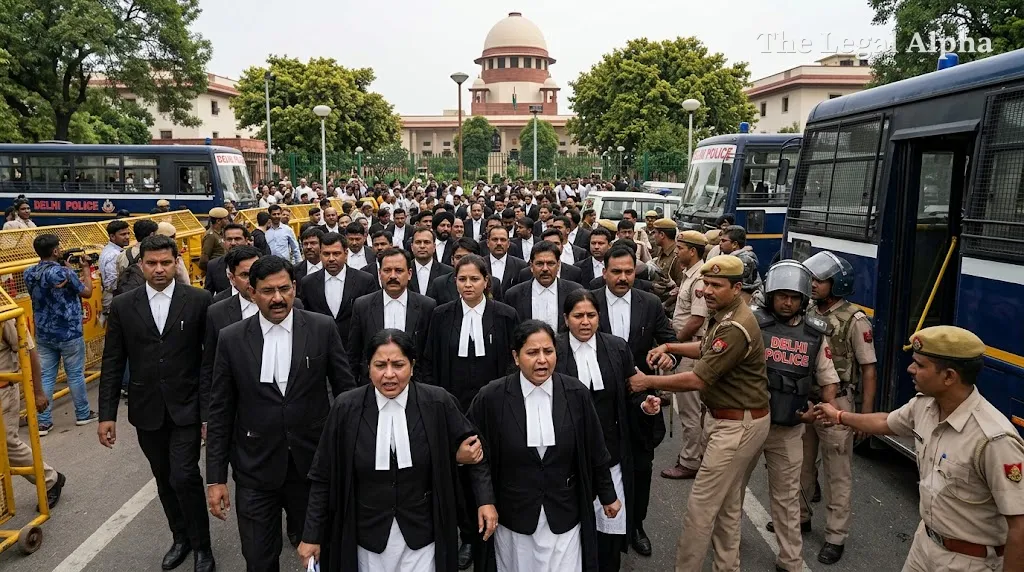
The Chief Justice of India, Surya Kant, intervened with law enforcement authorities to secure the release of several advocates detained by the Delhi Police during a protest march.
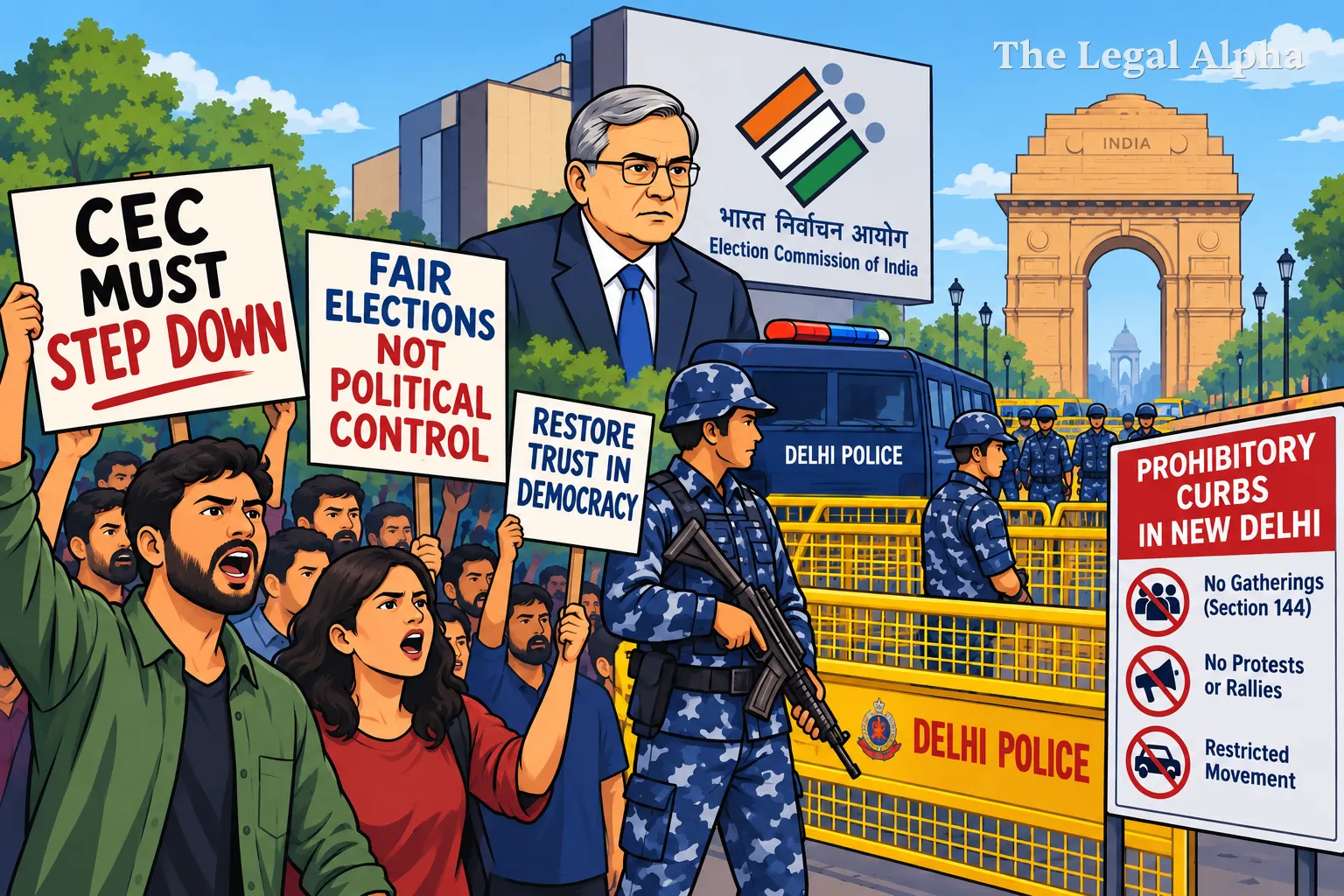
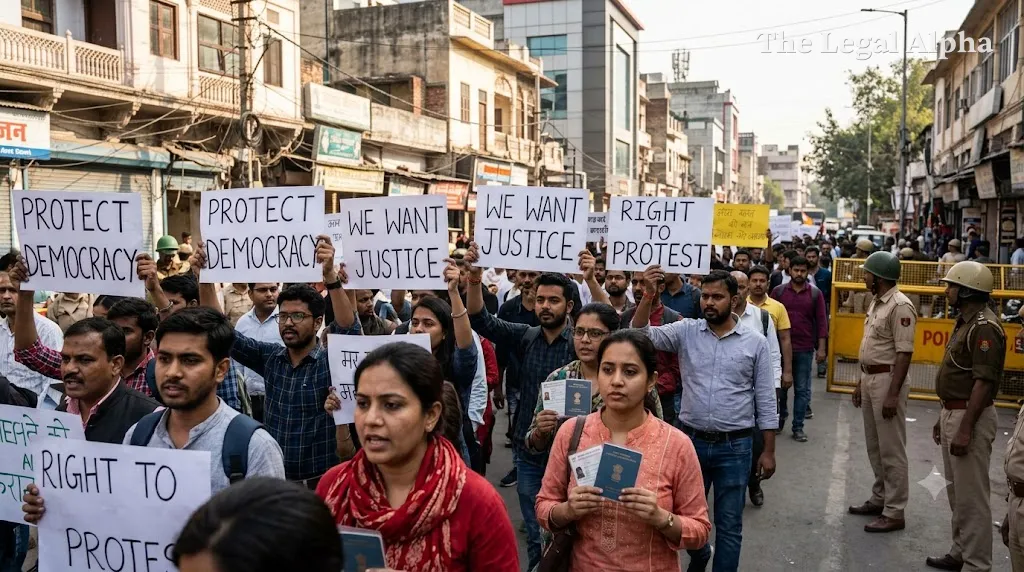
The incident took place outside the Supreme Court, where lawyers had gathered to march in protest against Chief Election Commissioner Gyanesh Kumar and the Special Intensive Revision (SIR) process. Police intercepted the demonstrating advocates—including women practitioners—and transported them in custody to the Yamuna Sports Complex.
The intervention came after urgent representations were made by premier bar bodies. The Supreme Court Bar Association (SCBA) passed an urgent resolution highlighting the police action and alleged excessive use of force. Concurrently, the President of the Supreme Court Advocates-on-Record Association (SCAORA), Advocate Devvrat, placed the situation before the Chief Justice. Following communications between the Chief Justice, central law officers including Solicitor General of India Tushar Mehta, and administrative authorities, steps were initiated to release the detained legal practitioners.
Legal Topic
Area of Law: Constitutional & Criminal Procedure Law
Sub-topic: Preventive Detention, Right to Peaceful Assembly, and Bar Protection
Core Legal Issue
The controversy centres on the boundaries of preventive detention powers exercised by police against peaceful demonstrators, particularly officers of the court exercising their constitutional rights.
The primary legal question concerns whether the state can invoke preventive or public-order detention under police regulations against members of the bar carrying out an unprovoked, peaceful demonstration, and the extent to which excessive administrative force infringes upon fundamental freedoms guaranteed under Part III of the Constitution.
What Did the Court / Authority Decide?
While this was an administrative intervention rather than a formal judicial order passed on the bench, Chief Justice Surya Kant communicated directly with the competent authorities calling for the immediate release of the detained lawyers.
Solicitor General Tushar Mehta also stepped in to coordinate with law enforcement and facilitate their discharge from detention. No formal writ petition or judicial adjudication took place on the merits of the protest restrictions during this exchange.
Key Legal Points
-
Protection of Civil Liberties: The right of citizens, including legal professionals, to register peaceful dissent is shielded under Article 19, provided public order is not breached.
-
Administrative Redress by Bar Leadership: The leadership of institutional bar bodies (SCBA and SCAORA) serves as a critical bridge between legal practitioners and judicial leadership in redressing high-handed executive action.
-
Proportionality in Preventive Restraint: Police power to execute preventive detentions cannot be exercised with disproportionate force, particularly against peaceful assemblies and women practitioners.
-
Institutional Coordination: The rapid intervention involving the head of the judiciary and the Solicitor General highlights executive accountability toward the legal fraternity in national capital security situations.
Relevant Law
-
Article 19(1)(a) and 19(1)(b) of the Constitution of India: Freedom of speech and expression, and the right to assemble peaceably and without arms.
-
Article 21 of the Constitution of India: Protection of personal liberty against arbitrary state detention.
-
Section 65 / Section 66 of the Delhi Police Act, 1978: Police duties and powers regarding regulatory detentions and keeping order in public streets.
-
Section 170 of the Bharatiya Nagarik Suraksha Sanhita (BNSS), 2023 (formerly Section 151 CrPC): Preventive arrest powers of police to prevent cognizable offences.
Arguments of the Parties
Supreme Court Bar Bodies & Detained Advocates
The SCBA and SCAORA contended that the advocates were exercising their democratic rights through a peaceful demonstration. They strongly objected to the detention, arguing that the police deployed excessive and unwarranted force against lawyers, with specific concern raised regarding the treatment of women advocates taken to makeshift detention facilities.
Law Enforcement / Authorities
Administrative authorities maintained that the curbs, barricading, and subsequent detentions were precautionary measures implemented to maintain public order and traffic flow across the national capital amid widespread demonstration calls.
Why Does It Matter?
The prompt intervention by the head of India’s judiciary underscores the sensitive threshold between maintaining municipal public order and suppressing democratic assembly. For the legal fraternity, it sets an institutional precedent showing that bar leadership can swiftly trigger administrative safeguards against disproportionate police action.
Beyond the immediate relief for the detained lawyers, the episode highlights increasing tensions between regulatory protest curbs and citizens’ fundamental freedoms in highly secured civic zones around constitutional institutions.
Legal Takeaway
Preventive detentions during peaceful public demonstrations remain subject to constitutional scrutiny and proportionality tests. When administrative authorities use excessive force against peaceful assemblies, institutional intervention by the judiciary reinforces the constitutional protection of personal liberty and democratic dissent.
Sources
Primary Source:
-
Resolutions and formal communications submitted by the Supreme Court Bar Association (SCBA) and the Supreme Court Advocates-on-Record Association (SCAORA) to the Chief Justice of India.
Additional Sources:
-
Official communications and statements from the Office of the Chief Justice of India and the Solicitor General of India.
-
Ground reports on preventive custody measures executed by the Delhi Police.