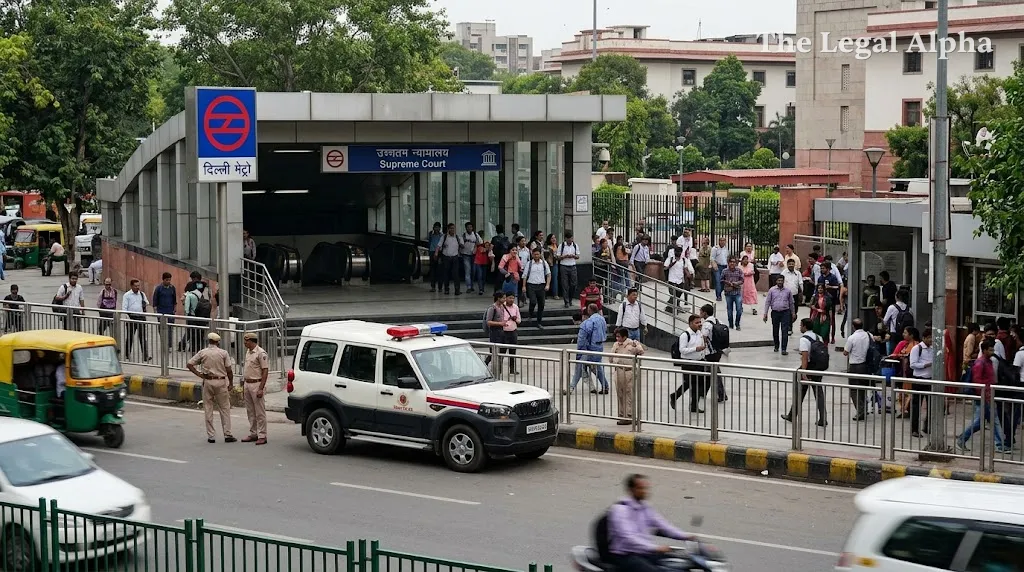
Jantar Mantar Trespass Dispute: Special Executive Magistrate Sends CJP Leaders to Five Days Judicial Custody Amid Protest Site Re-Zoning Row
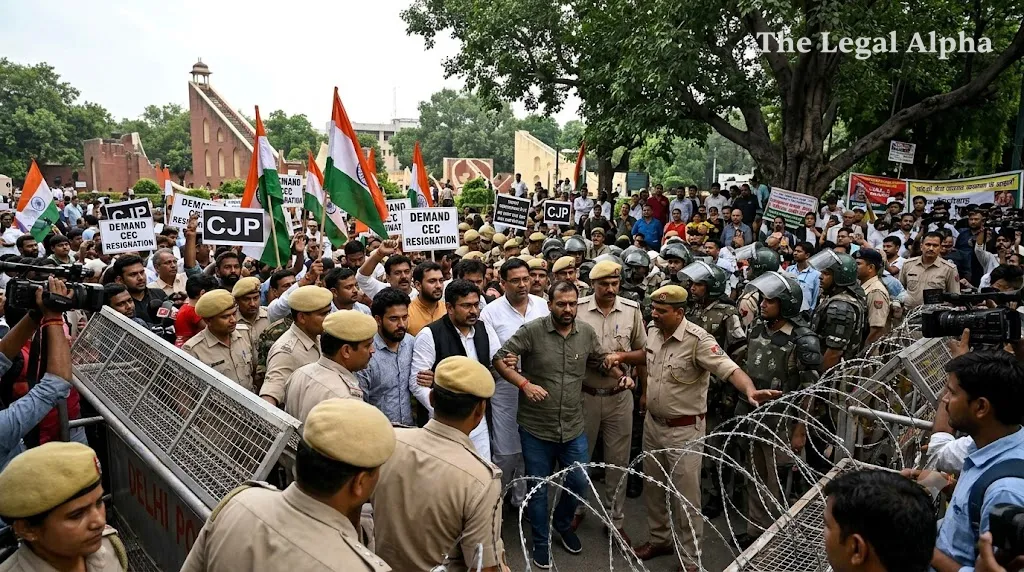
A Delhi Special Executive Magistrate remanded Cockroach Janta Party (CJP) co-convenors Saurav Das and Ashutosh Ranka to five days of judicial custody following their arrest by the Delhi Police. A third leader, Ajinkya Shinde, was released after furnishing a personal bond.
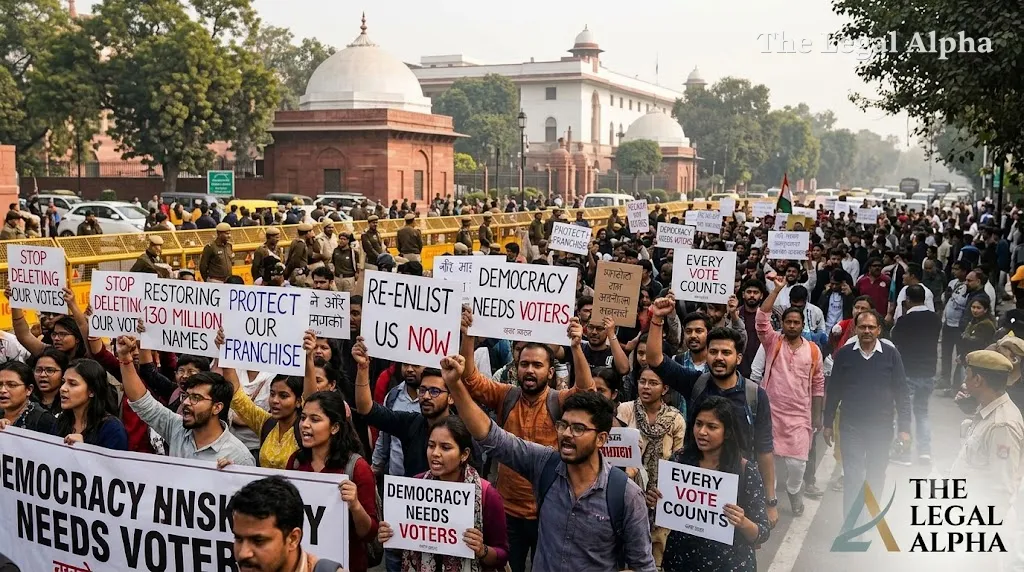
The action stems from an FIR registered against the activists for allegedly defying prohibitory restrictions and entering the Jantar Mantar complex without administrative clearance. The incident occurred against the backdrop of widening political demonstrations demanding the resignation of Chief Election Commissioner Gyanesh Kumar over the Special Intensive Revision (SIR) of voter lists, and comes immediately after law enforcement authorities formally denotified Jantar Mantar as an authorized venue for public assemblies.
Legal Topic
Area of Law: Criminal Procedure & Constitutional Law
Sub-topic: Preventive Custody / Public Order & Right to Peaceful Assembly
Core Legal Issue
The controversy centres on the statutory scope of preventive detention powers under criminal procedural law when applied to political demonstrators entering a historically recognized public assembly ground.
The primary legal question is whether criminal trespass and preventive penal custody can be validly invoked against peaceful protesters on the basis of administrative re-zoning orders that de-designate traditional protest hubs, without demonstrating an imminent threat of violent breach of peace.
What Did the Court / Authority Decide?
The Special Executive Magistrate (SEM) considered the police application and ordered that Saurav Das and Ashutosh Ranka be placed in judicial remand for five days, directing their lodgment at Tihar Jail. In contrast, the SEM granted relief to co-accused Ajinkya Shinde, ordering his discharge upon executing a personal appearance/surety bond.
This order follows an earlier weekend detention where the activists were temporarily released after executing statutory peace-keeping bonds. While the magistrate has authorized short-term judicial remand, the substantive charges regarding unlawful assembly, criminal trespass, and the broader legal challenge against protest curbs across New Delhi remain pending before higher courts.
Key Legal Points
-
Preventive Remand by Executive Magistrates: The order highlights the statutory interplay between executive magistrates' preventive jurisdiction and formal judicial custody under standard penal offenses like criminal trespass.
-
Impact of Administrative Re-Zoning: The police de-notification of Jantar Mantar alters the legal character of entry, converting what was historically treated as protected public dissent into unauthorized entry under prohibitory standing orders.
-
Bond Conditions and Revocation: Prior conditional release under good-behaviour bonds places heavy procedural leverage on police authorities to seek custodial remand if subsequent breaches of administrative orders occur.
-
Constitutional Tension with Article 19: Restricting assembly to distant alternative grounds—particularly when available dates are constrained—raises urgent questions regarding reasonable restrictions under Article 19(2) and 19(3) of the Constitution of India.
Relevant Law
-
Section 329 of the Bharatiya Nyaya Sanhita, 2023 (or Section 441/447 of the IPC): Criminal Trespass into public property under administrative prohibition.
-
Sections 126 and 127 of the Bharatiya Nagarik Suraksha Sanhita, 2023 (formerly Sections 107 and 116 of the Code of Criminal Procedure, 1973): Preventive powers of Executive Magistrates to require security for keeping the peace.
-
Section 144 of the CrPC / Section 163 of the BNSS: Prohibitory orders banning assembly in designated zones.
-
Constitution of India:
-
Article 19(1)(a) and 19(1)(b) (Freedom of speech, expression, and peaceful assembly without arms).
-
Article 19(2) and 19(3) (Reasonable restrictions in the interests of public order).
-
Article 21 (Protection of life and personal liberty against arbitrary executive detention).
-
-
Judicial Precedent: Anita Thakur v. Govt. of J&K (2016) and Mazdoor Kisan Shakti Sangathan v. Union of India (2018), regulating the balance between maintaining public order and preserving the right to demonstrate at central venues like Jantar Mantar.
Arguments of the Parties
Delhi Police / State
The prosecution contended that the accused deliberately bypassed police barricades and entered the Jantar Mantar premises in direct violation of effective prohibitory orders. Authorities submitted that Jantar Mantar is no longer an authorized site for public demonstrations following the Police Commissioner's official standing order shifting designated protest areas to alternate venues. The state maintained that the individuals had previously executed statutory bonds to maintain public order and that their repeated defiance warranted custodial detention to prevent breaches of law and order.
The Accused / CJP Legal Defence
Counsel for the detained activists argued that the detention was punitive and an abuse of executive magistrate powers aimed at suppressing non-violent political expression. The defence submitted that the members entered peacefully merely carrying the national flag and raising slogans, without causing damage or committing violence. Furthermore, they asserted that shifting designated demonstration hubs outside the administrative core of the capital infringes upon fundamental freedoms, and that administrative venue de-notification cannot be weaponized to treat citizens exercising their right to dissent as criminal trespassers.
Why Does It Matter?
This development underscores a tightening regulatory model over public spaces in the national capital. Moving public assembly zones away from government districts to peripheral or restricted-access grounds—especially where operational bottlenecks and high fees limit availability—fundamentally impacts how civic dissent is registered.
From an administrative law standpoint, executing trespass charges and preventive remands against non-violent assemblies sets a notable enforcement precedent. It provides law enforcement with direct criminal mechanisms to curtail demonstrations before substantive constitutional challenges against such zoning notifications can be fully adjudicated by constitutional courts.
Legal Takeaway
Preventive remand orders issued by Executive Magistrates highlight how spatial regulation can quickly transform peaceful assembly into an actionable penal offense like criminal trespass. When public demonstration venues are denotified by administrative fiat, defying geographic boundaries exposes protesters to custodial detention irrespective of the non-violent character of their agitation.
Sources
Primary Source:
-
Remand and Bond Proceedings before the Court of the Special Executive Magistrate, New Delhi District (Police Station Parliament Street / Jaffarpur Kalan jurisdiction).
-
Delhi Police Standing Order on Re-designation of Protest Sites in the National Capital Territory (issued by Commissioner of Police, Delhi).
Additional Sources:
-
Live news coverage and factual tracking from The Hindu and legal reporting services (LiveLaw, The Observer Post) on Delhi Police anti-CEC protest detentions and court proceedings.