Clark County Court Sentences Duane Davis to 40 Years to Life in 1996 Tupac Shakur Drive-By Homicide
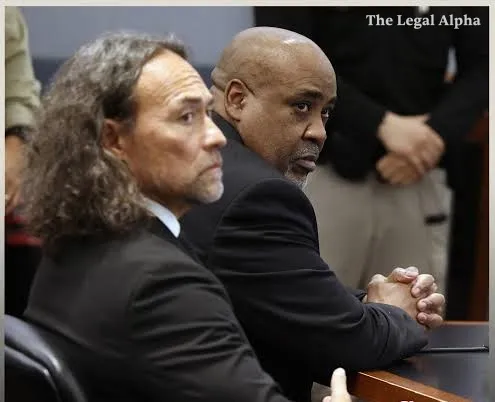
The Eighth Judicial District Court in Clark County, Nevada, handed down a sentence of 40 years to life imprisonment against Duane "Keffe D" Davis for his role in the 1996 drive-by shooting that killed hip-hop artist Tupac Shakur.
Davis, 63, was convicted by a Clark County jury of first-degree murder with the use of a deadly weapon in furtherance of a criminal gang. Although Davis did not discharge the firearm that struck Shakur on September 7, 1996, near the Las Vegas Strip, state prosecutors established criminal liability under Nevada's accomplice and conspiracy statutes, proving Davis procured the weapon and directed the vehicle carrying the shooter. District Court Judge Carli Kierny imposed the sentence following Davis's conviction, granting him 731 days of credit for time already served in custody.
Legal Topic
-
Area of Law: Criminal Law & Procedure
-
Sub-topic: Accomplice Liability / First-Degree Murder / Sentence Enhancements
Core Legal Issue
The primary legal issue concerned the application of principal liability to an accomplice who neither fired the fatal shots nor was the physical triggerman, but who allegedly orchestrated, armed, and facilitated a drive-by homicide. Under criminal law, the court addressed whether an organizer who secures the instrument of death and directs co-conspirators bears identical culpability and penal exposure to the actual shooter.
A secondary evidentiary question arose regarding whether voluntary, extrajudicial admissions—made in public interviews, commercial documentary broadcasts, and a published memoir decades after the offense—could be introduced by the State as party admissions to establish premeditation, conspiracy, and gang enhancement without violating due process or pre-trial proffer protections.
What Did the Court Decide?
Judge Carli Kierny sentenced Davis to an aggregate term of 40 years to life in Nevada state prison.
-
Confinement Term: The sentence incorporates consecutive terms reflecting the primary offense of first-degree murder and statutory enhancements applied for the use of a deadly weapon in association with a criminal gang.
-
Pre-Trial Custody Credit: The court formally credited Davis with 731 days previously served in county detention awaiting trial and final sentencing.
-
Subsequent Proceedings: Davis waived jury involvement for the penalty phase, allowing the bench to impose the term directly. Following the sentencing hearing, defense counsel confirmed plans to lodge an appeal challenging the conviction, evidentiary admissions, and pre-indictment delay.
Key Legal Points
-
Equal Liability for Aiders and Abettors: Nevada law does not distinguish between a principal perpetrator who pulls the trigger and an accomplice who aids, abets, counsels, or procures the commission of a felony; both face identical statutory charges and penalties.
-
Party Admissions in Criminal Proceedings: Unsworn public disclosures, memoirs, and recorded media interviews are non-hearsay party admissions admissible against a criminal defendant, provided they were made voluntarily outside of custodial interrogation constraints.
-
Application of Statutory Enhancements: The presence of a deadly weapon and gang affiliation operate as statutory sentence multipliers, compounding the base sentence for first-degree murder into mandatory consecutive time.
-
Pre-Indictment Delay and Due Process: The absence of a statute of limitations for murder permits prosecution decades after the event, requiring the defense to prove actual substantial prejudice and improper state intent to sustain a due process dismissal claim.
Relevant Law
-
Nevada Revised Statutes (NRS) 195.020 (Principals): Mandates that any person aiding, abetting, or counseling the commission of a felony is prosecuted and punished as a principal.
-
Nevada Revised Statutes (NRS) 200.010 & 200.030 (Murder Defined and Degrees): Defines murder as the unlawful killing of a human being with malice aforethought, establishing first-degree murder standards and available penalty ranges.
-
Nevada Revised Statutes (NRS) 193.165 (Use of Deadly Weapon): Imposes an additional consecutive prison term when a felony is committed using a firearm or deadly weapon.
-
Nevada Revised Statutes (NRS) 193.168 (Gang Enhancement): Authorizes additional penalties where a felony is committed with the intent to promote, further, or assist a criminal gang.
Arguments of the Parties
The State of Nevada The prosecution contended that Davis served as the on-site organizer and mastermind of the fatal retaliatory assault. Deputy District Attorneys submitted that Davis obtained the firearm, coordinated the pursuit of the victim's vehicle following an altercation at a hotel-casino, handed the weapon to the rear-seat occupant, and facilitated the gang-motivated retaliation. The State argued that Davis's extensive public bragging, media admissions, and commercial writings eliminated reasonable doubt concerning his intent, knowledge, and active participation.
The Defense The defense argued that the State's case relied on unsubstantiated street gossip and uncorroborated storytelling designed to generate commercial publicity and income from entertainment media. Counsel contended that no physical evidence, forensic markers, or contemporaneous eyewitness accounts directly tied Davis to the procurement of the weapon or the shooting itself. The defense further argued that the nearly three-decade delay between the incident and indictment severely prejudiced Davis’s ability to present a defense, as key witnesses and alternative co-suspects had since died.
Why Does It Matter?
This sentence underscores the long reach of principal and accomplice liability in violent crime prosecutions. It confirms that the absence of physical triggerman acts does not insulate an organizer or supplier of lethal means from maximum criminal exposure, even across a multi-decade span.
The proceedings offer a cautionary precedent regarding self-incrimination in commercial media. Public claims made in memoirs, podcasts, and video interviews can be extracted by prosecutors as admissible party admissions, effectively turning commercial publicity into evidentiary anchors in cold-case prosecutions. The ruling also confirms that the passage of 30 years does not extinguish prosecutorial authority in capital or non-statute-barred offenses, provided the State can assemble sufficient evidence from admissions and circumstantial corroboration.
Legal Takeaway
Under criminal accomplice doctrines, orchestrating a violent crime and supplying the weapon carries the exact same legal liability as pulling the trigger. Voluntary public disclosures and published memoirs remain admissible evidence of guilt, demonstrating that commercial storytelling outside the courtroom can dismantle a defendant’s legal protection decades after the crime occurred.
Sources
Primary Source:
-
State of Nevada v. Duane Keith Davis, Case No. C-23-376916-1, Eighth Judicial District Court of Clark County, Nevada (Sentencing Order delivered by District Judge Carli Kierny, October 13, 2026).
Additional Sources:
-
Office of the Clark County District Attorney, Case Records and Sentencing Statements.
-
Nevada Revised Statutes, Chapter 195 (Parties to Crimes) and Chapter 200 (Crimes Against the Person).