Antitrust Scrutiny Mounts Against American Bar Association Over Law School Faculty Restrictions
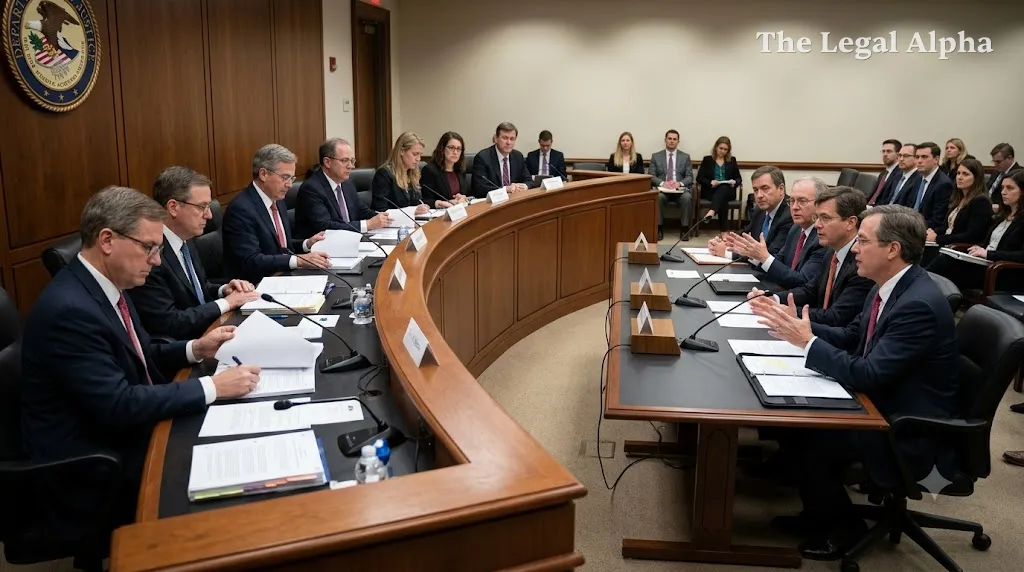
The United States Department of Justice has cautioned the American Bar Association (ABA) that its accreditation standards could prompt a federal antitrust investigation if the organization maintains rules restricting the employment and teaching scope of adjunct and part-time faculty at accredited law schools. The inquiry focuses on whether the association's faculty staffing mandates improperly inflate operational costs and restrain trade within legal education, reigniting federal scrutiny over the ABA's longstanding monopoly-like authority over law school accreditation.
Legal Topic
Area of Law: Antitrust & Competition Law
Sub-topic: Trade Association Regulation / Professional Accreditation Standards
Core Legal Issue
The controversy centers on whether professional accreditation standards governing law faculty ratios and hiring models violate federal antitrust laws. Specifically, the inquiry turns on whether mandating minimum quotas of full-time, tenure-track faculty—while sharply capping or restricting the instructional load of part-time adjuncts and practitioners—constitutes an unlawful restraint of trade under Section 1 of the Sherman Act by artificially inflating tuition costs, limiting labor competition, and restricting how law schools allocate instructional resources.
What Did the Court / Authority Decide?
The Department of Justice has not filed a formal civil enforcement lawsuit, but has delivered an administrative warning that places the ABA on notice of potential federal investigation.
The DOJ is demanding that the ABA review and modify accreditation mandates that constrain law schools from utilizing lower-cost, part-time practicing attorneys to teach core courses. The ABA’s Section of Legal Education and Admissions to the Bar faces growing federal pressure on multiple fronts, as the DOJ’s antitrust warning runs parallel to administrative challenges from the Department of Education concerning accreditation compliance and university governance.
Key Legal Points
-
Restraint of Trade Concerns: The DOJ's challenge targets accreditation benchmarks that require law schools to depend predominantly on costly full-time, tenured faculty, treating such rules as potential horizontal agreements that suppress lower-cost operational alternatives.
-
Historical Precedent and Consent Decrees: The action echoes the landmark 1995 civil antitrust case, United States v. American Bar Association, in which the federal government prohibited the ABA from setting faculty compensation benchmarks and enforcing anti-competitive accreditation criteria.
-
Economic Impact on Legal Education: Regulators are examining whether limiting adjunct participation artificially drives up tuition rates and saddles prospective lawyers with excessive educational debt.
-
Accreditation as a Commercial Gatekeeper: Because ABA accreditation remains a condition for federal student aid access and state bar examination eligibility in most jurisdictions, mandatory accreditation guidelines carry commercial effects directly subject to the Sherman Act.
Relevant Law
-
Sherman Antitrust Act of 1890, 15 U.S.C. § 1: Prohibits every contract, combination, or conspiracy in restraint of trade or commerce among the several States.
-
Clayton Antitrust Act, 15 U.S.C. § 12 et seq.: Empowers federal regulators to investigate and enjoin anti-competitive business practices and trade restraints.
-
United States v. American Bar Association, Civil Action No. 95-1211 (D.D.C. 1995): Federal antitrust consent decree preventing the ABA from adopting standards that fix or stabilize faculty salaries and restrict competitive employment practices.
-
ABA Standards and Rules of Procedure for Approval of Law Schools: Specifically Standards 401 through 405, governing faculty size, full-time faculty responsibilities, and conditions of faculty employment.
Arguments of the Parties
Department of Justice
The Justice Department contends that accreditation criteria must remain focused on educational competence rather than protecting specific labor arrangements. Regulators argue that rigid limitations on part-time instructors unnecessarily constrain school budgets, restrict practicing attorneys from contributing their practical expertise in classrooms, and ultimately burden students with higher educational costs without demonstrably improving the quality of legal training.
American Bar Association
The ABA maintains that its faculty guidelines are essential to safeguarding the rigor and independence of legal education. The association argues that full-time, dedicated faculty members are vital for sustained student mentorship, governance, scholarship, and comprehensive bar preparation, and that accreditation minimums serve an educational quality-assurance role rather than an anti-competitive commercial purpose.
Why Does It Matter?
Federal intervention in ABA faculty guidelines strikes at the business model of American legal education. If the ABA eases its restrictions on adjunct and part-time instructors under federal pressure, law schools will gain greater flexibility to hire active practitioners, potentially reducing instructional overhead and tuition pressures while expanding practical training.
The warning also carries systemic implications for professional accrediting bodies. It highlights that self-regulatory organizations cannot invoke academic independence or professional gatekeeping to shield anti-competitive economic restrictions from federal antitrust scrutiny.
Legal Takeaway
Professional accreditation criteria that control staffing ratios and employment terms are commercial practices subject to federal antitrust laws. When accreditation rules limit the utilization of cost-effective labor or bar qualified practitioners, accrediting bodies risk triggering enforcement actions under Section 1 of the Sherman Act for unreasonable restraint of trade.
Sources
Primary Source:
-
U.S. Department of Justice, Antitrust Division: Regulatory Notice and Inquiries regarding ABA Law School Accreditation Standards; see also United States v. American Bar Association, Final Consent Decree, No. 95-1211 (D.D.C. 1996).
Additional Sources:
-
The Wall Street Journal, Justice Department Threatens Probe of American Bar Association on Law School Rules (October 13, 2026).
-
American Bar Association Standards and Rules of Procedure for Approval of Law Schools (Section of Legal Education and Admissions to the Bar).