Delhi Police Lodge Multiple FIRs and Trigger Digital Content Takedowns Following Opposition Demonstration in New Delhi
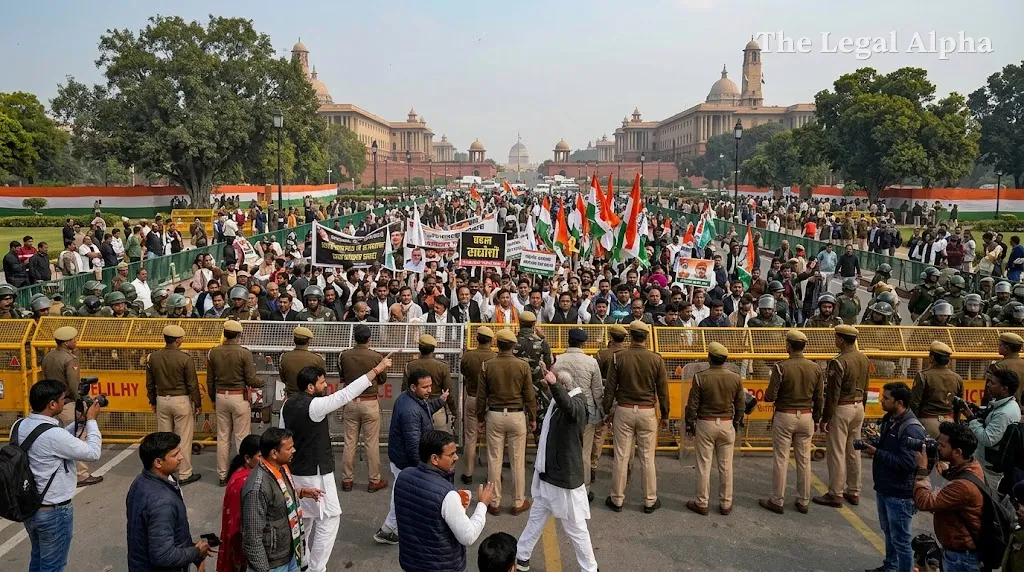
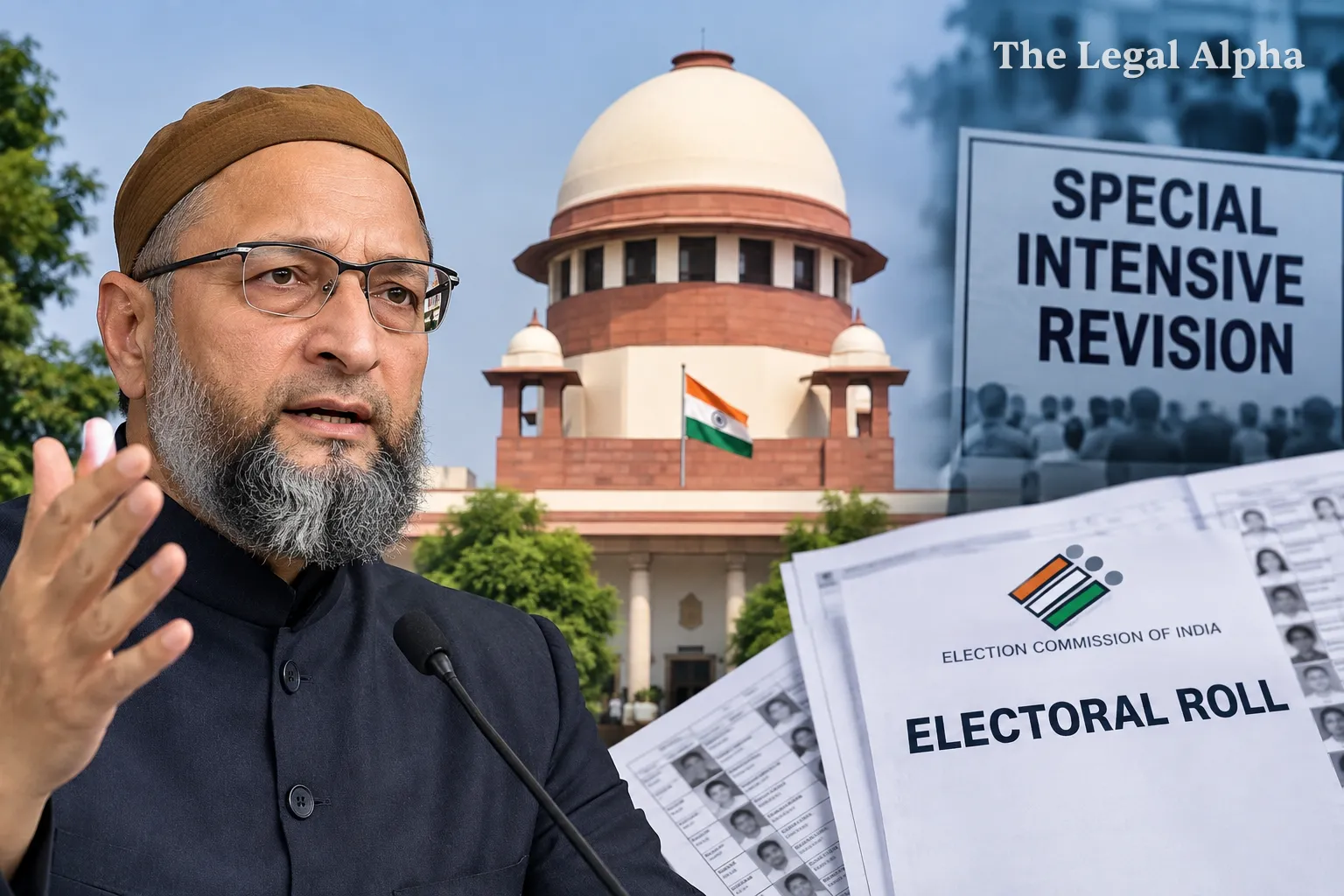
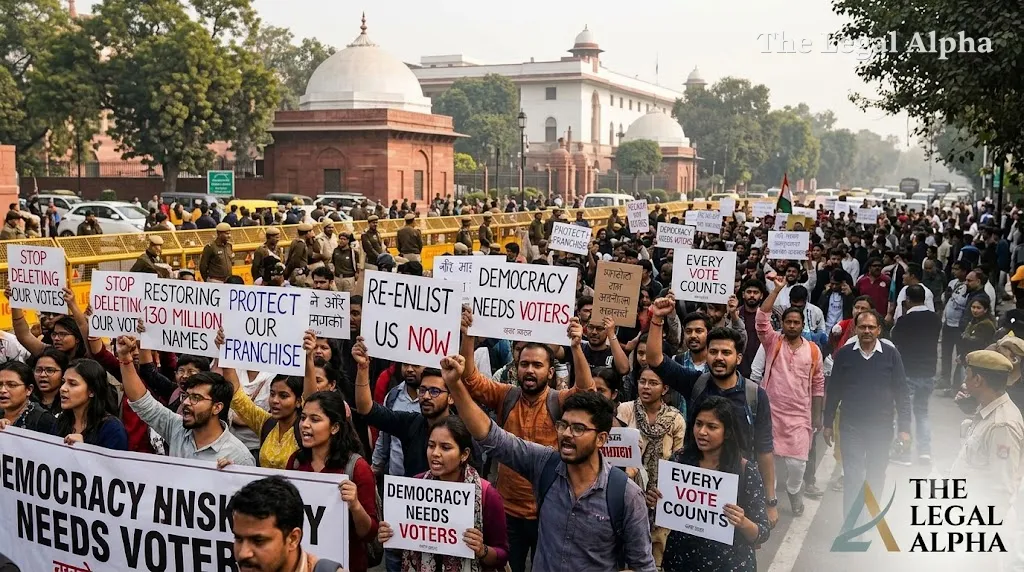
The Delhi Police have registered four separate First Information Reports across four police stations in New Delhi—Connaught Place, Tilak Marg, Barakhamba Road, and Mandir Marg—following an opposition demonstration. Senior leaders from the INDIA bloc had organised a procession towards the Supreme Court to register a protest over the Election Commission of India’s ongoing Special Intensive Revision (SIR) of electoral rolls.
Law enforcement officials stated that the procession was carried out in breach of active prohibitory orders restricting public assemblies across the New Delhi district. Concurrently, the Delhi Police’s specialised cyber wing, the Intelligence Fusion and Strategic Operations (IFSO) unit, initiated separate penal proceedings and moved to take down approximately 500 online posts and handles, alleging that coordinated disinformation and unverified reports were circulated to foment public disorder.
Legal Topic
-
Area of Law: Criminal Procedure and Constitutional Law
-
Sub-topic: Regulation of Public Assemblies, Statutory Prohibitory Orders, and Digital Content Intermediary Compliance
Core Legal Issue
The controversy centres on the threshold for penalising public political assembly under preventive executive decrees, weighed against constitutional guarantees of peaceful protest. Specifically, it involves the enforcement of Section 163 of the Bharatiya Nagarik Suraksha Sanhita, 2023 (BNSS)—the statutory successor to Section 144 of the Code of Criminal Procedure, 1973—and whether an unpermitted march towards the apex judiciary constitutes a cognisable breach of public order.
A parallel legal issue concerns the regulatory parameters applied by law enforcement agencies when seeking the summary takedown of online political and user-generated speech under information technology safeguards during active civic demonstrations.
What Did the Authority Decide?
The Delhi Police determined that the opposition march breached standing prohibitory directions that prohibited assemblies of five or more persons in the sensitive central administrative corridor. Consequently, police:
-
Lodged four FIRs for defiance of lawful orders promulgated by a public servant and related infractions across local jurisdictions.
-
Deployed IFSO cyber investigators to identify and issue removal requisitions for around 500 digital posts deemed to spread fabricated narratives or inflammatory rumours.
-
Initiated verification protocols on international and domestic social media accounts accused of orchestrating digital disruption.
The underlying legal challenge filed by opposition leaders concerning the Election Commission's revisions remains subject to defect clearance and listing before the Supreme Court.
Key Legal Points
-
Enforcement of BNSS Preventive Measures: The action marks a significant invocation of Section 163 of the BNSS to prosecute large-scale political processions held without prior administrative sanction in high-security zones.
-
Dual-Track Policing: Law enforcement applied a bifurcated mechanism: physical crowd regulation through station-level FIRs alongside cyber policing through statutory content takedown mechanisms.
-
Disinformation Thresholds: Regulatory agencies targeted non-traditional speech vectors, including automated or bot accounts and foreign handles, arguing that online panic constitutes an actionable adjunct to unlawful physical assembly.
-
Tension with Fundamental Freedoms: The blanket use of preventive section orders over major thoroughfares continues to test the constitutional balancing test between state security and fundamental speech and assembly rights under Article 19.
Relevant Law
-
Section 163, Bharatiya Nagarik Suraksha Sanhita, 2023 (BNSS): Authorises district magistrates and designated police executives to issue directions in urgent cases of nuisance or apprehended danger (formerly Section 144, CrPC).
-
Section 223, Bharatiya Nyaya Sanhita, 2023 (BNS): Penalises disobedience to an order duly promulgated by a public servant (analogous to Section 188, Indian Penal Code).
-
Section 69A, Information Technology Act, 2000, read with Information Technology Rules: Empowers authorised authorities to direct digital intermediaries to block or remove content affecting public order.
-
Articles 19(1)(a) and 19(1)(b) of the Constitution of India: Guarantee freedom of speech and expression and the right to assemble peacefully without arms, subject to reasonable restrictions under Articles 19(2) and 19(3).
-
Anuradha Bhasin v. Union of India (2020) 3 SCC 637: Precedent establishing that repetitive and indefinite prohibitory orders without demonstrated necessity or proportionality are an abuse of statutory police powers.
Arguments of the Parties
The Delhi Police and State Authorities The police submitted that strict prohibitory orders had already been published to maintain public order and secure institutional infrastructure, including the Supreme Court and high-security government zones. Authorities contended that assembling thousands of demonstrators without requisite permissions directly contravened statutory mandates, creating safety hazards and transit gridlock. Furthermore, the State argued that circulating misleading digital claims regarding violence or fatalities necessitated immediate takedown notices to preempt potential unrest.
The Organisers and Opposition Parties Representatives of the opposition bloc argued that peaceful assembly to submit a petition to the apex judiciary is an essential democratic right protected by the Constitution. They submitted that routinely invoking sweeping prohibitory orders over political centres effectively criminalises legitimate opposition activity and dissent. The petitioners also maintained that administrative hurdles and defects raised against their filings must not be conflated with unlawful conduct, asserting that their digital commentary constituted constitutionally protected free political expression.
Why Does It Matter?
This development highlights the ongoing friction between municipal security governance and democratic assembly. As law enforcement transitions entirely from the CrPC to the BNSS framework, how executive magistrates and police commissioners deploy Section 163 will define the operational boundaries of peaceful protest in India’s capital.
Simultaneously, the coupling of physical FIRs with swift, large-scale digital takedowns signals a refined standard of public order management. For legal practitioners, civil liberties advocates, and internet intermediaries, it underscores how rapidly online commentary can be brought under criminal scrutiny and administrative content moderation when accompanying contentious political events.
Legal Takeaway
Defying standing prohibitory orders under Section 163 of the BNSS carries immediate criminal exposure under the new criminal codes, regardless of the political or institutional destination of a demonstration. Moreover, the parallel mobilisation of cyber takedowns demonstrates that modern public-order policing treats online narratives as an indivisible extension of physical gatherings.
Sources
-
Primary Source: Delhi Police Statutory Notices, Prohibitory Orders under Section 163 BNSS, and First Information Reports registered at Connaught Place, Tilak Marg, Barakhamba Road, and Mandir Marg Police Stations.
-
Additional Sources: Operational Statements from the Intelligence Fusion and Strategic Operations (IFSO) Unit, Delhi Police; Supreme Court Registry filing records.