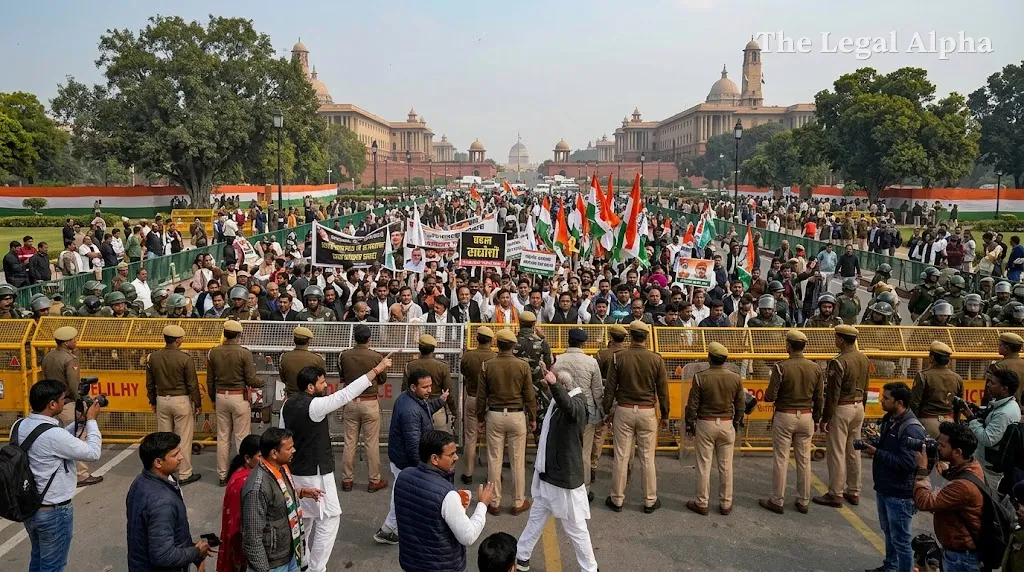
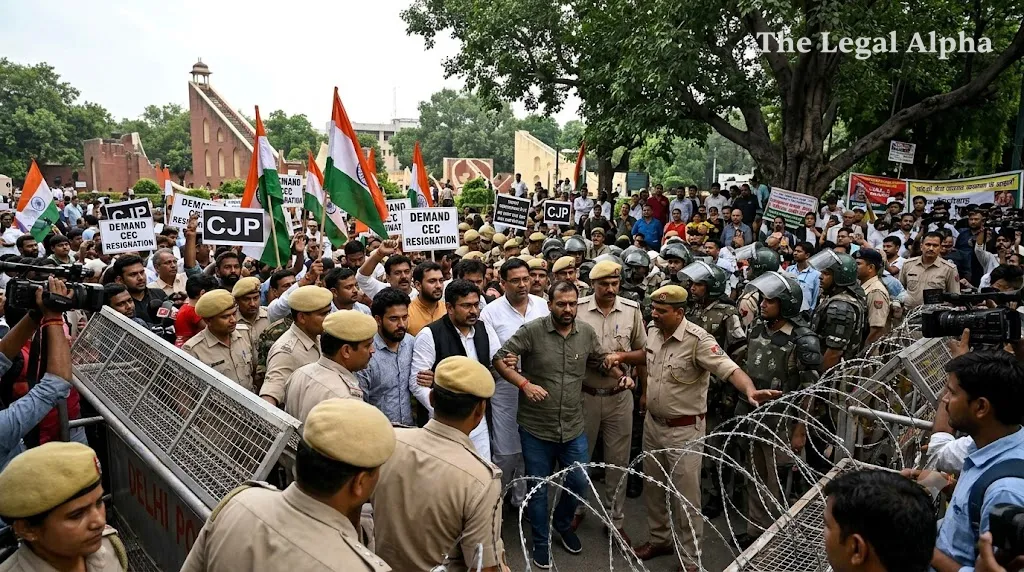
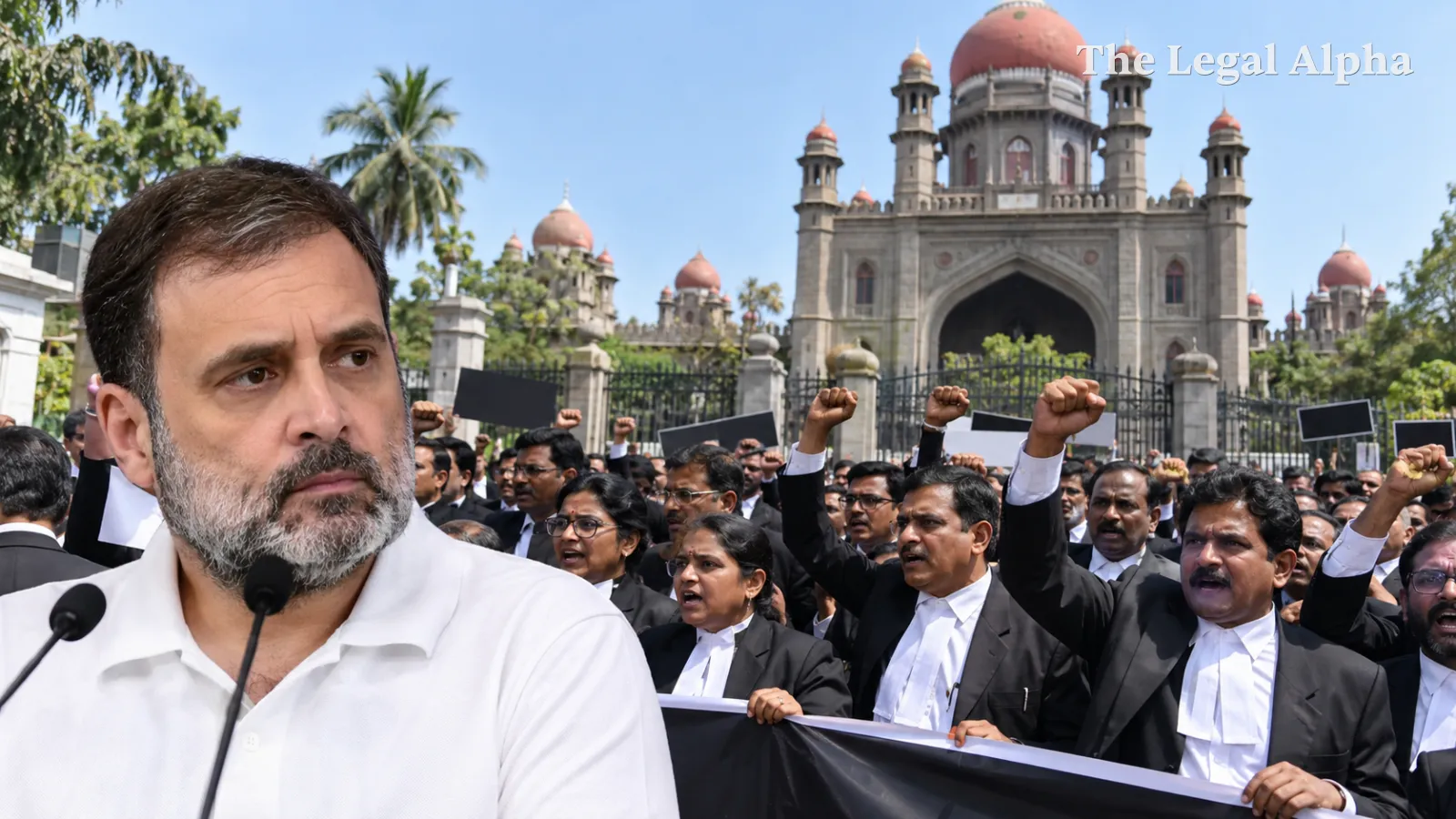
Mass Electoral Roll Purge Sparks Nationwide Protests and Scrutiny Before the Supreme Court
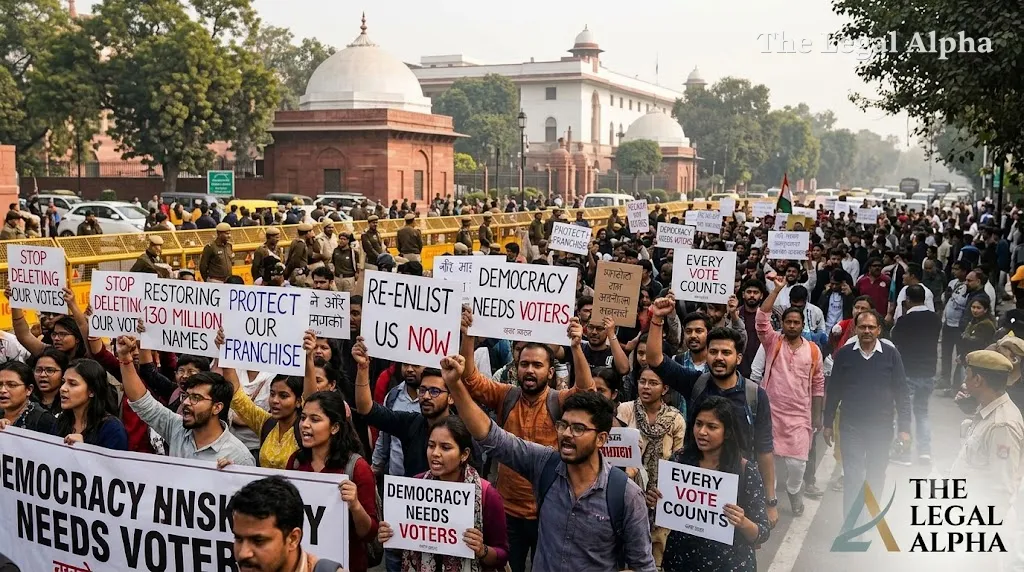
A nationwide Special Intensive Revision (SIR) undertaken by the Election Commission of India has resulted in the deletion of approximately 130 million entries from voter lists across multiple states. While the poll body and the ruling central government describe the initiative as an essential data clean-up targeting deceased individuals, duplicates, and untraceable or relocated electors, civil rights advocates, youth activists, and opposition parties have taken to the streets alleging systemic disenfranchisement.
The controversy intensified after reports emerged of arbitrary de-registrations, targeted bulk objection filings, and instances where long-term residents and marginalized citizens were excluded without individual notice. The issue has now escalated to the Supreme Court of India, accompanied by widespread demonstrations across New Delhi and other regions demanding accountability, an immediate pause on summary deletions, and the resignation of Chief Election Commissioner Gyanesh Kumar.
Legal Topic
-
Area of Law: Constitutional Law / Election Law
-
Sub-topic: Universal Adult Suffrage, Maintenance of Electoral Rolls, Procedural Fairness
Core Legal Issue
The controversy centres on whether the Election Commission's administrative methodology for purging voter lists conforms with constitutional guarantees of due process and statutory safeguards governing electoral rolls.
Specifically, the core question is whether the summary or algorithmic deletion of registered voters without adequate prior notice, verified documentary inquiry, or a reasonable opportunity of hearing violates the fundamental principles of natural justice and effectively imperils the constitutional right to vote.
What Did the Court / Authority Decide?
The Supreme Court of India has been approached via writ petitions seeking urgent judicial intervention and systemic safeguards against arbitrary electoral roll deletions. The court is currently seized of the dispute, with substantive adjudication pending on the legality of mass de-registration and the adequacy of existing statutory remedies.
At the administrative level, the Election Commission has maintained that the revision exercise followed statutory mandates for roll verification. However, amid reports of abuse involving bulk objection submissions (Form 7), the Commission belatedly placed a cap on the number of third-party objection filings permitted per applicant and reiterated that wrongfully omitted individuals retain the right to seek re-enrolment via standard statutory channels.
Key Legal Points
-
Procedural Safeguards on Form 7: The statutory framework allows third-party objections to voter entries, but the administrative machinery must ensure that summary removals cannot be weaponized without strict threshold verification and burden of proof on the objector.
-
Application of Natural Justice: Administrative convenience in updating mass records cannot supersede the basic legal requirement to notify a registered elector before stripping them of voting eligibility.
-
Presumption of Valid Registration: Once an elector is enrolled on the basis of valid documentation, administrative re-verification processes cannot arbitrarily reverse the burden of proof to force citizens to continually re-establish their franchise.
-
Scope of Article 324 Powers: While plenary powers for superintendence, direction, and control of elections are vested in the Election Commission, such powers remain subservient to statutory election rules and basic constitutional rights.
Relevant Law
-
Constitution of India:
-
Article 326 (Elections to the House of the People and Legislative Assemblies on the basis of adult suffrage)
-
Article 324 (Superintendence, direction, and control of elections vested in the Election Commission)
-
Article 14 (Equality before law and protection against arbitrary state action)
-
Article 21 (Procedural fairness and substantive due process)
-
-
Representation of the People Act, 1950: Section 21 (Preparation and revision of electoral rolls) and Section 22 (Correction of entries in electoral rolls).
-
Registration of Electors Rules, 1960: Rule 13 (Objections to inclusion of names), Rule 20 (Inquiry into claims and objections), and Rule 21A (Deletion of names).
-
Judicial Precedent: Lily Thomas v. Speaker, Lok Sabha and Lakshmi Charan Sen v. A.K.M. Hassan Uzzaman (holding that while electoral rolls can be revised, the right of an eligible voter cannot be extinguished through summary administrative actions devoid of statutory adherence).
Arguments of the Parties
Petitioners / Opposing Parties:
-
Argued that the deletion of over 100 million voter names constitutes an unconstitutional disenfranchisement carried out through non-transparent administrative drives.
-
Submitted that third-party objection mechanisms were exploited through mass filings targeting vulnerable, migrant, and minority demographics without providing affected individuals personal notice or fair hearings.
-
Contended that placing the burden solely on deleted voters to re-enrol erects an unjustified barrier to the franchise guaranteed under Article 326 of the Constitution.
The Election Commission and Union of India:
-
Contended that the Special Intensive Revision is a routine, non-partisan statutory exercise aimed at purifying voter registries riddled with duplicates, deceased persons, and voters who permanently relocated.
-
Submitted that established statutory mechanisms under the Registration of Electors Rules provide ample avenues for appeals, claims, and expedited re-registration for any bona fide elector inadvertently struck off.
-
Denied allegations of bias or discriminatory profiling, maintaining that data integrity is essential for free and fair elections.
Why Does It Matter?
Electoral rolls serve as the foundational architecture of representative democracy. When roll updates scale to tens of millions of deletions, administrative inaccuracies cease to be minor statistical anomalies and become potential structural threats to the integrity of electoral mandates.
The outcome of this controversy and subsequent judicial scrutiny will define the legal boundaries between technological roll-auditing and individual constitutional protections. It will establish whether regulatory authorities can rely on automated or third-party flagging without maintaining mandatory procedural safeguards, personal summons, and clear accountability for wrongful deletions.
Legal Takeaway
Electoral roll sanitization cannot bypass the mandatory requirement of natural justice. Any administrative mechanism that removes a registered citizen from the voter list without prior individual notice and a verifiable evidentiary standard risks violating statutory election rules and fundamental constitutional protections.
Sources
-
Primary Source: Election Commission of India Official Guidelines on Special Intensive Revision (SIR) and Registration of Electors Rules, 1960 (Statutory Deletion and Objection Framework).
-
Additional Sources: Supreme Court of India filings concerning electoral roll deletions; official Election Commission data statements regarding voter list maintenance.