Texas Attorney General Targets Children's Apparel Giants Over Suspected Chemical Contaminants
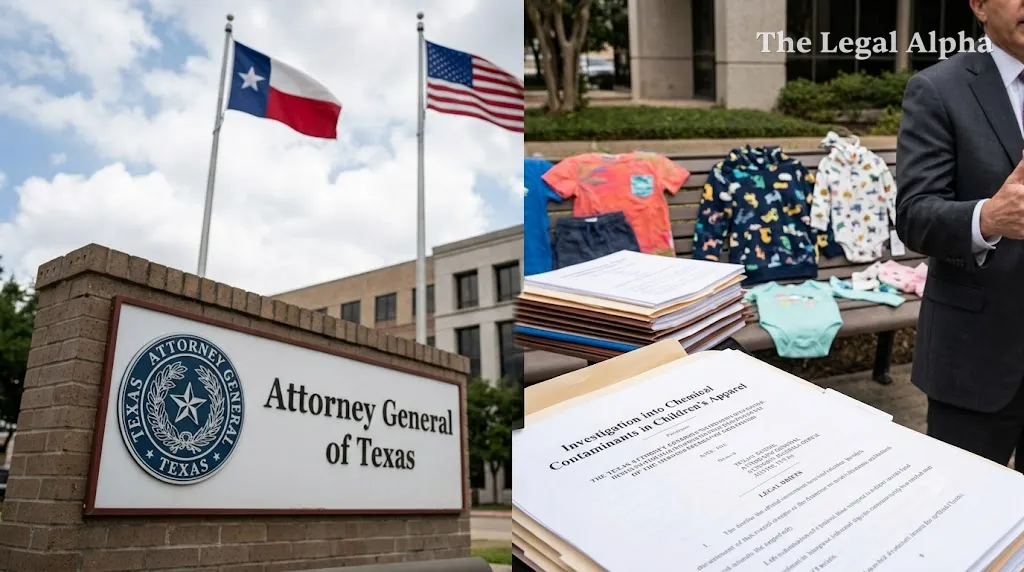
The Office of the Attorney General of Texas has initiated an official inquiry into two leading apparel manufacturers, Fruit of the Loom and Hanesbrands Inc. State officials are examining whether children's undergarments sold across Texas contain hazardous synthetic substances, including per- and polyfluoroalkyl substances (PFAS), phthalates, bisphenols, and microplastic-shedding synthetic fibers.
Attorney General Ken Paxton issued formal administrative requests to both corporations demanding internal records, chemical testing documentation, and safety disclosures. The inquiry follows escalating regulatory scrutiny over everyday consumer textiles that come into prolonged, direct contact with children's skin.
Legal Topic
Area of Law: Consumer Protection & Product Safety Law
Sub-topic: Deceptive Trade Practices / Chemical Safety in Consumer Goods
Core Legal Issue
The core legal question centers on whether apparel manufacturers engaged in false, misleading, or deceptive business practices by marketing and distributing children's basic garments without disclosing the presence of potentially hazardous industrial chemicals and additives.
Under statutory consumer protection standards, state enforcers must establish whether the companies withheld material safety information that would alter consumer purchasing decisions, or whether they affirmatively made deceptive representations concerning product purity, safety, and suitability for minors.
What Did the Court / Authority Decide?
No court has rendered a final determination, nor has any enforcement lawsuit been filed at this stage.
The Texas Attorney General initiated the pre-litigation investigative stage by serving Civil Investigative Demands (CIDs) on Fruit of the Loom and Hanes. These demands compel the companies to produce documents, material compositional analyses, and internal communications regarding the presence of chemical additives. The state has not established wrongdoing; the outcome remains pending based on the review of the corporate disclosures.
Key Legal Points
-
Use of Pre-Suit Investigative Authority: State attorneys general possess broad statutory authority to issue Civil Investigative Demands to discover whether violations have occurred before lodging formal civil complaints.
-
Materiality of Chemical Disclosures: An omission regarding chemical treatments, endocrine-disrupting compounds, or synthetic finishes can constitute an actionable deceptive omission if an ordinary consumer would reasonably expect children's basics to be free from hazardous substances.
-
Expansion of Product Liability Scrutiny: State regulators are increasingly extending environmental and toxic chemical enforcement from industrial polluters directly downstream to retail apparel and consumer goods.
-
Burden on Supply Chain Verification: The probe tests whether global clothing brands maintain legally defensible supply-chain testing mechanisms to substantiate safety and quality claims.
Relevant Law
-
Texas Deceptive Trade Practices-Consumer Protection Act (DTPA): Texas Business and Commerce Code § 17.41 et seq. (specifically Section 17.60, granting investigative demand powers, and Section 17.46, addressing deceptive trade practices and material omissions).
-
Consumer Product Safety Act (CPSA): 15 U.S.C. § 2051 et seq., governing federal hazardous substances and children's product safety benchmarks.
Arguments of the Parties
Office of the Attorney General of Texas
The State contended that children represent a particularly vulnerable demographic and that parents reasonably assume essential everyday items are free from endocrine disruptors, carcinogens, and hazardous chemical additives. The Attorney General argued that if corporations concealed chemical risks or cut safety corners to reduce manufacturing costs, they may be liable for unlawful and misleading commercial practices under state law.
Fruit of the Loom & Hanesbrands
The apparel manufacturers have not filed formal court answers, as this is an administrative inquiry rather than a formal civil complaint. Historically in similar textile inquiries, manufacturers maintain that their products strictly comply with applicable federal safety guidelines, flammability standards, and chemical safety regulations established by the Consumer Product Safety Commission (CPSC), while asserting that trace chemical detections do not inherently indicate consumer harm or intentional deception.
Why Does It Matter?
This development signals that state enforcement agencies are actively deploying consumer protection statutes to address "forever chemicals" and textile additives in mainstream retail sectors. Traditionally, apparel brands relied on broad compliance certifications and global vendor guarantees. By focusing on consumer undergarments, regulators are elevating chemical safety from an environmental discharge issue to a direct retail disclosure requirement.
For corporations, this creates significant supply chain compliance risks. Retailers and manufacturers selling into heavily populated states face an increased threat of state-level scrutiny over product chemistry, necessitating independent laboratory testing, stricter supplier audits, and conservative product-labeling practices.
Legal Takeaway
State attorneys general are leveraging broad administrative subpoena powers to investigate whether undisclosed chemical additives in everyday consumer goods constitute deceptive trade practices. For consumer brands, maintaining basic federal compliance may no longer suffice to shield corporate supply chains from aggressive state-level product safety inquiries.
Sources
Primary Source:
-
Official Press Release, Office of the Attorney General of Texas, "Attorney General Ken Paxton Launches Investigation into Kids Clothing Companies Over Potential Presence of Toxic Chemicals in Material" (Issued October 6, 2026).
Additional Sources:
-
Texas Business and Commerce Code, Subchapter E (Deceptive Trade Practices and Consumer Protection).
-
Reuters Legal Litigation Report, Paxton Probes Fruit of the Loom, Hanes Over Potential Toxic Chemicals in Children's Underwear (October 6, 2026).