Procedural Breach in Seizure Weakens Evidence: Supreme Court Restores Acquittal
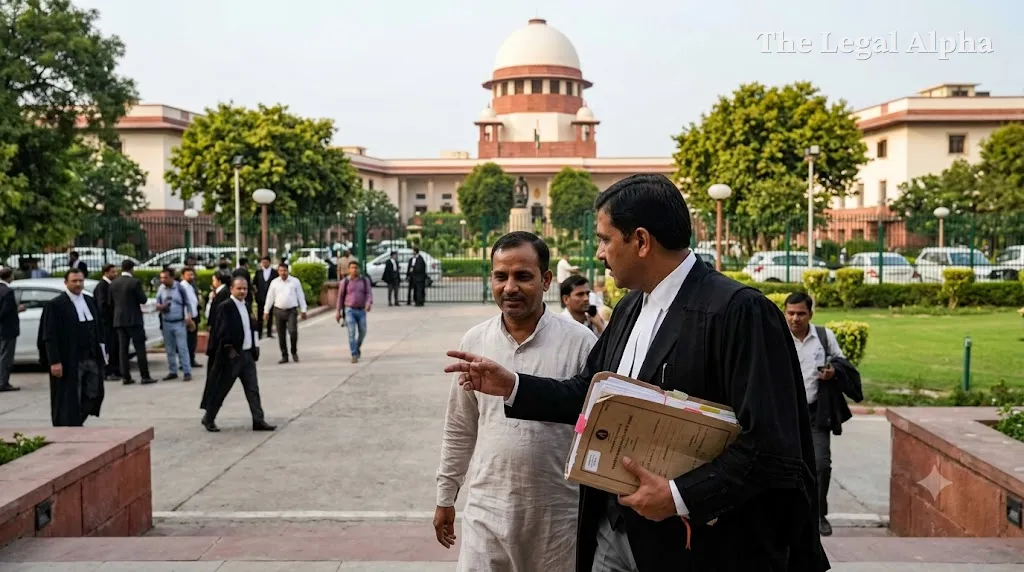
Case Name: Ramkrushna Prahllad Dongardive v. The State of Maharashtra
Court: Supreme Court of India
Bench: Justice Ujjal Bhuyan & Justice Atul S. Chandurkar
Case Record: Criminal Appeal No. 1432 of 2019 | Citation: 2026 LiveLaw (SC) 1032
Date of Pronouncement: October 08, 2026 | Reported: October 08, 2026 (LiveLaw ID: 553763)
Subject: Section 409 IPC & Section 100 CrPC | Criminal Breach of Trust & Seizure Procedure
Category
Judgements / Criminal Jurisprudence
The appellant, Ramkrushna Prahllad Dongardive, was employed as a Cashier-cum-Counter Clerk in the Telecom Department (Telephone Department) in Maharashtra. An investigation was initiated against him alleging that between 1996 and 1998, he had collected phone bill payments amounting to ₹8,73,812/- (₹8.73 Lakh) from subscribers across departmental cash collection counters but failed to deposit the collected sum into the official government treasury, thereby committing criminal breach of trust and cheating under Section 409 and Section 420 of the Indian Penal Code, 1860 (IPC).
During the trial before the Special Judicial Magistrate, the prosecution claimed to have recovered certain records, cash receipts, and accounting memos from the accused. However, the investigating agency failed to produce the foundational documents, including the original daily cashbook, primary counter collection registers, and the complete audit report. Furthermore, the search and seizure conducted by the police flagrantly violated Section 100 of the Code of Criminal Procedure, 1973 (CrPC), as no independent panch witnesses from the locality were called to witness the seizure. Finding that the prosecution had failed to establish either actual entrustment or dishonest misappropriation, the trial court acquitted the appellant.
On appeal by the State of Maharashtra against the acquittal, the Bombay High Court reversed the trial court's verdict. The High Court held that procedural non-compliance with Section 100 CrPC was merely a minor investigative irregularity that did not invalidate the seizure, and convicted the appellant under Section 409 IPC, sentencing him to rigorous imprisonment. Aggrieved by the reversal of his acquittal, Dongardive preferred Criminal Appeal No. 1432 of 2019 before the Supreme Court of India.
Legal Topic
Criminal Law & Law of Evidence – Section 405 & Section 409, Indian Penal Code, 1860 (Criminal Breach of Trust by Public Servant; Essential Ingredients of Entrustment and Dishonest Mens Rea); Section 100, Code of Criminal Procedure, 1973 (Procedural Requirements of Search and Seizure; Impact of Non-Compliance on Evidentiary Value); Appellate Scope in Overturning Acquittals (Presumption of Innocence).
Core Legal Issue
Whether non-compliance with the mandatory search and seizure procedures under Section 100 CrPC, coupled with the prosecution's failure to produce primary financial registers to establish entrustment and dishonest misappropriation, undermines the evidentiary foundation of an offence under Section 409 IPC so as to render the High Court's reversal of an acquittal unsustainable.
What Did the Court / Authority Decide?
A Division Bench of the Supreme Court of India, comprising Justice Ujjal Bhuyan and Justice Atul S. Chandurkar, allowed the appeal [Criminal Appeal No. 1432 of 2019, Citation: 2026 LiveLaw (SC) 1032], set aside the Bombay High Court's judgment of conviction, and restored the trial court's judgment acquitting Ramkrushna Prahllad Dongardive.
Justices Ujjal Bhuyan and Atul S. Chandurkar held that while a procedural violation under Section 100 CrPC may not by itself render a seizure completely illegal or void, it severely impairs the evidentiary credibility and weight of the alleged seizure. The Court observed: "It is true that non-compliance of the requirements of Section 100 of the Code by itself would not vitiate a seizure and the same would be an irregularity in the investigation. However, when this factor is considered cumulatively with other factors that contribute to doubting the prosecution case, the same would weigh in favour of the appellant, especially in an appeal against acquittal." The Bench further held that the prosecution miserably failed to prove both foundational ingredients of Section 409 IPC—actual entrustment of property and dishonest intention—due to non-production of the original cashbooks and primary audit records. Finding that the trial court had taken a reasonable and plausible view, the Supreme Court ruled that the High Court exceeded its appellate jurisdiction in reversing the acquittal.
Key Legal Points
- Evidentiary Value Damaged by Procedural Breaches: The Supreme Court clarified the legal effect of Section 100 CrPC non-compliance: while procedural lapses during seizure are technical irregularities that do not automatically vitiate the recovery, they heavily degrade the evidentiary weight of the seized material, which weighs conclusively in favour of the accused when combined with other gaps.
- Dual Prongs of Section 409 IPC: To secure a conviction for criminal breach of trust, the prosecution must establish beyond reasonable doubt both (i) entrustment of property or dominion over it, and (ii) dishonest misappropriation, conversion, or disposal. A mere accounting deficit or unverified departmental allegation without proof of dishonest intention does not constitute an offence.
- Fatal Consequence of Withholding Primary Records: The non-production of primary contemporaneous registers, such as original counter cashbooks and verified audit sheets showing cash handling on specific dates, is fatal to the charge of entrustment against a cashier.
- Sacrosanct Standard in Appeals Against Acquittal: An appellate court cannot overturn a judgment of acquittal merely because a different view is possible. Unless the trial court's evaluation of evidence is palpably perverse or impossible, the double presumption of innocence must be safeguarded.
- Restoration of Trial Court Acquittal: Concluding that the trial court's findings were fully supported by the evidence on record, the Supreme Court quashed the sentence and restored Dongardive's honorable acquittal.
Relevant Law
- Section 405 & Section 409, Indian Penal Code, 1860: Defines criminal breach of trust and prescribes enhanced punishment (up to life imprisonment or ten years) for criminal breach of trust committed by a public servant, banker, merchant, or agent.
- Section 100, Code of Criminal Procedure, 1973: Mandates procedural safeguards for searches and seizures, requiring officers to call upon two or more independent and respectable inhabitants of the locality to attend and witness the search.
- State of Rajasthan v. Teja Singh (2001) 3 SCC 147: Supreme Court authority establishing that non-compliance with Section 100 CrPC affects the weight and credibility of seizure evidence.
- Sardar Singh v. State of Haryana (1977) 1 SCC 463: Apex Court precedent holding that in the absence of proof of dishonest intention, a mere failure to account for money does not establish criminal breach of trust under Section 409 IPC.
- Chandrappa v. State of Karnataka (2007) 4 SCC 415: Landmark ruling on the golden rules governing appellate interference with orders of acquittal.
Arguments of the Parties
- Contentions of the Appellant (Ramkrushna Prahllad Dongardive):
- Represented by Senior Advocates B.H. Marlapalle and Sudhanshu S. Choudhari, the appellant submitted that the prosecution failed to prove that he had exclusive dominion over the alleged cash collections.
- Counsel argued that the primary cash registers and daily counter scrolls were deliberately withheld, and secondary photocopies could not establish entrustment.
- It was contended that the police carried out an arbitrary seizure without independent panch witnesses in gross violation of Section 100 CrPC, and the High Court erred in reversing a well-reasoned trial court acquittal.
- Contentions of the Respondent (State of Maharashtra):
- Represented by Advocates Shrirang B. Varma and Siddharth Dharmadhikari, the State submitted that the appellant was the designated cashier on duty and had a statutory duty to deposit daily counter collections.
- The State argued that departmental audits revealed a clear deficit of ₹8.73 Lakh, creating a strong presumption of misappropriation.
- Counsel maintained that procedural non-compliance with Section 100 CrPC was a mere curable irregularity that did not prejudice the accused or vitiate the recovery of records.
Why Does It Matter?
Public servants handling public funds and counter cashiers in government undertakings frequently find themselves vulnerable to sweeping criminal prosecutions under Section 409 IPC whenever accounting discrepancies arise. Investigating agencies often take shortcuts—conducting seizures without independent public witnesses and relying on summarized departmental audit notes rather than proving actual custody of cash on specific dates.
The Supreme Court’s ruling in Ramkrushna Prahllad Dongardive establishes an essential judicial shield against sloppy criminal investigations. By ruling that procedural breaches in seizure severely undermine evidentiary value, Justices Ujjal Bhuyan and Atul S. Chandurkar ensure that investigative agencies cannot brush aside Section 100 CrPC safeguards as meaningless technicalities. The judgment reinforces that a criminal breach of trust requires ironclad proof of dishonest mens rea and actual entrustment, preventing public servants from being convicted on mere suspicion or bookkeeping irregularities.
Legal Takeaway
Non-compliance with the search and seizure procedures under Section 100 of the Code of Criminal Procedure, 1973, while not rendering a seizure per se illegal, severely compromises the evidentiary value and credibility of the seized material. In prosecutions for criminal breach of trust under Section 409 IPC, the state must strictly prove actual entrustment and dishonest intention through primary contemporaneous records. Where the prosecution fails to produce original cashbooks and relies on flawed seizures, the charge cannot stand, and an order of acquittal cannot be overturned by the High Court.
Sources (Primary & Additional)
- Primary Judicial Order: Supreme Court of India, Ramkrushna Prahllad Dongardive v. The State of Maharashtra [Criminal Appeal No. 1432 of 2019, Neutral Citation: 2026 LiveLaw (SC) 1032, Decided on October 08, 2026], per Justice Ujjal Bhuyan and Justice Atul S. Chandurkar. LiveLaw SC Judgment Repository.
- Authoritative Legal Reporting (LiveLaw): Editorial Bureau, \"Procedural Violation Will Not Vitiate Seizure But Can Affect Evidentiary Value : Supreme Court\" (Article ID: 553763, Published on October 08, 2026). LiveLaw Article.
- Criminal Jurisprudence Analysis (CourtBook & LawTrend): Legal Desk, \"Supreme Court Restores Acquittal of Telephone Department Cashier in ₹8.73 Lakh Criminal Breach of Trust Case\" (Published on October 08, 2026). CourtBook Legal Intelligence and LawTrend Analysis.