Breakup Ending in Suicide Not Abetment: Supreme Court Quashes Prosecution
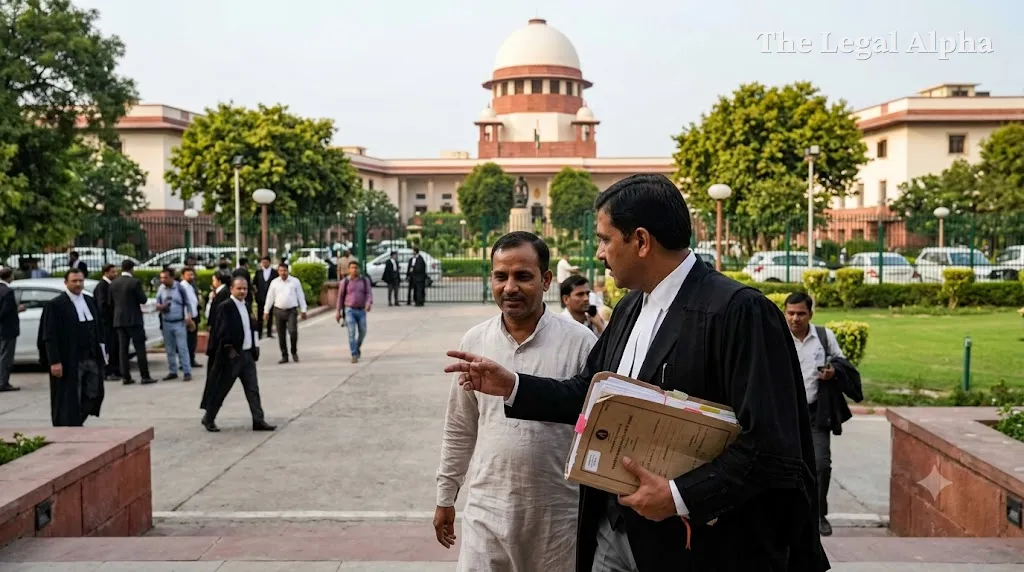
Court: Supreme Court of India
Bench: Justice J.B. Pardiwala & Justice K. Vinod Chandran
Case Record: Criminal Appeal (Arising out of SLP (Crl.) No. 7239 of 2026)
Citation: 2026 LiveLaw (SC) 1029
Date of Pronouncement: October 08, 2026
Subject: Indian Penal Code (Section 306 & Section 107) / Bharatiya Nyaya Sanhita (Section 108) | Abetment to Suicide
Category
Judgements / Criminal Law
The first appellant, Chittibarika Chandra Shekar, and the deceased woman were engaged in a consensual romantic relationship and had cohabited together for approximately three months at his residence in Kushaiguda, Telangana, with the initial knowledge and acceptance of his family. Subsequently, the relationship encountered friction, and the deceased's sisters intervened, taking her away from the appellant's house.
When the deceased requested the first appellant to formalize their relationship into marriage, he declined to do so. The remaining appellants—comprising the first appellant's father, mother, sister, the sister's proposed bridegroom, and a mutual friend—were accused of having discouraged the union, citing concerns that the prospective marriage of the sister might be disrupted. Deeply distressed by the refusal to marry, the deceased made a phone call to her eldest sister stating that she was ending her life due to the heartbreak, and tragically died by suicide shortly thereafter.
On a complaint lodged by the deceased's sister, an FIR was registered, and the police filed a charge-sheet against all six individuals for the offence of abetment to suicide under Section 306 read with Section 34 of the Indian Penal Code, 1860 (IPC), leading to the commencement of Sessions Case No. 101 of 2024 before the II Additional Senior Civil Judge-cum-Additional Chief Judicial Magistrate, Medchal-Malkajgiri District at Kushaiguda. The accused approached the High Court of Telangana seeking quashing under Section 482 of the Code of Criminal Procedure, 1973 (CrPC). However, the High Court dismissed their petition on February 20, 2026. Aggrieved, the appellants preferred a Special Leave to Appeal before the Supreme Court of India.
Legal Topic
Criminal Jurisprudence & Personal Liberty – Section 306 read with Section 107 of the Indian Penal Code, 1860 (now Section 108 read with Section 45 of Bharatiya Nyaya Sanhita, 2023) [Abetment of Suicide]; Essential Ingredients of Instigation and Mens Rea; Refusal of Marriage and Relationship Breakup vs. Criminal Culpability; Quashing of Criminal Proceedings under Section 482 CrPC (Section 528 BNSS) to Prevent Abuse of Judicial Process.
Core Legal Issue
Whether a romantic partner's refusal to marry or a relationship breakup, even if followed by the suicide of the aggrieved partner, can legally constitute 'abetment to suicide' under Section 306 of the Indian Penal Code in the absence of intentional instigation, active provocation, or positive acts driving the deceased to end their life.
What Did the Court / Authority Decide?
A Division Bench of the Supreme Court of India, comprising Justice J.B. Pardiwala and Justice K. Vinod Chandran, allowed the appeal [Criminal Appeal arising out of SLP (Crl.) No. 7239 of 2026, Citation: 2026 LiveLaw (SC) 1029], set aside the judgment of the Telangana High Court, and quashed all criminal proceedings in Sessions Case No. 101 of 2024 against all six accused persons.
Justice J.B. Pardiwala and Justice K. Vinod Chandran held that people react differently to life's adversities and emotional distress, and a relationship breakup culminating in suicide cannot automatically be characterized as criminal abetment. The Supreme Court observed: \"People react differently to situations and if a breakup ends up with suicide, it cannot always be termed an abetment to suicide.\" The Bench ruled that to establish an offence under Section 306 IPC, the prosecution must demonstrate clear mens rea and a direct, positive act of instigation. The Court held: \"The refusal to marry was not with an intention to drive the woman to death by suicide nor can knowledge be attributed to the accused that on such refusal, she would commit suicide. We are unable to find any instigation by the accused/appellants to drive the deceased to death by suicide. It was neither intended nor can it be said to be abetment. At the worst, even if we fully believe what has been stated by the 1st informant, there was a refusal of marriage, which led to the woman committing suicide.\" Holding that continuing the trial would constitute a clear abuse of the process of law, the Court ordered the immediate discharge of the accused and cancellation of their bail bonds.
Key Legal Points
- Breakup Does Not Equal Instigation: The Supreme Court held that the dissolution of a romantic relationship or a refusal to enter into marriage does not constitute instigation under Section 107 IPC, even if the emotional fallout tragically results in suicide.
- Mandatory Requirement of Mens Rea: The Bench reaffirmed that abetment under Section 306 IPC demands an active mental state—either an intention to drive the person to suicide or clear knowledge that suicide would be the unavoidable outcome of the act.
- Subjective Emotional Reactions Cannot Create Criminal Liability: The Court recognized that human beings possess varying degrees of psychological resilience; an individual cannot be held criminally liable for murder or abetment simply because the other party possessed a hypersensitive or fragile emotional disposition.
- Extended Family Members Cannot Be Implicated: The Court ruled that relatives who express reservations, family concerns, or opposition to a marriage proposal cannot be roped into an abetment charge, as their actions lack criminal intent and causal proximity.
- Duty of High Courts to Prevent Abuse of Process: The Bench observed that High Courts must vigilantly exercise inherent powers under Section 482 CrPC to quash malicious or legally untenable prosecutions at the threshold, rather than mechanically relegating innocent citizens to full-fledged criminal trials.
Relevant Law
- Section 306, Indian Penal Code, 1860 (Section 108, Bharatiya Nyaya Sanhita, 2023): Prescribes punishment of up to ten years' imprisonment and fine for abetting the commission of suicide.
- Section 107, Indian Penal Code, 1860 (Section 45, Bharatiya Nyaya Sanhita, 2023): Defines abetment by instigation, conspiracy, or intentional aid, requiring active incitement or facilitation.
- Section 482, Code of Criminal Procedure, 1973 (Section 528, Bharatiya Nagarik Suraksha Sanhita, 2023): Inherent powers of High Courts to make such orders as necessary to prevent abuse of the process of any court or secure the ends of justice.
- Geo Varghese v. State of Rajasthan (2021) 19 SCC 144: Supreme Court precedent ruling that mere reprimand or harsh conduct does not amount to instigation without an active mental state to provoke suicide.
- Sanju alias Sanjay Singh Sengar v. State of M.P. (2002) 5 SCC 371: Landmark Supreme Court authority establishing that the word 'instigate' denotes incitement or urging another person to do a desperate act, which cannot be inferred from ordinary relationship friction.
Arguments of the Parties
- Contentions of the Appellants (Chittibarika Chandra Shekar & Ors.):
- Represented by Senior Advocate Ms. Aparna Bhat, alongside Advocates Yash S. Vijay (AOR), Shikhar Aggarwal, Joshua Tom Thomas, and Saransh Khandelwal, the appellants submitted that the relationship between the parties was entirely consensual and accepted.
- Counsel argued that a refusal to marry, whether due to family reservations or incompatibility, cannot be equated with the criminal act of instigating suicide.
- It was contended that there was neither intention nor knowledge on the part of the appellants that the deceased would take her own life, and roping in the entire family was a classic abuse of criminal process.
- Contentions of the Respondents (State of Telangana & Complainant):
- Represented by learned State Counsel, the respondents submitted that the deceased was deeply emotionally invested after three months of cohabitation.
- Counsel argued that the sudden refusal to marry, coupled with the family's active discouragement and negative remarks, drove the deceased into an acute depressive state leaving her no choice but suicide.
- The State contended that whether the refusal amounted to instigation was a triable question of fact that could only be determined during a full sessions trial.
Why Does It Matter?
In contemporary Indian society, failed romantic relationships and broken engagements frequently trigger retaliatory criminal complaints. When an individual dies by suicide following a breakup or a broken marriage promise, grieving families almost reflexively invoke Section 306 of the IPC against the surviving partner and their extended relatives. Trial courts and police authorities have routinely treated suicide notes or distress phone calls as automatic proof of criminal abetment, subjecting innocent young citizens and their families to harrowing incarceration and protracted criminal trials.
The Supreme Court’s definitive pronouncement in Chittibarika Chandra Shekar establishes a vital jurisprudence of compassion and legal restraint. By declaring that 'if a breakup ends up with suicide, it cannot always be termed an abetment to suicide', Justices J.B. Pardiwala and K. Vinod Chandran draw a bright constitutional line between emotional heartbreak and criminal culpability. The judgment prevents the tragic end of a personal relationship from being weaponized into criminal extortion, safeguarding personal liberty, and protecting youth and their families from unwarranted penal retribution.
Legal Takeaway
A refusal to marry or the dissolution of a romantic relationship does not, by itself, constitute the offence of abetment to suicide under Section 306 of the Indian Penal Code (Section 108 BNS). The prosecution must establish positive acts of intentional instigation, active provocation, and clear mens rea demonstrating that the accused intended to drive the deceased to end their life. In the absence of an active intention to provoke suicide or direct proximate incitement, criminal proceedings against the partner and family members are legally unsustainable and liable to be quashed under Section 482 CrPC.
Sources (Primary & Additional)
- Primary Judicial Order: Supreme Court of India, Chittibarika Chandra Shekar & Ors. v. The State of Telangana & Anr. [Criminal Appeal arising out of SLP (Crl.) No. 7239 of 2026, Decided on October 07–08, 2026], per Justice J.B. Pardiwala and Justice K. Vinod Chandran. Supreme Court Judgment Record | 2026 LiveLaw (SC) 1029.
- Authoritative Legal Reporting (LiveLaw): Yash Mittal, \"If Breakup Ends Up With Suicide, It Cannot Always Be Termed Abetment To Suicide : Supreme Court\" (Article ID: 553656, Published on October 08, 2026). LiveLaw Report.
- Judicial Case Analysis (Drishti Judiciary): Editorial Bureau, \"Breakup Ending in Suicide Not Always Abetment: SC Quashes Section 306 IPC Charges\" (Published on October 08, 2026). Drishti Judiciary Case Brief.