Taking Loan Doesn't Mortgage Rights: Madras HC Rejects Travel Curbs on Defaulter
Case Name: Bank of Baroda v. Kondepati Ganga Prasad & Ors.
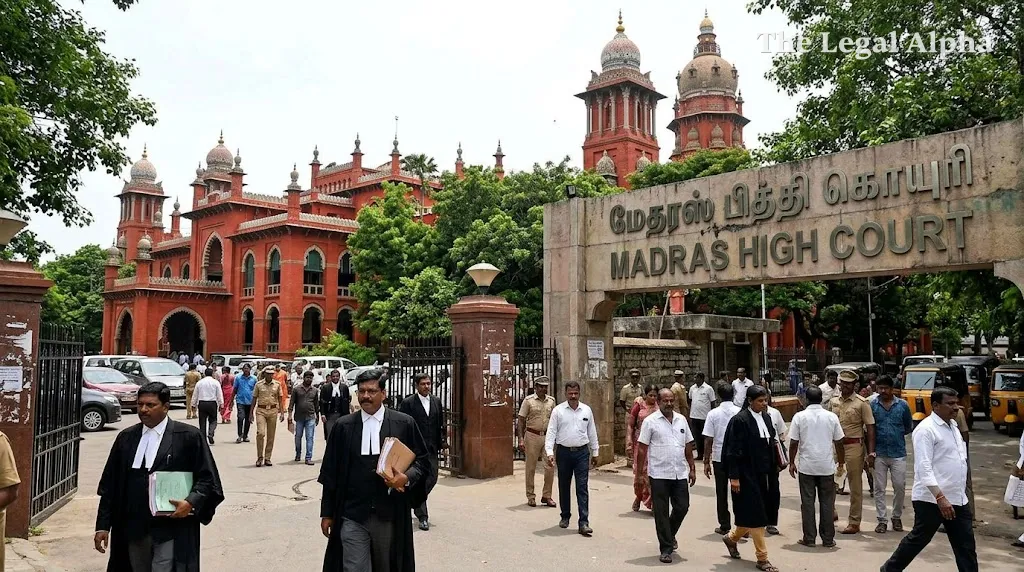
Court: High Court of Judicature at Madras
Bench: Justice V. Lakshminarayanan
Case Record: Review Application | Neutral Citation: 2026 LiveLaw (Mad) 488
Date of Pronouncement: October 01, 2026 | Reported: October 08, 2026 (LiveLaw ID: 553670)
Subject: Article 21 & Banking Law | Look Out Circulars & Right to Travel Abroad
Category
Judgements
The writ petitioner, Kondepati Ganga Prasad, was a promoter, director, and personal guarantor of M/s GVR Infra Projects Ltd., an infrastructure development company. The entity had availed extensive credit facilities from a consortium of public sector banks, with Bank of Baroda being one of the primary lenders. When the company defaulted on its loan repayments, corporate insolvency resolution proceedings were initiated against GVR Infra Projects under the Insolvency and Bankruptcy Code, 2016 (IBC). During the insolvency process, a resolution plan was approved by the National Company Law Tribunal (NCLT), resulting in the statutory settlement and extinguishment of the corporate debtor’s debt.
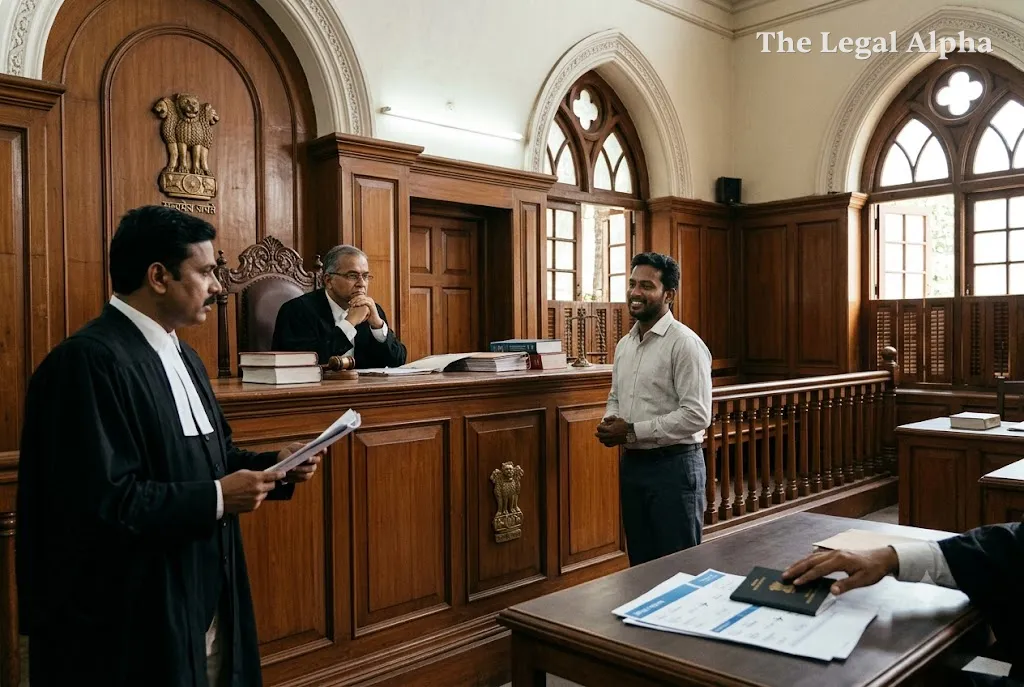
However, to exert coercive pressure for recovery against the personal guarantor, Bank of Baroda submitted an administrative requisition to the Ministry of Home Affairs and the Bureau of Immigration, prompting the Foreigners Regional Registration Office (FRRO) to issue an open-ended Look Out Circular (LOC) against Kondepati Ganga Prasad. The LOC prevented him from traveling abroad for his legitimate business activities.
Aggrieved by the travel restraint, Prasad filed a writ petition under Article 226 of the Constitution before the High Court of Judicature at Madras, challenging the validity of the LOC. In that writ proceeding, the High Court quashed the LOC, holding that mere default without criminal wrongdoing cannot deprive a citizen of the fundamental right to travel abroad. Seeking to undo this relief, Bank of Baroda preferred a Review Application, arguing that even though the corporate debt was extinguished, Prasad remained liable as a personal guarantor, that insolvency proceedings against him were under discussion among consortium banks, and that the LOC should be kept alive to prevent him from fleeing the country.
Legal Topic
Constitutional & Banking Jurisprudence – Article 21 of the Constitution of India (Fundamental Right to Travel Abroad); Scope and Legality of Look Out Circulars (LOCs) Issued at the Request of Public Sector Banks; Personal Guarantor Liability vs. Liberty; Ministry of Home Affairs Office Memoranda on LOCs; Principles Governing Review Jurisdiction under Order 47 Rule 1 of the Code of Civil Procedure (CPC).
Core Legal Issue
Whether a public sector bank can legitimately requisition or maintain a Look Out Circular (LOC) to curtail the foreign travel of a loan defaulter or personal guarantor under Article 21, in the absence of any criminal complaint, allegations of fraud, or pending judicial restraint orders.
What Did the Court / Authority Decide?
The High Court of Judicature at Madras, through a Single Judge Bench comprising Justice V. Lakshminarayanan, dismissed Bank of Baroda's Review Application [Neutral Citation: 2026 LiveLaw (Mad) 488, Decided on October 01, 2026 / Uploaded October 08, 2026], firmly refusing to reinstate the Look Out Circular against Kondepati Ganga Prasad.
Justice V. Lakshminarayanan delivered a scathing rebuke to the creditor bank, observing: \"Taking a loan does not mean that a citizen has mortgaged his constitutional rights with the bank.\" Warning against creditor overreach, the Court remarked: \"God forbid the debtors from being thrown at the mercy of wolves of creditors.\" The Bench held that when there is no allegation of fraud—either by the borrower or by bank managerial staff—the mere status of being a loan defaulter cannot justify forcing a citizen to remain confined within the country. The Court observed that the bank had neither lodged a complaint with the Central Bureau of Investigation (CBI) nor approached local police alleging fraudulent conduct. Noting that the Supreme Court in landmark authorities like Maneka Gandhi did not expect citizens to stay back in the country and \"play Tweedledum and Tweedledee,\" the High Court ruled that economic recovery cannot be converted into an extra-judicial deprivation of personal liberty, and confirmed the revocation of the LOC.
Key Legal Points
- Constitutional Rights Not Mortgaged to Creditors: Justice V. Lakshminarayanan established that borrowing money from a financial institution does not alienate or mortgage a citizen's fundamental rights guaranteed under Part III of the Constitution.
- Absence of Fraud Precludes Travel Restraints: The Court held that in the absence of demonstrable fraud, economic offenses, or criminal proceedings, public sector banks cannot deploy Look Out Circulars as extra-judicial recovery mechanisms to restrain foreign travel.
- No Police or CBI Complaint by Bank: The Bench highlighted that Bank of Baroda had failed to lodge any complaint with the CBI or local police against Prasad or his co-directors, proving that the default was a commercial failure rather than a criminal fraud.
- Tweedledum and Tweedledee Precedent: Drawing upon Supreme Court constitutional jurisprudence, the Court observed that borrowers facing civil recovery claims cannot be compelled to remain idle within the country when no court has restrained their movement.
- Strict Limitations on Review Jurisdiction: Reaffirming Parsion Devi v. Sumitri Devi (1997) 8 SCC 715, the Court held that a review petition is not an appeal in disguise and cannot be entertained merely because a party seeks to re-agitate settled questions.
Relevant Law
- Article 21, Constitution of India: Guarantees protection of life and personal liberty, which encompasses the fundamental right to travel abroad as an integral facet of personal liberty.
- Office Memoranda of Ministry of Home Affairs (MHA) on Look Out Circulars: Executive guidelines governing the issuance of LOCs at the request of designated public sector bank authorities, strictly circumscribed by economic security criteria and criminal prosecution triggers.
- Section 60 & Section 128, Insolvency and Bankruptcy Code, 2016: Statutory framework governing corporate insolvency resolution and creditor claims against corporate debtors and personal guarantors.
- Order 47 Rule 1, Code of Civil Procedure, 1908 (CPC): Prescribes the parameters of review jurisdiction, confining interference to errors apparent on the face of the record.
- Maneka Gandhi v. Union of India (1978) 1 SCC 248: Historic Constitution Bench ruling establishing that the right to travel abroad is a fundamental right under Article 21 that can only be curtailed by a fair, just, and reasonable procedure established by law.
- Satwant Singh Sawhney v. D. Ramarathnam, APO (1967) 3 SCR 525: Landmark Supreme Court decision declaring that the right to travel abroad is an essential part of personal liberty under Article 21.
Arguments of the Parties
- Contentions of the Petitioner in Review (Bank of Baroda):
- Represented by Advocate Ms. Revathi Manivannan, the bank argued that while the corporate debt of GVR Infra Projects was settled under the resolution plan, Prasad remained personally liable as a guarantor.
- Counsel submitted that the Resolution Professional had advised the initiation of personal bankruptcy proceedings against Prasad, and consortium banks were actively deliberating the matter.
- The bank contended that the LOC was necessary to ensure the guarantor’s physical presence in India and prevent him from fleeing the jurisdiction before recovery was finalized.
- Contentions of the Respondent / Guarantor (Kondepati Ganga Prasad):
- Represented by Senior Counsel Mr. Arvind Pandian with Advocates Sandeepkumar and G. Subramanian, the respondent submitted that the principal loan account had been formally closed following IBC approval.
- Counsel proved that no personal bankruptcy petition had been filed by the bank as of date, and no criminal complaint or FIR alleging fraud was ever lodged with any law enforcement agency.
- It was argued that the bank could not misuse administrative LOC mechanisms as an extra-judicial arm-twisting tool to abrogate the guarantor’s fundamental right to travel abroad under Article 21.
Why Does It Matter?
In recent years, public sector banks across India have increasingly exploited Ministry of Home Affairs Office Memoranda to issue Look Out Circulars against directors, promoters, and guarantors of defaulting corporate entities. By detaining borrowers at international airports without prior notice, pending FIRs, or judicial orders, banks have effectively converted the immigration apparatus into a private recovery arm, bypassing civil recovery courts and Debts Recovery Tribunals.
The Madras High Court’s ruling in Bank of Baroda v. Kondepati Ganga Prasad delivers a vital constitutional rebuke against this practice. By declaring that taking a loan does not mortgage a citizen's constitutional rights and denouncing the predatory instincts of creditors, Justice V. Lakshminarayanan draws a bright judicial line between commercial default and criminal fraud. The judgment reinforces the supremacy of Article 21 over executive circulars, protecting entrepreneurs and personal guarantors from administrative detention and ensuring that financial liabilities cannot be enforced through the extra-judicial destruction of personal freedom.
Legal Takeaway
A commercial loan default, in the absence of fraud or criminal prosecution, does not authorize financial institutions to curtail a borrower’s or guarantor's fundamental right to travel abroad. Public sector banks cannot deploy Look Out Circulars as extra-judicial recovery weapons where no criminal complaint or judicial travel ban exists. Taking a loan does not mortgage a citizen's constitutional rights, and personal liberty under Article 21 cannot be suspended to enforce civil debt recovery.
Sources (Primary & Additional)
- Primary Judicial Order: High Court of Judicature at Madras, Bank of Baroda v. Kondepati Ganga Prasad & Ors. [Review Application in W.P. No. 12942 of 2024 / Order Dated 01-10-2026, Neutral Citation: 2026 LiveLaw (Mad) 488], per Justice V. Lakshminarayanan. Madras High Court Order PDF Repository / LiveLaw Upload.
- Authoritative Legal Reporting (LiveLaw): Upasana Sajeev, \"'Taking Loan Doesn't Mortgage Citizen's Rights': Madras High Court Rejects Bank's Plea To Restrict Loan Defaulter's Foreign Travel\" (Article ID: 553670, Published on October 08, 2026). LiveLaw Article.
- Banking Legal Analysis (HelloBanker): Banking Legal Bureau, \"Madras High Court Says Loan Defaulter Cannot Be Stopped From Travelling Abroad Without Fraud\" (Published on October 08, 2026). HelloBanker Legal Dispatch.