PMLA Not Meant for Private Property Disputes: Madras High Court Grants Bail, Asks ED to Prioritise Public Money Scams
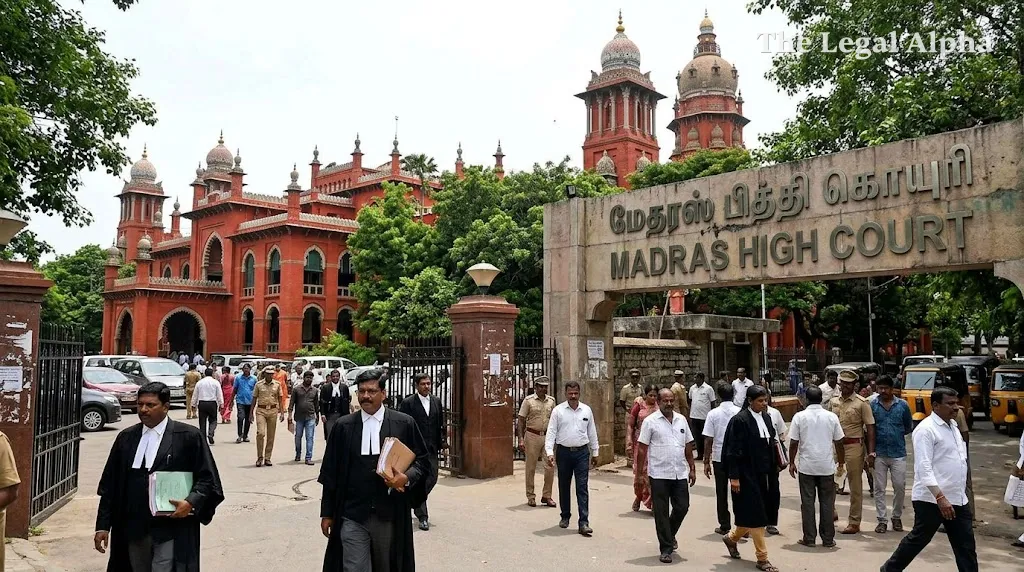
Court: High Court of Judicature at Madras
Bench: Justice N. Ramesh
Case Record: Crl. O.P. No. 26721 of 2026 | CNR: HCMA012232642026
Date of Pronouncement: October 06, 2026 | Reported: October 08, 2026 (LiveLawBiz ID: 553721)
Subject: Prevention of Money Laundering Act, 2002 (PMLA) | Misuse for Private Disputes
Category
Judgements | Financial Crimes & Criminal Law
The proceedings originated from an Enforcement Case Information Report (ECIR) registered by the Directorate of Enforcement (ED) against the petitioner, Ala Alagappan (Accused No. 3), and his father, C. Alagappan. The money laundering case was founded upon a scheduled offence under Section 420 of the Indian Penal Code, arising out of a financial dispute between the de facto complainant and the petitioner’s father. The complainant alleged that the father, who held a Power of Attorney executed by her to manage certain properties, had abused his mandate to divert sale proceeds to his own accounts and those of his family members.
The ED stepped into the dispute, alleging that a residential flat purchased in 2016 in the name of Ala Alagappan, along with subsequent bank credits, represented 'proceeds of crime' derived from the scheduled offence of cheating. The agency arrested Ala Alagappan on August 25, 2026, and remanded him to judicial custody. His regular bail application was subsequently rejected by the Principal Special Court for PMLA Cases in Chennai, which applied the strict twin conditions under Section 45 of the PMLA.
Aggrieved by his continued incarceration, Ala Alagappan moved the High Court of Judicature at Madras by filing a criminal original petition for regular bail [Crl. O.P. No. 26721 of 2026], contending that he had never acted as the complainant’s power agent, had no part in her dealings with his father, and that a purely private financial dispute was being distorted into a draconian PMLA prosecution.
Legal Topic
Criminal Law & Anti-Money Laundering Jurisprudence – Section 3 & Section 4 read with Section 45(1) (Twin Conditions for Bail), Prevention of Money Laundering Act, 2002 (PMLA); Section 420, Indian Penal Code; Scope and Legislative Purpose of PMLA; Distinction Between Private Civil/Property Disputes and Macro-Economic Scams; Judicial Review of Investigating Agency Priorities; Fundamental Right to Personal Liberty under Article 21.
Core Legal Issue
Whether the stringent machinery of the Prevention of Money Laundering Act, 2002 (PMLA) and the rigorous bail conditions under Section 45 can be legitimately deployed to investigate and prosecute purely private property and financial disputes between individuals, in the total absence of public money, public bodies, or corruption.
What Did the Court / Authority Decide?
The High Court of Judicature at Madras, through a Single Judge Bench comprising Justice N. Ramesh, allowed the petition [Crl. O.P. No. 26721 of 2026] and granted regular bail to Ala Alagappan upon executing a bond for ₹25,000/- with two sureties.
Justice N. Ramesh delivered a sharp rebuke to the Enforcement Directorate, observing that the extraordinary and stringent provisions of the PMLA are not intended to be invoked in disputes that are, in substance, purely between private individuals concerning private property that can be resolved through ordinary civil and criminal remedies. The Court emphasized that ED resources are finite and must be preserved for major public crimes: \"The resources of the Directorate are not unlimited. Each hour its officers spend tracing a flat bought by a father in his son\'s name in 2016 is an hour not spent on the laundering of public money, the proceeds of corruption, scams that defraud the public at large, and crime that touches the security and economic interest of the nation. It is for the Directorate to decide where its investigations should go, and nothing in this order is a direction to close or abandon this one.\" Holding that reasonable grounds existed to believe that the petitioner was not guilty of money laundering and unlikely to commit offences on bail, the High Court directed his immediate release.
Key Legal Points
- PMLA Unsuited for Private Property Disputes: The High Court held that the legislative architecture of the PMLA was created to combat organized, large-scale financial crimes and terrorism financing, not to serve as an aggressive forum for resolving private civil grievances or family property transfers.
- Prudent Allocation of State Investigative Resources: Justice N. Ramesh observed that the ED has limited institutional bandwidth; diverting federal officers to investigate private property transfers squanders public resources that ought to be focused on major public corruption, bank frauds, and national economic security threats.
- Adequacy of Ordinary Legal Remedies: The Bench noted that where a complainant has already instituted civil suits and criminal complaints regarding an alleged breach of a power of attorney, the deployment of PMLA transforms a private dispute into a disproportionate federal prosecution.
- Satisfaction of Section 45 Twin Conditions: The Court found that because the petitioner was not the power agent, had no role in his father’s transactions with the complainant, and did not participate in the scheduled offence, reasonable grounds existed under Section 45 to believe he was not guilty.
- Personal Liberty Remains the Fundamental Rule: The Court reiterated that Section 45 of the PMLA does not rewrite the established constitutional principle that personal liberty is the rule and pre-trial imprisonment is the exception.
Relevant Law
- Section 3 & Section 4, Prevention of Money Laundering Act, 2002: Defines and punishes the offence of money laundering involving direct or indirect involvement in proceeds of crime.
- Section 45(1), Prevention of Money Laundering Act, 2002: Imposes mandatory twin conditions for bail, requiring the court to be satisfied that there are reasonable grounds for believing the accused is not guilty and unlikely to commit an offence while on bail.
- Section 420, Indian Penal Code, 1860: Cheating and dishonestly inducing delivery of property (Scheduled Offence under Paragraph 1 of Part A of the PMLA Schedule).
- Section 439, Code of Criminal Procedure, 1973 (Section 483, BNSS, 2023): Special powers of the High Court and Court of Session regarding bail.
- Vijay Madanlal Choudhary v. Union of India (2022) SCC OnLine SC 929: Supreme Court Constitution Bench decision clarifying the scope of proceeds of crime and the application of Section 45.
- Manish Sisodia v. Directorate of Enforcement (2024) SCC OnLine SC 1920: Supreme Court ruling reiterating that prolonged incarceration without trial violates Article 21 and Section 45 does not bar constitutional bail.
Arguments of the Parties
- Contentions of the Petitioner (Ala Alagappan):
- Represented by Senior Advocate T. Mohan and Advocate G. Uma Maheswari, the petitioner submitted that he was never the complainant’s power agent and had zero involvement in her financial dealings with his father.
- Counsel argued that the dispute was entirely private, arising out of a family agreement, and the complainant had already obtained a civil decree and filed ordinary criminal complaints.
- It was contended that purchasing a flat in 2016 from familial funds could not justify treating the son as a money launderer under Section 3, and keeping him in custody violated Article 21.
- Contentions of the Respondent (Enforcement Directorate):
- Represented by Special Public Prosecutor P. Sidharthan, the ED contended that the flat purchased in the petitioner’s name was acquired using funds diverted from the complainant’s accounts during the period of the scheduled offence.
- The agency argued that the property remained in the petitioner’s possession and was projected as untainted property, satisfying the statutory ingredients of Section 3 PMLA.
- The ED maintained that under the mandatory threshold of Section 45, the petitioner had failed to discharge the burden of demonstrating prima facie innocence.
Why Does It Matter?
In recent years, the Enforcement Directorate has faced intense public and judicial scrutiny for increasingly intervening in private contractual defaults, civil property disagreements, and family estate disputes. Because the scheduled offences under PMLA include Section 420 IPC (cheating), complainants have increasingly weaponized the central agency to exert coercive pressure on counterparties, converting civil recovery suits into non-bailable money-laundering probes.
The Madras High Court’s ruling in Ala Alagappan delivers an essential institutional course correction. By reminding the ED that its resources are finite and belong to the protection of public revenue, Justice N. Ramesh draws a vital constitutional line between genuine national economic threats and ordinary private grievances. The judgment provides relief to citizens caught in commercial crosshairs and calls upon federal probe agencies to redirect their firepower toward grand corruption, systemic bank scams, and public welfare frauds.
Legal Takeaway
The stringent provisions of the Prevention of Money Laundering Act, 2002 are not meant to be invoked in disputes that are, in substance, between private individuals concerning private property where ordinary civil and criminal remedies are available. The Enforcement Directorate must prudently prioritize its finite investigative resources on cases involving public funds, systematic scams, and national economic security. Where an accused had no role in the principal scheduled transaction and no public money is involved, the twin conditions under Section 45 PMLA stand satisfied, warranting the grant of regular bail.
Sources (Primary & Additional)
- Primary Judicial Order: High Court of Judicature at Madras, Ala Alagappan v. The Deputy Director, Directorate of Enforcement [Crl. O.P. No. 26721 of 2026, CNR No. HCMA012232642026, Decided on October 06, 2026 / Uploaded October 08, 2026], per Justice N. Ramesh. Madras High Court Order PDF Repository / LiveLaw Upload.
- Authoritative Legal Reporting (LiveLawBiz): Shilpa Soman, \"PMLA Not Meant For Private Property Disputes, ED Must Prioritise Public Money Cases: Madras High Court\" (Article ID: 553721, Published on October 08, 2026). LiveLawBiz Article.
- Bar & Bench Legal Coverage: Legal Bureau, \"Focus on scams of national level, not private property disputes: Madras High Court to ED\" (Published on October 07-08, 2026). Bar & Bench Report.