Bankrupt Guarantor Cannot Withdraw Bank Funds After Estate Vests in Trustee: NCLAT
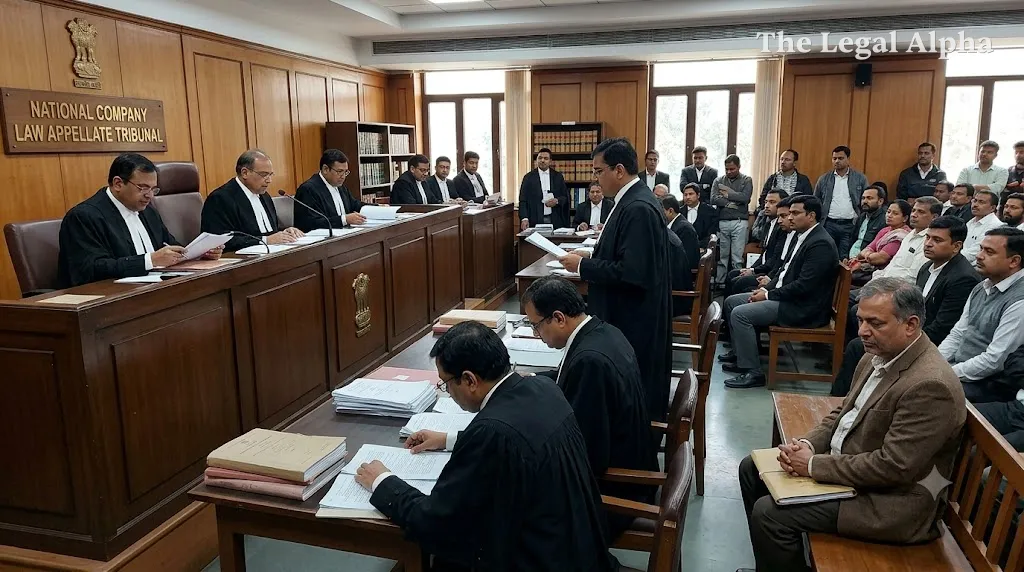
Court / Tribunal: National Company Law Appellate Tribunal (NCLAT), Principal Bench, New Delhi
Bench: Justice Mohammad Faiz Alam Khan (Judicial Member) & Shri Naresh Salecha (Technical Member)
Case Record: Company Appeal (AT) (Insolvency) Nos. 1172 & 1173 of 2026 | Citation: (2026) ibclaw.in 1127 NCLAT
Date of Pronouncement: October 07, 2026 | Reported: October 08, 2026 (LiveLawBiz ID: 553734)
Subject: Insolvency & Bankruptcy Code, 2016 (Section 154 & Section 79(14)(c)) | Personal Bankruptcy
Category
Insolvency & Bankruptcy / Judgements
The appellant, Manju Sirohi, was a personal guarantor to credit facilities extended to corporate debtor M/s Saha Infratech Private Limited. Following defaults by the corporate debtor, financial creditor Assets Care & Reconstruction Enterprise Ltd. (ACRE, acting as Trustee of ACRE-100-TRUST) initiated personal insolvency proceedings under Section 95(1) of the Insolvency and Bankruptcy Code, 2016 (IBC) [CP(IB)-80/ND/2023] before the National Company Law Tribunal (NCLT), New Delhi.
Subsequently, ACRE filed an application under Section 123 of the Code seeking the initiation of the bankruptcy process against the guarantor. On May 21, 2025, the Adjudicating Authority (NCLT New Delhi) passed a bankruptcy order under Section 126 of the IBC, declaring Manju Sirohi bankrupt and appointing Mr. Anup Kumar as the Bankruptcy Trustee.
On the date of the bankruptcy order, Sirohi maintained a savings bank account with Union Bank of India having a credit balance of ₹19,07,366.46. The Bankruptcy Trustee formally served written notice of the bankruptcy order and the statutory vesting of her estate upon Sirohi on June 5, 2025. Furthermore, Sirohi actively participated in the meeting of creditors convened by the Trustee on July 1, 2025.
Notwithstanding receipt of the formal intimation, Sirohi operated her bank account between June 16, 2025 and July 24, 2025, executing two major self-cheque withdrawals of ₹9,95,000/- and ₹9,00,000/-, alongside six ATM cash withdrawals aggregating ₹23,500/-, depleting a total of ₹19,17,500/- and leaving a negligible closing balance of ₹114.32. When the Bankruptcy Trustee moved an application before NCLT New Delhi seeking restitution of the withdrawn funds, Sirohi resisted, asserting that as an elderly senior citizen without independent income, she had sold personal streedhan jewellery and deposited the proceeds to sustain herself, and that she was unaware the statutory moratorium prohibited bank operations.
The NCLT rejected her contentions and directed her to return the entire ₹19,17,500/- to the Bankruptcy Trustee. Aggrieved, Sirohi filed statutory appeals before the National Company Law Appellate Tribunal (NCLAT), New Delhi [Company Appeal (AT) (Insolvency) Nos. 1172 & 1173 of 2026].
Legal Topic
Insolvency & Bankruptcy Law – Part III, Chapter IV of the Insolvency and Bankruptcy Code, 2016 (Bankruptcy Process for Individuals and Personal Guarantors); Section 126 (Passing of Bankruptcy Order); Section 128 (Statutory Moratorium); Section 154 (Vesting of Bankrupt’s Estate in Bankruptcy Trustee); Section 79(14)(c) & Section 155 (Excluded Assets vs. Bankruptcy Estate); Duties and Powers of Bankruptcy Trustee to Secure and Distribute Assets for Creditors.
Core Legal Issue
Whether a personal guarantor declared bankrupt under Section 126 of the IBC is legally entitled to withdraw funds from a bank account after the passing of the bankruptcy order on the plea of lack of awareness of the moratorium, and whether cash proceeds from the sale of personal jewellery qualify as 'excluded assets' under Section 79(14)(c) of the Code.
What Did the Court / Authority Decide?
A Division Bench of the National Company Law Appellate Tribunal (NCLAT), Principal Bench, New Delhi, comprising Judicial Member Justice Mohammad Faiz Alam Khan and Technical Member Naresh Salecha, dismissed the appeals [Company Appeal (AT) (Insolvency) Nos. 1172 & 1173 of 2026, Neutral Citation: (2026) ibclaw.in 1127 NCLAT / 2026 LLBiz NCLAT 393], affirming the NCLT orders directing Manju Sirohi to refund the entire ₹19,17,500/- to the Bankruptcy Trustee.
The NCLAT held that under Section 154 of the IBC, the entire estate of the bankrupt—including all credit balances in bank accounts—vests automatically and unconditionally in the Bankruptcy Trustee from the date of the bankruptcy order (May 21, 2025) without any requirement of conveyance, assignment, or transfer. The Appellate Tribunal ruled that the governing legal test is the statutory vesting of the estate under Section 154, and not merely the operation of the moratorium under Section 128. Once the estate vests in the Trustee, the bankrupt ceases to have any legal title or authority to withdraw, deal with, or dissipate those funds. The Bench rejected Sirohi’s contention that the funds were protected as proceeds of personal jewellery, holding that Section 79(14)(c) read with the Bankruptcy Rules protects only unencumbered personal ornaments up to a prescribed limit of ₹1 Lakh, and cannot be extended to multi-lakh commercial cash sale proceeds deposited into a bank account.
Key Legal Points
- Automatic Statutory Vesting Under Section 154: The NCLAT held that upon the passing of a bankruptcy order under Section 126, all property and bank balances of the bankrupt vest immediately in the Bankruptcy Trustee without any deed of conveyance, divesting the bankrupt of all operational control.
- Governing Test is Estate Vesting, Not Moratorium: The Appellate Tribunal clarified that the bar on dealing with assets stems directly from the vesting of the bankruptcy estate under Section 154, rather than the moratorium under Section 128. A bankrupt cannot plead ignorance of moratorium restrictions to validate unauthorized post-vesting withdrawals.
- Jewellery Sale Proceeds Are Not Excluded Assets: The Bench ruled that under Section 79(14)(c) read with the Bankruptcy Rules, 2019, statutory protection is limited strictly to unencumbered personal ornaments up to ₹1 Lakh in value. Liquid cash proceeds realized from selling jewellery and deposited in a bank account do not retain the character of excluded assets.
- Rejection of Plea of Ignorance: The NCLAT found that the Bankruptcy Trustee had delivered written intimation to the guarantor on June 5, 2025, and the guarantor had participated in the creditors' meeting on July 1, 2025, completely disproving her claim that she was unaware of the bankruptcy restrictions when withdrawing funds between June 16 and July 24, 2025.
- Mandatory Restitution for Creditor Distribution: The Appellate Tribunal held that unauthorized post-bankruptcy withdrawals constitute an illegal interference with the bankruptcy estate, mandating full restitution of the siphoned sum to the Trustee for equitable distribution among creditors.
Relevant Law
- Section 126, Insolvency and Bankruptcy Code, 2016: Mandates the passing of a bankruptcy order by the Adjudicating Authority against an individual or personal guarantor upon failure of the insolvency resolution process.
- Section 128, Insolvency and Bankruptcy Code, 2016: Imposes a statutory moratorium on the passing of a bankruptcy order, prohibiting fresh legal proceedings and creditor enforcement actions.
- Section 154, Insolvency and Bankruptcy Code, 2016: Dictates that the estate of the bankrupt shall vest in the Bankruptcy Trustee immediately from the date of the order, without any conveyance, assignment, or transfer.
- Section 79(14)(c) & Section 155, Insolvency and Bankruptcy Code, 2016: Defines 'excluded assets' and the composition of the bankruptcy estate, shielding only unencumbered personal ornaments of the bankrupt up to a prescribed statutory threshold (₹1 Lakh under the 2019 Rules).
- Rule 5, Insolvency and Bankruptcy (Application to Adjudicating Authority for Bankruptcy Process for Personal Guarantors to Corporate Debtors) Rules, 2019: Delineates procedural requirements, notification mechanisms, and prescribed limits for excluded assets in personal bankruptcy.
Arguments of the Parties
- Contentions of the Appellant (Manju Sirohi):
- Represented by learned counsel, the appellant argued that she is a senior citizen with no independent income and withdrew the funds purely for her subsistence.
- She contended that the deposits in the Union Bank of India account were generated from selling her personal streedhan jewellery and from her late mother-in-law's closed account, which qualified as 'excluded assets' under Section 79(14)(c).
- Counsel argued that she had acted bona fide without realizing that the statutory moratorium prevented her from operating her personal bank account.
- Contentions of the Respondents (Bankruptcy Trustee & ACRE):
- Represented by learned counsel, the Bankruptcy Trustee and Financial Creditor argued that under Section 154, all property of the bankrupt vested in the Trustee on May 21, 2025, and the bank balance formed part of the bankruptcy estate for creditor distribution.
- It was submitted that Section 79(14)(c) exempts only physical unencumbered ornaments up to ₹1 Lakh, not large-scale commercial sale proceeds deposited in bank accounts.
- The Trustee proved that formal intimation had been delivered to Sirohi on June 5, 2025, and she had attended the July 1, 2025 creditors' meeting, showing that her subsequent withdrawals were deliberate and unauthorized.
Why Does It Matter?
The personal insolvency and bankruptcy framework under Part III of the IBC is a crucial pillar of India's debt recovery ecosystem, holding promoters and corporate guarantors directly accountable for defaulted corporate loans. A recurring abuse in individual bankruptcy has been the surreptitious emptying of personal bank accounts by guarantors immediately after bankruptcy orders are pronounced, under the guise of personal living expenses, streedhan exemptions, or feigned ignorance of legal proceedings.
The NCLAT’s ruling in Manju Sirohi firmly plugs this loophole. By establishing that the governing test is the automatic statutory vesting under Section 154 rather than procedural moratorium notices, the Appellate Tribunal reinforces that a bankrupt is stripped of all authority over their bank balances the second a bankruptcy order is signed. Furthermore, by strictly confining the jewellery exemption under Section 79(14)(c) to physical ornaments within the statutory ₹1 Lakh cap, the NCLAT ensures that bankrupt guarantors cannot liquidate high-value personal assets into cash to shield funds from legitimate creditors.
Legal Takeaway
Upon the passing of a bankruptcy order under Section 126 of the Insolvency and Bankruptcy Code, 2016, all property and bank balances of the personal guarantor vest automatically in the Bankruptcy Trustee by operation of Section 154 without requiring any conveyance or transfer. A bankrupt personal guarantor has zero legal right to withdraw or deal with funds in their bank account post-vesting. Cash proceeds realized from the sale of personal jewellery do not qualify as 'excluded assets' under Section 79(14)(c), and any unauthorized post-bankruptcy withdrawal must be fully refunded to the Trustee for distribution to creditors.
Sources (Primary & Additional)
- Primary Appellate Order: National Company Law Appellate Tribunal (NCLAT), Principal Bench, New Delhi, Manju Sirohi v. Assets Care & Reconstruction Enterprise Ltd. & Anr. [Company Appeal (AT) (Insolvency) Nos. 1172 & 1173 of 2026, Neutral Citation: (2026) ibclaw.in 1127 NCLAT / 2026 LLBiz NCLAT 393, Decided on October 07, 2026], per Justice Mohammad Faiz Alam Khan and Technical Member Naresh Salecha. NCLAT Judgment Repository / IBC Laws Portal.
- Authoritative Legal Reporting (LiveLawBiz): Sandhra Suresh, \"Bankrupt Personal Guarantor Cannot Withdraw Funds After Estate Vests In Trustee: NCLAT New Delhi\" (Article ID: 553734, Published on October 08, 2026). LiveLawBiz Article.
- Insolvency Jurisprudence Analysis (IBC Laws Research): Editorial Desk, \"NCLAT Upholds Return of Withdrawn Bank Funds in Personal Bankruptcy: Section 154 Vesting Overrides Moratorium\" (Published on October 07-08, 2026). IBC Laws Analysis.