States Deploy Tort Law in Federal Courts to Target Cross-Border Delivery of Medication Abortion
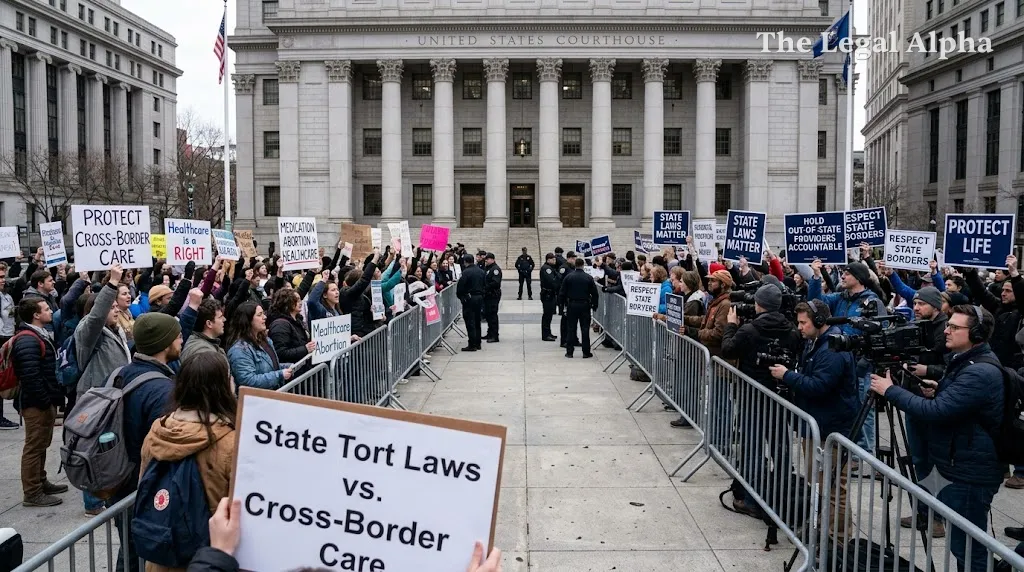
A coalition of three Republican-led states has initiated a novel cross-border legal campaign targeting the distribution of abortion medication, framing the mailing of the drugs into their jurisdictions as a actionable "public nuisance".
The states have pursued this strategy across two distinct judicial tracks. First, they filed an action invoking the original jurisdiction of the United States Supreme Court against states that maintain statutory "shield laws" protecting reproductive healthcare clinicians. Second, they initiated a federal lawsuit in the U.S. District Court in Louisiana naming nearly thirty healthcare providers, telemedicine practitioners, and non-profit support networks, including entities such as A Safe Choice Network and Cambridge Reproductive Health Consultants.
This marks a significant procedural shift in interstate reproductive health disputes. Rather than relying solely on criminal statutes or administrative challenges to federal drug approvals, state officials are weaponizing civil common-law tort principles to bypass interstate jurisdictional barriers and suppress mail-order access to mifepristone and misoprostol.
Legal Topic
Area of Law: Constitutional Law & Civil Litigation
Sub-topic: Interstate Jurisdiction / Public Nuisance Doctrine / Extraterritoriality
Core Legal Issue
The primary legal controversy centers on whether states can extend traditional common-law public nuisance claims to penalize conduct occurring outside their borders that is lawful where performed.
The courts must resolve whether the shipment of federally approved pharmaceuticals across state lines constitutes a substantial interference with a public right under tort law, and whether the U.S. Constitution permits states to abate extraterritorial actions protected by sister-state shield statutes without violating principles of federalism and interstate commerce.
What Did the Court / Authority Decide?
Neither the U.S. Supreme Court nor the Louisiana federal district court has issued a ruling on the merits or entered preliminary injunctive relief.
The filings represent an initial litigation push. The U.S. Supreme Court must first determine whether it will exercise its discretionary original jurisdiction to hear the interstate dispute. Simultaneously, the Louisiana federal court must consider anticipated preliminary motions concerning personal jurisdiction, venue, and legal standing. The cases remain pending at their earliest procedural stages.
Key Legal Points
-
Novel Use of Public Nuisance: The litigation attempts to repurpose a tort doctrine traditionally reserved for environmental contamination or illicit physical hazards to regulate the flow of prescription drugs shipped from other jurisdictions.
-
Direct Clashes Over Shield Statutes: By petitioning the Supreme Court directly, the plaintiff states seek an interstate resolution declaring that blue-state statutory protections for healthcare workers cannot shield cross-border shipments into restrictionist jurisdictions.
-
Federal Preemption and Agency Authority: The claims challenge whether state nuisance litigation can circumscribe access to drugs that maintain Food and Drug Administration (FDA) approval for remote delivery.
-
Strict Extraterritorial Limits: The actions test constitutional boundaries governing how far one state may penalize commercial and medical conduct conducted entirely within another state's territorial boundaries.
Relevant Law
-
U.S. Constitution, Article III, Section 2: Governs the original and exclusive jurisdiction of the Supreme Court over controversies between two or more States.
-
U.S. Constitution, Article IV (Full Faith and Credit Clause) & Article I (Dormant Commerce Clause): Governing interstate commerce and the respect owed to sister-state legislative acts.
-
Common Law Public Nuisance Doctrine: Principles under the Restatement (Second) of Torts § 821B regarding unreasonable interference with rights common to the general public.
-
State Shield Statutes: State laws designed to insulate local providers against out-of-state subpoenas, extraditions, and civil liabilities arising from reproductive health services.
Arguments of the Parties
Plaintiff States
The suing states contended that the intentional shipment of abortifacients into their territory directly undermines state statutes enacted to protect maternal health and unborn life. In their Supreme Court filing, the states argued that out-of-state shield laws actively encourage activities that disrupt public welfare within plaintiff states, comparing the systematic dispatch of prohibited substances across borders to sending actionable contraband or public safety threats that states retain the sovereign right to abate.
Out-of-State Providers and Shield Jurisdictions
Defending practitioners and affected states submit that medical providers are practicing lawful telemedicine within their licensing states under valid federal regulatory guidelines. Their legal position maintains that one sovereign state cannot project its civil tort statutes extraterritorially to regulate legal medical services performed elsewhere, and that applying nuisance law to federally approved pharmaceuticals improperly conflicts with federal preemption and interstate commerce protections.
Why Does It Matter?
If accepted by the courts, using public nuisance as an enforcement mechanism would create a sweeping precedent with consequences extending far beyond reproductive healthcare. It would offer states an expansive civil template to bypass the traditional hurdles of criminal extradition and regulatory reach, potentially enabling lawsuits against out-of-state businesses distributing firearms, consumer products, digital services, or environmental emissions that are legal in the origin state but restricted in the destination state.
Furthermore, this litigation directly tests the viability of state shield statutes. A finding of tort liability against remote practitioners would severely disrupt interstate telehealth networks, leaving providers exposed to crippling damages or interstate injunctions even when operating entirely inside jurisdictions designed to protect them.
Legal Takeaway
States seeking to shut down cross-border abortion medication are shifting from administrative challenges to common-law civil tort litigation, asserting that mail deliveries constitute an actionable public nuisance. The resulting legal battles will test whether states can project their civil laws across state borders to nullify protections established by other sovereign states.
Sources
Primary Source:
-
Complaint / Motion for Leave to File Bill of Complaint, original jurisdiction docket, Supreme Court of the United States (filed October 2026).
-
Civil Complaint against Out-of-State Telehealth Providers, U.S. District Court for the District of Louisiana (filed October 2026).
Additional Sources:
-
State legislative shield enactments and public nuisance filings concerning interstate medication distribution.