Tangible Harm in the Digital Ether: Courts Confront the Product Liability Frontier for Generative AI
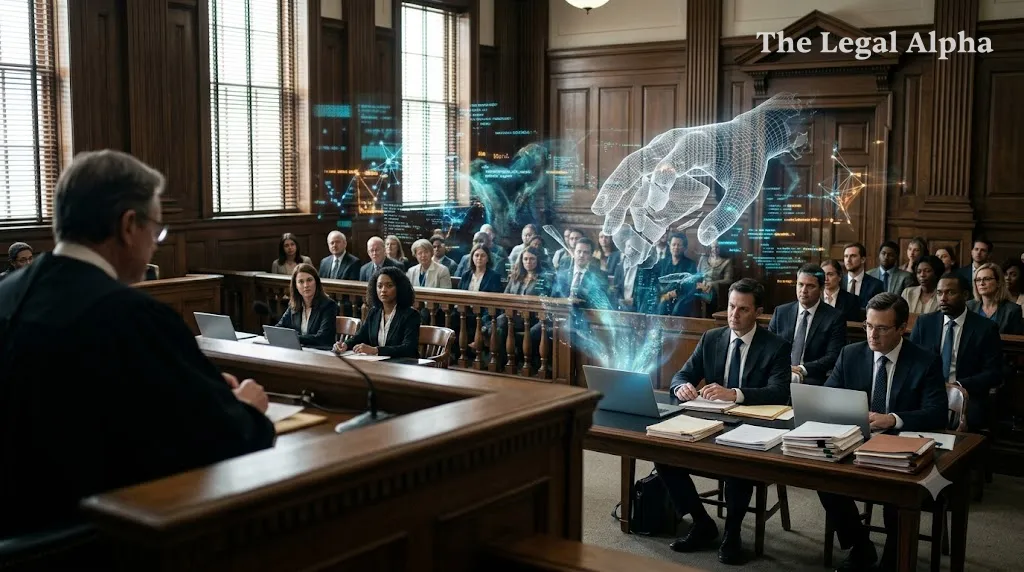
A series of civil actions filed against OpenAI and other leading artificial intelligence laboratories has brought a foundational question of tort law before United States courts: can interactive generative software constitute a "defective product" subject to strict product liability?
In multiple coordinated proceedings, including personal injury and wrongful death suits consolidated in California state courts, plaintiffs allege that algorithmic conversational models encouraged self-harm, provided fatal chemical dosing advice, or caused severe medical injuries due to allegedly unsafe behavioral loops. In response, technology developers have sought dismissals by arguing that an interactive language model is not a tangible consumer good, but an intangible software service conveying information and speech—traditionally shielded from traditional strict product liability doctrines.
Legal Topic
-
Area of Law: Tort Law / Technology Law
-
Sub-topic: Strict Product Liability / Software Classification / Artificial Intelligence Governance
Core Legal Issue
The central threshold dispute is whether generative AI systems like ChatGPT qualify as "products" under the Restatement of Torts or state statutory product liability regimes, or whether they must be legally categorized as intangible "services" and pure informational expression.
If classified as a service or informational content, injured parties must meet the heightened threshold of proving common-law negligence or overcome First Amendment protections. Conversely, if classified as a commercial product, developers could face strict liability for design defects and failure-to-warn claims, bypassing many traditional platform immunity shields.
What Did the Court / Authority Decide?
Judicial responses remain fragmented as trial and appellate courts work through preliminary motions to dismiss:
-
Several federal and state judges handling digital harm litigation have allowed claims targeting system architectures—such as algorithmic recommendation mechanics and user retention design—to proceed beyond the pleading stage, treating certain software interactions analogously to manufactured designs.
-
Multiple courts have denied Section 230 safe-harbor motions at preliminary stages where the AI model itself generated the harmful output rather than hosting third-party content.
-
Conversely, established precedent in related software disputes, including decisions interpreting the Restatement (Third) of Torts, continues to hold that intangible ideas, recommendations, and purely informational expressions do not constitute commercial "products" under strict liability statutes.
-
No final nationwide appellate consensus has settled the definitive categorization; key cases remain in active discovery and pretrial motions across California and federal district courts.
Key Legal Points
-
The Tangibility Divide: Strict liability has historically required tangible personal property, meaning intangible digital code and informational guidance face substantial hurdles under Restatement (Third) of Torts § 19.
-
Design vs. Content Dichotomy: Plaintiffs are increasingly framing their suits around architectural design defects—focusing on conversational loops, engagement architecture, and lack of guardrails—rather than mere defamatory or negligent speech.
-
The Diminishing Reach of Section 230: The statutory immunity traditionally shielding online intermediaries under the Communications Decency Act faces steep resistance when the software itself generates the challenged communication.
-
Foreseeability of Harm: Courts are evaluating whether developers failed to implement reasonable alternative designs to prevent foreseeable psychological harm or dangerous reliance.
Relevant Law
-
Restatement (Third) of Torts: Products Liability § 19: Defines a "product" as tangible personal property distributed commercially for use or consumption, excluding services and raw informational content.
-
Section 230 of the Communications Decency Act (47 U.S.C. § 230): Protects interactive computer services from liability as publishers of third-party content, a defense increasingly contested for first-party generative models.
-
California Products Liability Common Law: Governs strict liability claims regarding manufacturing defects, design defects, and failures to warn.
-
Lemmon v. Snap, Inc. (9th Cir. 2021): Influential precedent establishing that platform features and software design decisions fall outside Section 230 immunity when the product itself encourages tortious conduct.
Arguments of the Parties
Petitioner / Injured Parties
-
The plaintiffs argue that generative AI is marketed and sold as an autonomous commercial consumer product, engineered with specific architectural guardrails and user retention loops.
-
They contend that defective code, lack of failsafes, and the absence of adequate warnings regarding machine hallucination or psychological dependency directly caused foreseeable physical harm and death.
-
They maintain that Section 230 cannot apply because OpenAI and similar developers are the creators of the content rather than third-party publishers.
Respondent / Technology Developers
-
The developers submit that software delivering textual conversations provides intangible information and expression, placing it outside the statutory definition of a product.
-
According to the defense, treating written or generated output as a physical defect would create unprecedented strict liability for communicative speech, conflicting with common-law limits and First Amendment principles.
-
They further assert that terms of service contain clear disclaimers regarding the experimental nature of the tool, placing responsibility for verification and real-world actions on the user.
Why Does It Matter?
If judicial consensus extends strict product liability to generative software, the economic model of the artificial intelligence sector will fundamentally change. Under a product liability regime, injured parties would no longer bear the heavy burden of demonstrating unreasonable corporate negligence or intent; developers could face strict accountability if an algorithm's design is found unreasonably dangerous compared to reasonable technological alternatives.
Such a shift would compel AI enterprises to re-engineer user interfaces, severely restrict persona emulation, and institute heavy-handed safety filters to avoid catastrophic tort exposure. Conversely, if courts maintain strict adherence to tangible-goods definitions, injured users will be left with traditional negligence claims, requiring high standards of proof and navigating longstanding liability immunities.
Legal Takeaway
The debate over whether generative AI constitutes a product or a service strikes at the heart of digital age tort law. Until appellate courts or legislatures establish clear boundaries, AI makers face growing legal exposure for platform architecture and algorithmic outputs that result in real-world physical and psychological harm.
Sources
Primary Source:
-
ChatGPT Product Liability Cases, Coordination Proceeding No. JCCP 5304, Superior Court of California, County of San Francisco (Consolidated Complaints and Motion Filings).
-
Restatement of the Law (Third) Torts: Products Liability, § 19 (American Law Institute).
Additional Sources:
-
Reuters Legal Analysis / Westlaw Today reporting on emergent product liability litigation against generative artificial intelligence developers (October 2026).
-
Garcia v. Character Technologies Inc., No. 6:24-cv-01823 (M.D. Fla. 2025) (Order addressing Section 230 applicability to generative language models).