Supreme Court Suspends Life Sentences of Two Bilkis Bano Case Convicts Pending Appeal
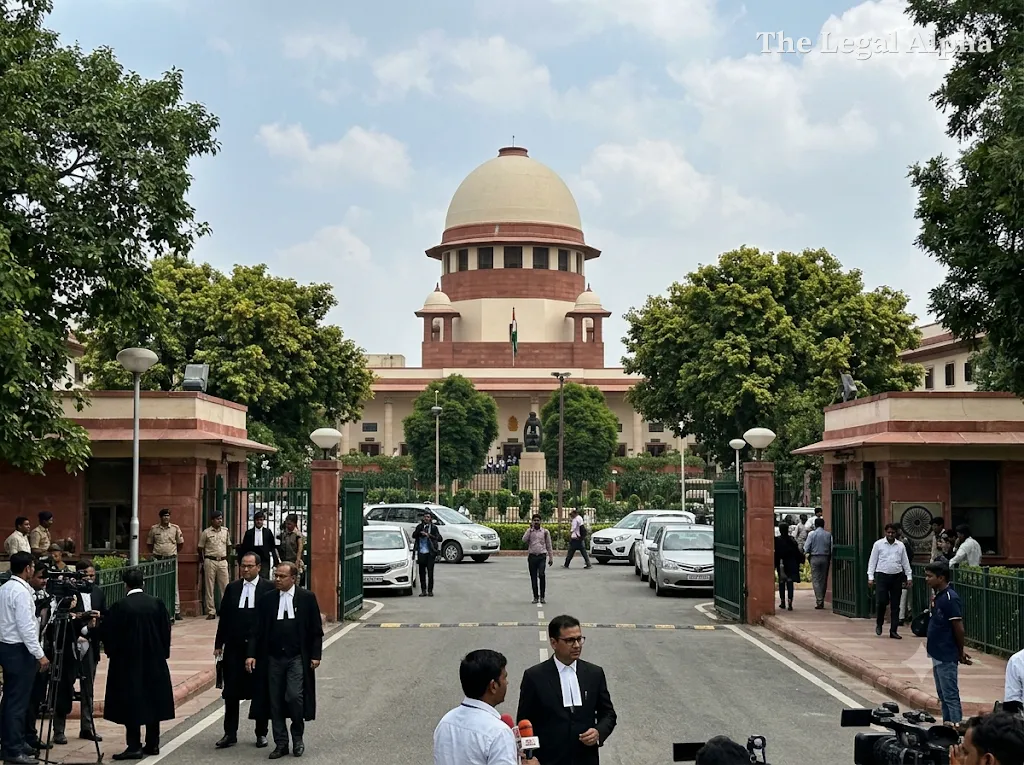
The Supreme Court of India has suspended the life sentences of two men convicted in the 2002 Bilkis Bano gangrape and murder case and granted them conditional bail while their substantive appeals against conviction remain pending.
A Division Bench comprising Justice M.M. Sundresh and Justice Prasanna B. Varale passed the order on October 28, 2026 (which became widely reported in mid-November), in criminal appeals arising out of Special Leave Petitions (Crl.) Nos. 5265–5266 of 2026, titled Bipinchand Kanaiyalal Joshi @ Lala Doctor, Etc. v. The State of Gujarat & Anr. The relief applies to convicts Bipinchand Kanaiyalal Joshi and Pradip Ramanlal Modhiya.
The development is significant because both men are among the eleven convicts whose controversial premature release by the Gujarat government in August 2022 was quashed by the Supreme Court in January 2024, forcing their return to prison. Following the latest bail order, survivor Bilkis Bano issued a public statement expressing shock and stating that she was neither notified nor heard before the interim relief was granted.
Legal Topic
Area of Law: Criminal Law
Sub-topic: Suspension of Sentence / Appellate Bail
Core Legal Issue
The Supreme Court was called upon to determine whether two life convicts, who had already undergone more than seventeen years of actual imprisonment, should have their sentences suspended and be released on bail pending the final adjudication of their statutory appeals against conviction.
In deciding this interim prayer, the Bench had to balance the gravity of the underlying offences—which include gangrape and murder—against prolonged pre-appeal incarceration, severe physical disability suffered by one of the appellants, and the existence of arguable questions of fact and law in the pending appeals.
What Did the Court / Authority Decide?
The Supreme Court allowed the interim prayer for suspension of sentence and granted bail to both appellants, Bipinchand Kanaiyalal Joshi and Pradip Ramanlal Modhiya.
Key elements of the Court's order include:
-
Suspension of Sentence and Bail: The Bench ordered the suspension of the life sentences awarded to the two convicts and directed that they be released on bail, subject to terms and conditions to be fixed by the concerned trial court.
-
Recognition of Pending Issues: The Court explicitly observed that the appeals raise substantive questions on both fact and law that require detailed examination.
-
Status of the Case: The order is strictly an interim measure regarding custody. The underlying convictions—originally handed down by a Special CBI Court in Mumbai in 2008 and upheld by the Bombay High Court on May 4, 2017—have not been overturned. The main appeals have been admitted and will be listed for final hearing in due course.
Key Legal Points
-
Prolonged Incarceration as a Ground for Bail: The Bench placed primary weight on the fact that both appellants had already spent over seventeen years behind bars, reinforcing the judicial principle that lengthy imprisonment while an appeal awaits final hearing is a relevant factor for suspending a sentence.
-
Humanitarian and Medical Considerations: The Court took specific note of the undisputed fact that one of the appellants suffers from a severe physical handicap, factoring medical vulnerability into its discretionary assessment.
-
Presence of Arguable Legal and Factual Questions: Suspension of a life sentence generally requires a prima facie assessment that the appeal is not frivolous; the Bench recorded that "there are issues to be decided in the appeal, both on fact and law."
-
Distinction Between Remission and Appellate Bail: Unlike the 2022 executive remission—which was struck down in 2024 because the Gujarat government lacked jurisdiction—this relief stems from the judiciary's appellate power to regulate custody while reviewing the legality of the conviction itself.
Relevant Law
-
Code of Criminal Procedure, 1973 (CrPC) / Bharatiya Nagarik Suraksha Sanhita, 2023 (BNSS): Provisions governing the suspension of sentence pending appeal and release of an appellant on bail (specifically Section 389 of the CrPC / Section 430 of the BNSS) alongside Article 136 of the Constitution of India (Special Leave to Appeal).
-
Indian Penal Code, 1860 (IPC): The appellants were convicted and sentenced to rigorous imprisonment for life under Sections 143 (unlawful assembly), 147 (rioting), 302 (murder), and 376 (rape) arising out of an FIR registered at Godhra Town Police Station, Panchmahal district, Gujarat.
-
Precedent Context: Bilkis Yakub Rasool v. Union of India & Ors. (2024), wherein the Supreme Court quashed the Gujarat government's premature remission orders on the ground that the State of Maharashtra—where the trial was conducted—was the appropriate government to decide remission.
Arguments of the Parties
Appellants (Bipinchand Kanaiyalal Joshi & Pradip Ramanlal Modhiya)
Appearing for the convicts, Senior Advocate Siddharth Luthra argued that both appellants had already undergone more than seventeen years of actual incarceration. Counsel highlighted that one of the appellants was not named in the initial First Information Report (FIR) and was implicated nearly three years after the 2002 incident. It was further submitted that one of the convicts suffers from a severe physical disability, warranting suspension of sentence while their appeals against the 2017 Bombay High Court verdict are pending.
Respondent (State of Gujarat)
Additional Solicitor General Raja Thakre, representing the State, vehemently opposed the plea for bail. The State contended that both the trial court and the Bombay High Court had thoroughly evaluated the evidentiary record before convicting the appellants, and argued that the extreme gravity and brutality of the offences weighed against granting suspension of sentence.
Why Does It Matter?
This order highlights the sharp legal distinction between executive clemency and judicial review. While the Supreme Court's 2024 ruling invalidated the Gujarat government's executive decision to remit the convicts' sentences permanently, that ruling did not strip the convicts of their constitutional and statutory right to challenge their convictions before the apex court.
At the same time, the development underscores an ongoing tension in Indian criminal jurisprudence regarding victim participation. Under recent criminal law reforms and judicial precedents, courts have increasingly recognized a victim's right to be heard at crucial stages of criminal proceedings, including bail. Bilkis Bano's public objection that she was neither notified nor heard before the suspension of sentence is likely to trigger fresh legal challenges and renewed scrutiny over notice requirements to survivors in high-profile appellate bail hearings.
Legal Takeaway
Suspending a sentence and granting bail pending appeal does not amount to an acquittal or an endorsement of the convicts' innocence; the 2017 conviction remains intact until the Supreme Court decides the appeals on their merits. However, when convicts have served over seventeen years in prison and raise arguable legal issues, appellate courts may grant conditional bail to prevent prolonged incarceration before the appeal is finally heard.
Sources
Primary Source:
-
Order dated October 28, 2026, passed by the Supreme Court of India (Bench of Justice M.M. Sundresh and Justice Prasanna B. Varale) in Bipinchand Kanaiyalal Joshi @ Lala Doctor, Etc. v. The State of Gujarat & Anr., Petition(s) for Special Leave to Appeal (Crl.) Nos. 5265–5266 of 2026.
Additional Sources:
-
Bombay High Court Judgment dated May 4, 2017, in Criminal Appeals Nos. 1022 and 1023 of 2009 (upholding the 2008 Special CBI Court conviction).
-
Supreme Court of India Judgment in Bilkis Yakub Rasool v. Union of India & Ors. (January 2024) quashing premature remission.
-
Public statement issued by Bilkis Bano through Senior Advocate Shobha Gupta on November 16, 2026.