Supreme Court Upholds Maharashtra Local Body Seat Rotation Reset, Rules No Vested Right to Reserved Constituency
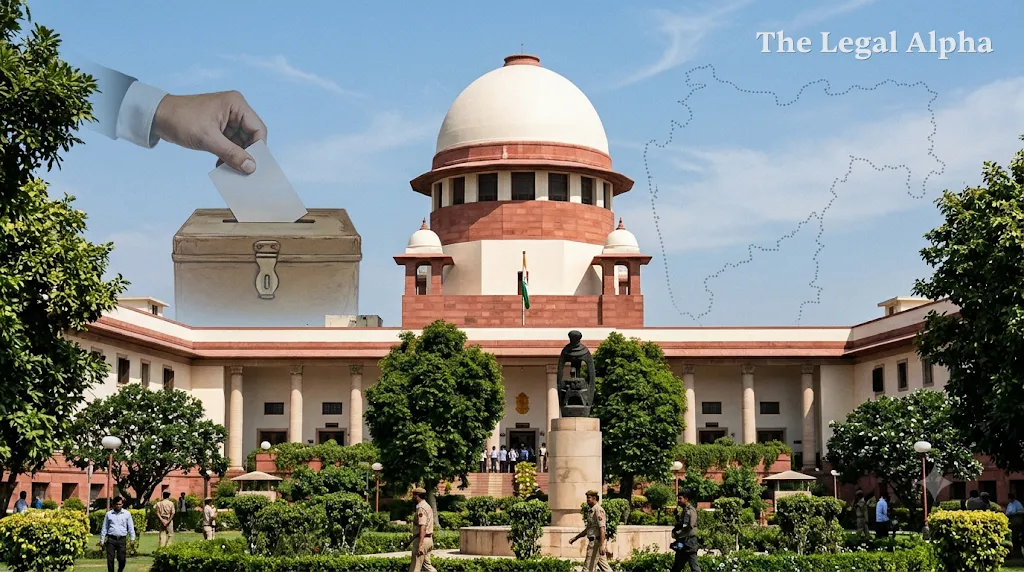
The Supreme Court of India dismissed a challenge to Maharashtra's updated policy governing how seats are rotated and reserved for Scheduled Castes (SC) and Scheduled Tribes (ST) in local body elections. The petition was filed by Sau. Rupali Indrabhushan Sonde (also known as Ku. Rupali Sharadrao Badhiye) against the State of Maharashtra, following a September 2025 decision by the Nagpur Bench of the Bombay High Court that rejected her plea.
A bench comprising Justice Joymalya Bagchi and Justice V. Mohana heard the Special Leave Petition on November 16, 2026. The dispute centered on Rule 12 of the Maharashtra Zilla Parishads and Panchayat Samitis (Manner and Rotation of Reservation of Seats) Rules, 2025, which treats the upcoming general election held after the rules' commencement as the "first election" for rotation purposes. By upholding the rule, the Court affirmed that the state government holds the discretion to determine the timing and cutoff dates for rotating reserved seats.
Legal Topic
Area of Law: Constitutional Law and Election Law
Sub-topic: Local Self-Government / Reservation and Rotation of Seats
Core Legal Issue
The core question before the Supreme Court was whether resetting the rotation cycle for SC and ST reserved seats in Zilla Parishad and Panchayat Samiti elections violates the constitutional mandate of rotation or infringes upon the rights of voters and prospective candidates.
Specifically, the Court had to decide if an individual voter or aspirant possesses a legally enforceable, vested right to demand that a specific constituency be reserved for SC or ST candidates during a particular election cycle.
What Did the Court / Authority Decide?
The Supreme Court dismissed the Special Leave Petition and declined to interfere with the Bombay High Court's ruling. The bench definitively ruled that neither a voter nor a prospective candidate can claim a vested right to have a specific seat declared as reserved for SC or ST communities.
While the Court acknowledged during the hearing that the petitioner's concern about resetting the cycle appeared attractive at first glance, it concluded that the argument overlooked the absence of any individual right to constituency-specific reservation. The bench noted that setting or shifting a cutoff date for rotation falls squarely within the executive's jurisdiction.
However, the Court provided a procedural window for the petitioner, clarifying that the dismissal of her petition does not bar her from submitting a formal representation to the State government requesting a reconsideration of the rotation scheme in accordance with the law.
Key Legal Points
-
No Individual Vested Right: Constitutional and statutory guarantees ensure proportionate representation for SC and ST communities based on population, not a personal right for any voter or candidate to see a specific constituency reserved.
-
Executive Discretion Over Cutoff Dates: While the law mandates the principle of rotating reserved seats in local bodies, the exact mechanism, timing, and cutoff dates for executing that rotation rest within the policy domain of the State government.
-
Validity of the 2025 Rules: Treating the first general election conducted after the notification of the Maharashtra Zilla Parishads and Panchayat Samitis (Manner and Rotation of Reservation of Seats) Rules, 2025 as the starting point for a fresh rotation cycle is legally permissible and does not violate Article 14.
-
Right to Make Representations Preserved: Even when courts decline to strike down a valid policy rule, affected citizens retain the administrative avenue to petition the government to review or modify the operational scheme.
Relevant Law
-
Constitution of India, Article 243D: Mandates the reservation of seats for Scheduled Castes and Scheduled Tribes in every Panchayat in proportion to their population, and provides that such seats may be allotted by rotation to different constituencies.
-
Constitution of India, Article 14: Guarantees equality before the law and prohibits arbitrary state action.
-
Maharashtra Zilla Parishads and Panchayat Samitis (Manner and Rotation of Reservation of Seats) Rules, 2025 (Rule 12): Replaces the 1996 rotation rules and stipulates that the general election held after the commencement of the 2025 Rules shall be treated as the first election for the purpose of rotating seats.
Arguments of the Parties
Petitioner
Represented by Senior Advocate Vipin Sanghi, the petitioner argued that Rule 12 arbitrarily disrupted an ongoing rotation cycle established under the 1996 framework. Counsel submitted that by wiping the slate clean and starting the rotation afresh, constituencies with smaller SC/ST populations—which were finally due for reservation—would be bypassed again and could remain unreserved indefinitely, rendering the constitutional promise of rotation illusory.
Respondent / State
Representing the State of Maharashtra, the government maintained before the courts that it possessed full legislative and rule-making competence to frame the 2025 Rules. The State contended that the rotation policy complied with constitutional requirements of proportionate representation and that shifting the baseline election for rotation was a valid policy decision.
Why Does It Matter?
This ruling clarifies the boundaries between constitutional entitlements and administrative implementation in grassroots democracy. While local body reservations are designed to ensure broad-based political participation across different regions over time, courts will not treat rotation schedules as rigid, unalterable guarantees for specific wards or constituencies.
For state governments and election commissions across India, the order reinforces broad administrative leeway when updating electoral rules or recalibrating reservation cycles following delimitation or legislative amendments. Conversely, for local political aspirants and community groups, the decision signals that grievances regarding perceived unfairness in seat rotation must primarily be resolved through executive representations and political advocacy rather than constitutional litigation.
Legal Takeaway
The law guarantees Scheduled Castes and Scheduled Tribes proportionate seat reservation in local bodies, not the reservation of any specific constituency. Because no voter or candidate holds a vested right to a reserved seat in their area, state governments retain the authority to reset rotation cycles and cutoff dates, leaving policy representations as the primary remedy for aggrieved aspirants.
Sources
Primary Source:
Order of the Supreme Court of India in Sau. Rupali Indrabhushan Sonde @ Ku. Rupali Sharadrao Badhiye v. State of Maharashtra & Ors. (Diary No. 68024/2026, decided on November 16, 2026).
Additional Sources:
-
Judgment of the High Court of Judicature at Bombay (Nagpur Bench) in Ishan Rajendra Sukhdeve & Ors. v. State of Maharashtra (decided on September 19, 2025).
-
Maharashtra Zilla Parishads and Panchayat Samitis (Manner and Rotation of Reservation of Seats) Rules, 2025.