DNA on a Bed Sheet Proves Contact, Not Lack of Consent: Delhi High Court Overturns 2014 Rape Conviction
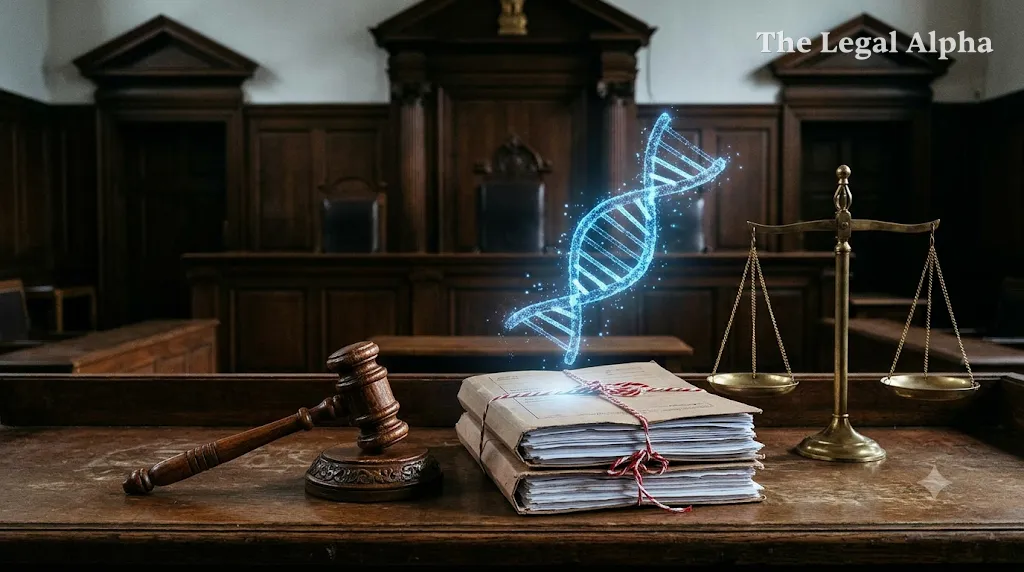
The Delhi High Court has acquitted a man who was convicted in 2014 of rape and causing hurt, ruling that forensic evidence of sexual contact cannot substitute for proof that the act happened without consent.
Justice Ravinder Dudeja delivered the judgment on November 6, 2026, in Narayan v. State (CRL.A. 1050/2014, Neutral Citation: 2026:DHC:9974). The case originated from a September 2012 incident under the jurisdiction of Police Station Bhalswa Dairy, Delhi. The prosecution initially alleged that the appellant, Narayan Pradhan, visited the complainant’s residence and forcibly sexually assaulted her.
However, during the trial, the complainant (examined as PW-5) turned hostile and completely disowned the allegations, testifying that the appellant had merely come to discuss buying a motorcycle from her sons and had done nothing wrong to her. Despite her testimony, the Trial Court convicted Narayan in May 2014 under Sections 376 (rape) and 324 (voluntarily causing hurt by dangerous weapons or means) of the Indian Penal Code (IPC), sentencing him to ten years of rigorous imprisonment. The Trial Court relied heavily on the presence of the appellant’s DNA on a seized bed sheet and faulted the defence for not cross-examining the complainant.
The ruling is significant because it clarifies how courts must treat forensic evidence and the burden of proof when a complainant retracts allegations of sexual assault.
Legal Topic
Area of Law: Criminal Law Sub-topic: Sexual Offences / Appreciation of Forensic and Circumstantial Evidence
Core Legal Issue
The central legal question before the Delhi High Court was whether a conviction for rape under Section 376 of the IPC can be sustained solely on circumstantial and forensic evidence—such as DNA matching on a bed sheet—when the complainant denies the assault in court and there is no independent evidence proving that the sexual act was non-consensual.
The Court also examined whether a trial judge can draw an adverse inference against an accused person for choosing not to cross-examine a complainant whose testimony has already exonerated them, or shift the burden onto the accused to explain the presence of DNA.
What Did the Court Decide?
The Delhi High Court allowed the criminal appeal, set aside the May 9, 2014 conviction and May 10, 2014 sentencing order, and acquitted Narayan of all charges. The Court also cancelled his bail bond and discharged his surety.
Key findings and directions from the judgment include:
-
DNA Does Not Prove Absence of Consent: Justice Ravinder Dudeja held that while forensic evidence showing the appellant’s DNA on a bed sheet may indicate sexual contact, it does not automatically establish that the act occurred without the woman's consent.
-
Hostile Testimony Does Not Automatically Acquit, But Gaps Remain Fatal: The Court acknowledged the settled principle that a hostile witness's testimony does not automatically end a prosecution if other admissible evidence proves the crime. However, in this case, the remaining medical and circumstantial evidence failed to prove the core ingredients of rape or the alleged administration of a chemical substance under Section 324 IPC.
-
No Adverse Inference Against the Defence: The High Court ruled that the Trial Court erred in penalising the accused for not cross-examining the complainant. Once the complainant testified that the accused had committed no offence, the defence had no reason to cross-examine her.
-
Burden of Proof Cannot Be Shifted: The Trial Court improperly placed the burden on the appellant to explain how his DNA came to be on the bed sheet, rather than requiring the prosecution to first establish a complete, unbroken chain of guilt beyond reasonable doubt.
-
Investigative Omissions: The Court noted that the prosecution failed to examine a tenant residing in the house or any independent witness who could corroborate the alleged incident.
Key Legal Points
-
Sexual Contact vs. Rape: In criminal jurisprudence, proving physical or sexual contact through forensic science is legally distinct from proving the offence of rape, which strictly requires proof of the absence of consent.
-
Presumption of Innocence and Burden of Proof: Until the prosecution discharges its primary burden of proving every ingredient of an offence beyond reasonable doubt, the evidentiary burden does not shift to the accused to offer explanations for forensic traces.
-
Role of Cross-Examination: An accused person is under no obligation to cross-examine a prosecution witness whose testimony already supports the defence; declining to cross-examine in such circumstances cannot be used as an incriminating factor.
-
Standard for Circumstantial Evidence: When direct ocular testimony fails, a conviction based on circumstantial evidence requires every link in the chain to be firmly established, pointing exclusively toward the guilt of the accused.
Relevant Law
-
Indian Penal Code, 1860 (IPC):
-
Section 376: Punishment for rape (requiring proof of sexual intercourse without consent as defined under Section 375 IPC).
-
Section 324: Voluntarily causing hurt by dangerous weapons or means (invoked in relation to the allegation of administering an unknown chemical substance).
-
-
Code of Criminal Procedure, 1973 (CrPC):
-
Section 374: Appeal from convictions.
-
Arguments of the Parties
Appellant (Narayan) Counsel for the appellant argued that the Trial Court committed serious errors in evaluating the evidence. They submitted that the complainant, being the star witness, explicitly denied any sexual assault or administration of any chemical substance during her court testimony. Without reliable evidence proving a lack of consent, the appellant contended, forensic traces on a bed sheet could not justify a conviction under Sections 376 or 324 of the IPC.
Respondent (State) The State supported the Trial Court's verdict, relying on the appellant's presence at the complainant's house around the time of the incident, the initial police statement, and the forensic report detecting the appellant's DNA on the seized bed sheet as sufficient circumstantial proof of guilt.
Why Does It Matter?
DNA profiling has become a cornerstone of modern criminal investigations in India, particularly in sexual assault prosecutions. While scientific evidence carries high persuasive value, the Delhi High Court’s ruling reinforces an important boundary: forensic science answers who was present or involved in physical contact, not whether that contact was consensual.
For trial courts, prosecutors, and defence lawyers, the judgment serves as a reminder that scientific corroboration cannot plug foundational gaps in a prosecution's case. When a complainant retracts an allegation on the witness stand, courts cannot use forensic reports to presume non-consent or reverse the constitutional presumption of innocence by demanding explanations from the accused.
Legal Takeaway
Forensic proof of sexual contact, such as a DNA match on a bed sheet, cannot by itself sustain a rape conviction if the prosecution fails to prove that the act was non-consensual. Courts cannot shift the burden of proof onto the accused or draw negative inferences simply because the defence chooses not to cross-examine a complainant who has already exonerated them.
Sources
Primary Source
-
Judgment of the High Court of Delhi in Narayan v. State, CRL.A. 1050/2014 (Neutral Citation: 2026:DHC:9974), decided by Justice Ravinder Dudeja on November 6, 2026.
Additional Sources
-
Case records and cause list filings of the High Court of Delhi (FIR No. 162/2012, PS Bhalswa Dairy).