Supreme Court Halts Accelerated Agency Review in Dispute Over Discounted Political Airtime
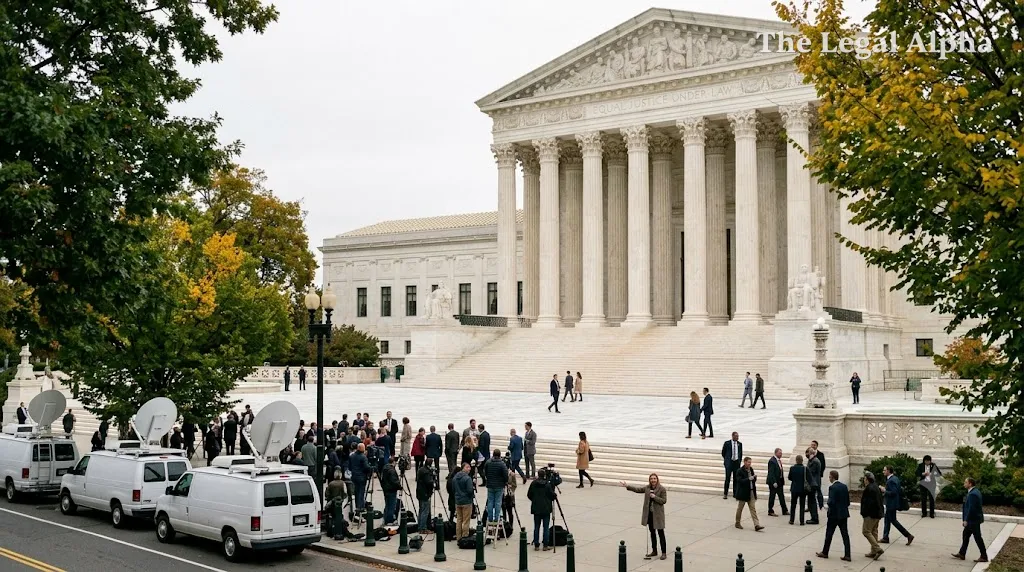
The U.S. Supreme Court has intervened once more to block a lower court directive instructing the Federal Communications Commission (FCC) to quickly resolve a Democratic challenge concerning broadcast advertising pricing.
The underlying controversy involves guidance issued by the FCC's Media Bureau that allows political party committees and joint fundraising entities to access the deeply discounted broadcast advertising rates normally reserved exclusively for individual candidates. Democratic candidates and committees challenged this policy before the agency and sought judicial intervention, arguing that the pricing rules improperly advantage cash-heavy party operations.
After the U.S. Court of Appeals for the Fourth Circuit attempted to force the FCC to decide the pending administrative challenge on an expedited schedule ahead of the midterm elections, the Supreme Court stayed that mandate. The order preserves the current advertising rules through the final stretch of the election season.
Legal Topic
-
Area of Law: Communications Law / Administrative Law
-
Sub-topic: Campaign Media Regulations & Administrative Remedies
Core Legal Issue
The controversy centres on whether federal courts can order an administrative agency to fast-track internal dispute proceedings absent an express statutory deadline, and whether litigating parties may obtain judicial relief prior to exhausting administrative processes.
Specifically, the Court evaluated whether the FCC could be compelled by judicial mandate to dispose of an application for review challenging the "lowest unit charge" expansion under the Communications Act, or if the doctrine of administrative exhaustion and agency discretion prevents premature judicial compulsion.
What Did the Court Decide?
The Supreme Court granted an emergency application staying the Fourth Circuit's order that would have required the FCC to act immediately on the administrative challenge. In its unsigned per curiam decision, the Court concluded that the Communications Act does not impose a mandatory timetable or statutory deadline on the FCC for resolving internal petitions of this nature.
By freezing the Fourth Circuit's intervention, the high court ensured that:
-
The FCC is not required to issue an accelerated administrative decision before the election.
-
The Media Bureau's expanded ad-rate framework remains in effect for the upcoming midterm races.
-
Judicial review of the underlying rate structure remains paused until the FCC concludes its administrative procedures.
Justices Sonia Sotomayor and Ketanji Brown Jackson noted their dissents from the ruling without issuing written opinions.
Key Legal Points
-
Absence of Statutory Deadlines: Courts cannot invent mandatory agency timelines where Congress has declined to write statutory deadlines into the governing regulatory framework.
-
Administrative Exhaustion: Under the Communications Act of 1934, parties seeking judicial review must generally exhaust their administrative remedies before obtaining federal court intervention, preventing courts from disrupting non-final agency proceedings.
-
Preservation of the Status Quo: The order maintains regulatory consistency in campaign finance and media purchasing during an ongoing election cycle, avoiding last-minute operational disruptions for broadcasters and campaigns.
Relevant Law
-
Section 315(b) of the Communications Act of 1934 (47 U.S.C. § 315(b)): Governs the "lowest unit charge" (LUC) provisions requiring broadcast stations to offer qualified candidates discounted airtime during designated pre-election windows.
-
Administrative Procedure Act (APA), 5 U.S.C. §§ 704 & 706: Regulates final agency action requirements and judicial standards concerning unreasonable agency delay.
-
Federal Election Campaign Act (FECA): Governs coordinated expenditures and joint fundraising between candidates and political party committees.
Arguments of the Parties
Petitioners (National Republican Committees & Federal Regulators)
The Republican committees and the government argued that the Fourth Circuit overstepped its constitutional and statutory authority by creating an artificial deadline for the FCC to act. They submitted that because the challenge was still under consideration at the FCC, no final agency action existed, depriving the federal appellate court of jurisdiction under the doctrine of exhaustion. They also maintained that altering ad-rate rules in the final weeks of a campaign would trigger widespread confusion among television stations and party committees that had already structured their media buys.
Respondents (Democratic Candidates and Committees)
The respondents contended that the Media Bureau's policy unlawfully distorted the statutory lowest-unit-rate protections, diluting candidate speech by shifting limited, cheap inventory to well-funded party committees. They submitted that the FCC’s protracted administrative inaction would effectively deny them meaningful relief, running out the clock until after voters cast their ballots. On that basis, they argued the court possessed inherent authority to order the agency to rule without undue delay.
Why Does It Matter?
This ruling directly shapes the financial dynamics of modern political advertising. By preserving the FCC Media Bureau's interpretation throughout the election cycle, national party committees with substantial cash reserves can leverage candidate-level discounted ad rates on television and radio. For broadcast licensees, it provides immediate certainty on billing and inventory obligations in the critical final weeks of the campaign.
From an administrative law standpoint, the decision reinforces judicial restraint when reviewing agency timetables. It underscores that federal courts cannot use claims of electoral urgency to circumvent final agency action requirements or bypass formal administrative exhaustion.
Legal Takeaway
Federal courts cannot compel an administrative agency to decide a pending challenge on an accelerated timeline unless Congress has enacted a specific statutory deadline. Until an agency completes its administrative review process and issues a final order, litigants cannot use claims of impending political deadlines to bypass exhaustion requirements and secure judicial intervention.
Sources
Primary Source:
-
U.S. Supreme Court Order and Per Curiam Ruling in National Republican Congressional Committee, et al. v. Brown, et al. (October 14, 2026).
Additional Sources:
-
Communications Act of 1934, 47 U.S.C. § 315(b) (Lowest Unit Charge Provisions).
-
Federal Communications Commission, Media Bureau Guidance on Broadcast Advertising Rates and Joint Fundraising Committees.
-
Orders and Filings from the U.S. Court of Appeals for the Fourth Circuit.