State Liability Cannot Rest on Hindsight: Delhi High Court Sets Aside NHRC’s ₹5 Lakh Compensation Order Over Police Station Suicide
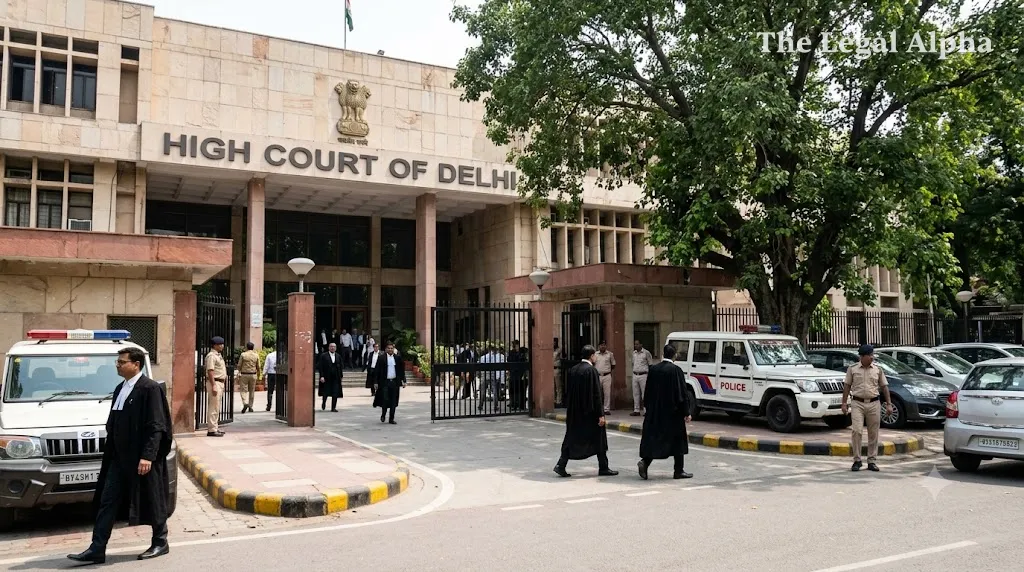
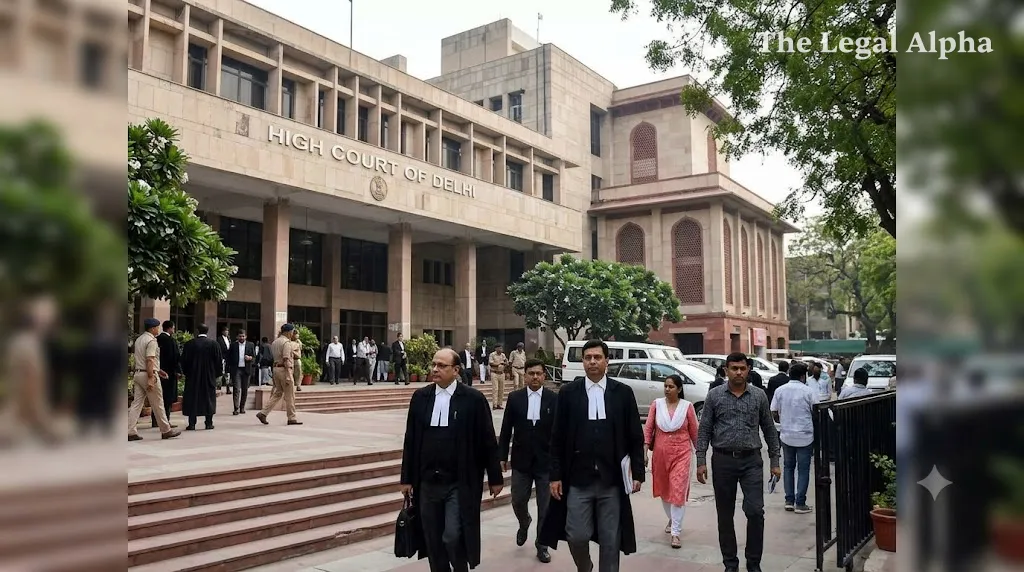
The Delhi High Court has quashed an order passed by the National Human Rights Commission (NHRC) directing the Delhi Police to pay ₹5 lakh in monetary compensation to the family of a man who died by suicide inside a police station.
The underlying incident dates back to December 2019, when the deceased, Rashid Raza, walked into the Narela Industrial Area police station to make inquiries regarding his deceased wife. Raza, who had arrived at the station voluntarily and was not placed under formal arrest or subject to physical restraints, entered a ground-floor room (Sankraman Kaksh), sent a final audio message to his brother on his mobile phone indicating his intention to end his life, and was subsequently discovered hanging.
Taking cognizance of the death, the NHRC directed the Delhi government to compensate Raza's next of kin, asserting that police officers owed a duty of care to anyone inside the station premises and could have averted the suicide had they maintained adequate vigilance. The Delhi Police challenged this directive before the High Court, which ruled that public authorities cannot be held vicariously liable for an unanticipated self-harm incident in the absence of demonstrable negligence or prior warning.
Legal Topic
Area of Law: Constitutional & Administrative Law
Sub-topic: Custodial Jurisprudence / State Negligence & Human Rights Commission Powers
Core Legal Issue
The fundamental legal question before the High Court was whether the State can be held strictly liable and directed to pay compensation under public law for a suicide occurring on government premises, solely on the presumption that officials failed to anticipate the act.
Specifically, the court examined whether the NHRC could impute negligence and award compensation under the Protection of Human Rights Act, 1993, when a visitor is neither in formal custody nor detained, and where police personnel possessed no advance knowledge, suicidal indicators, or reasonable window of opportunity to intervene.
What Did the Court / Authority Decide?
A Single Judge bench of Justice Sanjeev Narula allowed the writ petition filed by the Government of NCT of Delhi and quashed the NHRC's recommendation dated April 19, 2024, which had directed the payment of ₹5 lakh to Raza’s family.
The court ruled that fastening compensation upon law enforcement agencies requires affirmative material showing a distinct breach of duty, prior awareness of distress or danger, or an unexercised practical chance to prevent the fatality. Scrutinizing the CCTV footage and an audio recording left on Raza's phone, the court observed that Raza had voluntarily entered the station, was unconfined, and was alone in the room when the act occurred.
The High Court held that the NHRC had erroneously applied hindsight to penalize officers for failing to foresee the actions of an individual whose liberty had not been curtailed, noting that such an approach cannot be countenanced under administrative and constitutional law. The matter has been finally disposed of, with the compensation directive set aside in its entirety.
Key Legal Points
-
Rejection of Pure Hindsight Liability: The court clarified that negligence and State liability cannot be inferred merely from the tragic venue of an event or through retroactive expectations of omniscient monitoring.
-
Pre-requisites for Imputing Negligence: For an administrative or human rights tribunal to order compensatory relief against the State for a suicide, there must be established proof of specific operational failures, prior knowledge of vulnerability, or a reasonable, neglected opportunity to intervene.
-
Distinction Between Custodial Restraint and Free Movement: The ruling delineates formal custodial detention from situations where an individual visits a public administrative office voluntarily without legal restraint, restricting the application of strict custodial tort doctrines to the latter.
-
Evidentiary Threshold Before the NHRC: While the NHRC wields broad powers to recommend relief for human rights violations, its determinations must rely on verifiable dereliction of legal duties rather than speculative assumptions.
Relevant Law
-
Protection of Human Rights Act, 1993: Section 18 (powers of the Commission to recommend compensation or interim relief during or following inquiries).
-
Constitution of India: Article 226 (writ jurisdiction of the High Court over administrative and statutory authorities) and Article 21 (right to life and personal liberty in custodial contexts).
-
Principles of Law of Torts & Public Law Remedies: Doctrine of foreseeability and reasonable standard of care in State liability claims.
Arguments of the Parties
Petitioner (Delhi Police / Government of NCT of Delhi)
The State argued that Rashid Raza had not been detained, arrested, or summoned as a suspect; he visited the station voluntarily to follow up on the death of his wife. Counsel pointed out that Raza was left unrestrained, and the forensic material—including phone timestamps and CCTV surveillance—established that he was completely alone when he sent the suicide note to his brother and carried out the act. The police submitted that they had no notice of any suicidal ideation and could not have reasonably anticipated or thwarted the incident.
Respondent (National Human Rights Commission)
The NHRC maintained that because the death took place within the precincts of a police establishment, the authorities bore a non-delegable duty of care to ensure the safety and physical well-being of anyone on the premises. The Commission contended that heightened alertness and continuous monitoring by duty officers would have enabled timely intervention, making the failure to safeguard an individual inside the station a human rights lapse warranting reparative monetary compensation.
Why Does It Matter?
This ruling establishes a crucial operational boundary regarding human rights compensation jurisprudence in India. While Indian constitutional courts have stringently enforced state accountability for custodial torture and deaths, this decision cautions regulatory watchdogs against conflating every death on sovereign property with actionable State culpability.
By distinguishing voluntary station visitors from detained persons subjected to state coercion, the High Court prevents the inadvertent creation of a strict-liability regime where law enforcement is held financially and administratively accountable for unforeseen personal tragedies. For human rights commissions, the judgment serves as a reminder that recommendations for compensation under Section 18 of the Protection of Human Rights Act must be anchored in demonstrable causal negligence rather than speculative hindsight.
Legal Takeaway
State liability for death inside public facilities cannot be presumed on hindsight alone; it requires clear proof of demonstrable negligence, prior warning of peril, or an ignored window of intervention. Where an unrestrained individual voluntarily visits a police station and takes their life without any foreseeable warning signs, the police cannot be held legally or financially liable.
Sources
Primary Source:
-
High Court of Delhi: Government of NCT of Delhi through Deputy Commissioner of Police v. National Human Rights Commission & Anr. [W.P.(C) 7931/2024, decided by Justice Sanjeev Narula].
Additional Sources:
-
High Court of Delhi interim order records in W.P.(C) 7931/2024 dated August 20, 2024.
-
Reports by The Hindu, Hindustan Times, and India Today on the judgment setting aside the NHRC compensation directive.