Police High-Handedness Allegations in Student Demonstration at St Agnes College Spark Demands for Administrative and Disciplinary Action
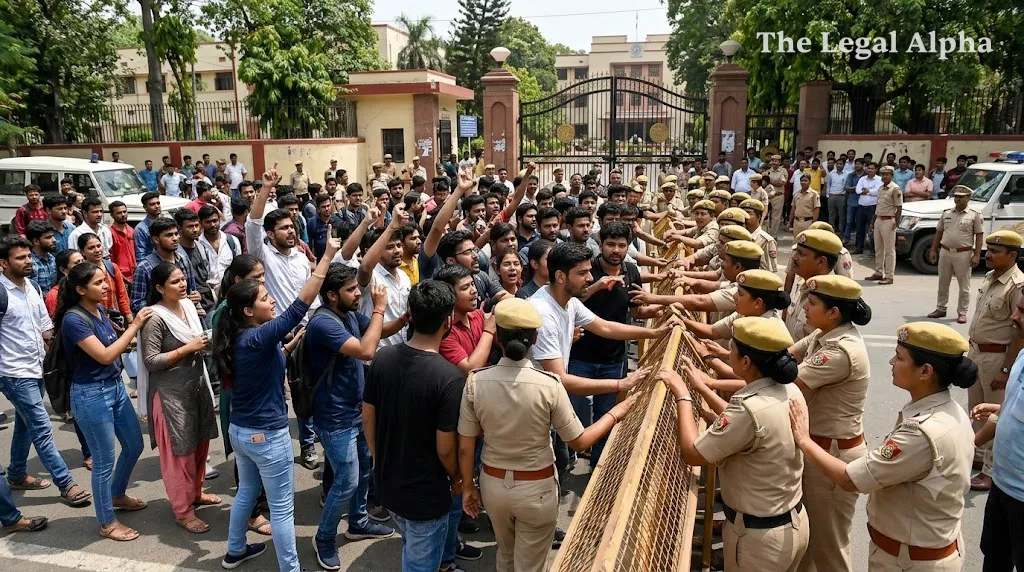
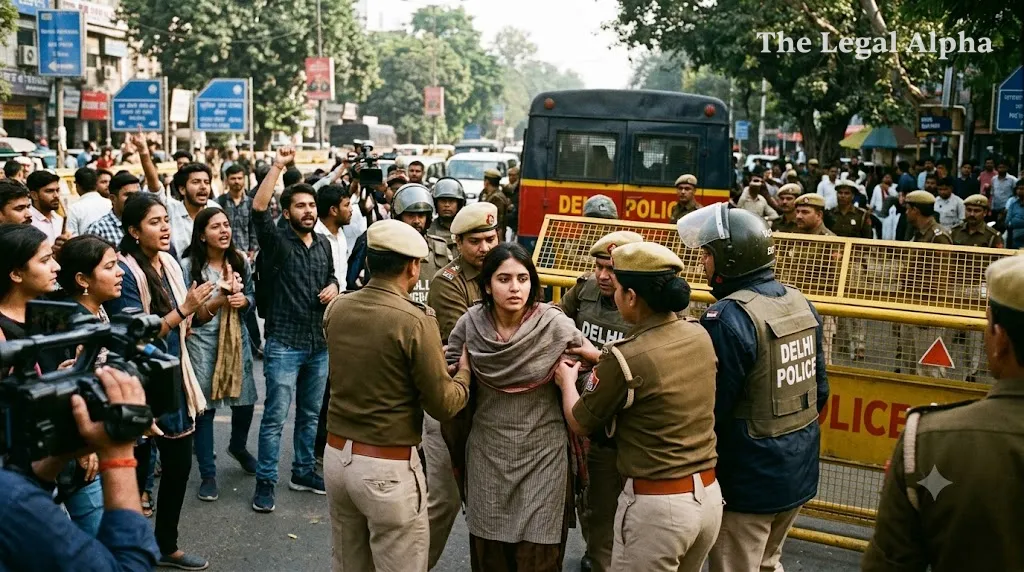
Tensions escalated in Mangaluru following a student agitation outside St Agnes College, where demonstrators were protesting the administration’s decision to schedule semester examinations during the Dasara festive break. The Akhil Bharatiya Vidyarthi Parishad (ABVP), which intervened in support of the students, formally demanded the immediate suspension and departmental prosecution of an Assistant Commissioner of Police (ACP) and other personnel.
The student body alleges that law enforcement officers used excessive and disproportionate force while dispersing peaceful demonstrators, resulting in the physical assault of an activist and the manhandling of female participants during preventative detentions. In response, Mangaluru police maintained that security personnel acted within legal bounds to prevent a breach of public peace after the college administration lodged a formal complaint against outside intervention blocking institutional premises.
Legal Topic
-
Area of Law: Constitutional & Administrative Law / Criminal Procedure
-
Sub-topic: Regulation of Public Assembly, Law Enforcement Accountability, and Preventative Detention Powers
Core Legal Issue
The controversy centres on the threshold of justifiable state force versus police excess during public demonstrations. The primary legal question is whether law enforcement officers exceeded their statutory authority under procedural law by resorting to summary physical restraint and preventive custody without adhering to statutory protocols governing crowd management and the handling of female protestors.
A secondary legal issue involves the limits of executive power during preventive crackdowns, specifically whether compelling detained protestors to furnish bail bonds and behavioral undertakings infringes upon the constitutionally protected rights to peaceful assembly and freedom of expression.
What Did the Court / Authority Decide?
No formal court ruling has been issued, as the dispute remains at the pre-litigation and administrative grievance stage:
-
Administrative Action Demanded: The student outfit submitted formal representations demanding an immediate inquiry and suspension of ACP Ravish Naik alongside implicated personnel.
-
Police Stance: The Mangaluru Police Commissionerate clarified that initial police action was initiated pursuant to a trespassing and disruption complaint by the college authorities to maintain public order.
-
Procedural Measures: Police detained key organizers and required executive peace bonds/undertakings to clear vehicular obstructions outside the college gate.
-
Pending Status: Departmental oversight inquiries and prospective human rights or magistrate complaints remain pending, with student representatives warning of wider municipal protests if internal disciplinary steps are not taken.
Key Legal Points
-
Proportionality in Use of Force: State actors are bounded by the doctrine of reasonable minimum force; summary assault or physical battery by an officer while executing preventive custody lacks statutory immunity.
-
Procedural Safeguards for Female Demonstrators: Procedural criminal law mandates strict female-officer-led protocols when detaining, searching, or restraining women during public order policing.
-
Preventative Custody vs. Fundamental Freedoms: The execution of preventive measures under security and public nuisance provisions must demonstrate an imminent threat to peace rather than serving as a blanket tool to stifle non-violent student representation.
-
Institutional Autonomy vs. Public Protest: Educational administrations possess the right to seek police intervention against campus obstruction, but institutional complaints do not authorize arbitrary force against demonstrators on public access ways.
Relevant Law
-
Constitution of India: Article 19(1)(a) (freedom of speech and expression), Article 19(1)(b) (right to assemble peaceably without arms), and Article 21 (protection of life, personal liberty, and bodily integrity).
-
Code of Criminal Procedure, 1973 / Bharatiya Nagarik Suraksha Sanhita, 2023 (BNSS):
-
Section 46 / Section 35 BNSS (Arrest procedures, strictly regulating the arrest and physical handling of women by male officers).
-
Sections 107 and 111 / Sections 126 and 130 BNSS (Security for keeping the peace and furnishing of bonds).
-
Sections 129–131 / Sections 148–150 BNSS (Statutory limits on force to disperse unlawful assemblies).
-
-
Indian Penal Code, 1860 / Bharatiya Nyaya Sanhita, 2023 (BNS): Provisions addressing voluntarily causing hurt, assault by public servants, and wrongful restraint.
-
Judicial Precedents: Anita Thakur v. Govt. of J&K (2016) (affirming that police use of force must be strictly necessary, non-excessive, and proportionate, holding police accountable for high-handedness against peaceful protestors).
Arguments of the Parties
Protesters & Student Representatives
The student organization argued that the gathering was a legitimate, non-violent agitation against an unfair institutional timetable that infringed upon festival holidays. They submitted that the police deployed unlawful brutality, specifically alleging that ACP Ravish Naik physically struck a student organizer and that male personnel aggressively handled female students without adherence to mandatory procedural protocols. Furthermore, they contended that compelling peaceful demonstrators to execute bond conditions violates their democratic right to protest.
Police & Administrative Authorities
The State and local police administration contended that personnel intervened solely to preserve public peace, regulate road access, and protect institutional operations following a formal grievance from St Agnes College. Authorities maintained that when external groups escalated the blockade and obstructed vehicular movement, preventative detentions became necessary under procedural law to avert breaches of public order.
Why Does It Matter?
This development highlights recurring friction points where institutional policy disputes spill into the public sphere, triggering administrative crackdowns. It tests the boundaries of law enforcement discretion, underscoring that police cannot treat college gate agitations with the same physical intensity applied to violent civil unrest.
For civil liberties, the case emphasizes the necessity for administrative accountability when statutory guidelines on arresting female protestors and reasonable force are ignored. For academic institutions, it underscores the legal risk of relying on law enforcement interventions to solve administrative and academic schedule grievances, which frequently converts internal campus issues into broader statutory and public order disputes.
Legal Takeaway
The right to assemble peaceably outside educational institutions cannot be curtailed through arbitrary state force, and officers remain bound by strict statutory safeguards regarding proportionality and the custody of female demonstrators. Law enforcement intervention must balance maintaining public order with constitutional guarantees, as executive complaints do not grant immunity against claims of departmental assault or wrongful detention.
Sources
-
Primary Source: Formal Press Statement and Representations by the Mangaluru City Police Commissionerate and ABVP State Joint Secretariat (October 14, 2026).
-
Additional Sources: News reports on police confrontation at St Agnes College, Mangaluru, October 2026 (The Hindu, The Times of India, Press Trust of India).