Punjab Challenges High Court Order Mandating CBI Inquiry into Chief Minister's Aide Before Supreme Court
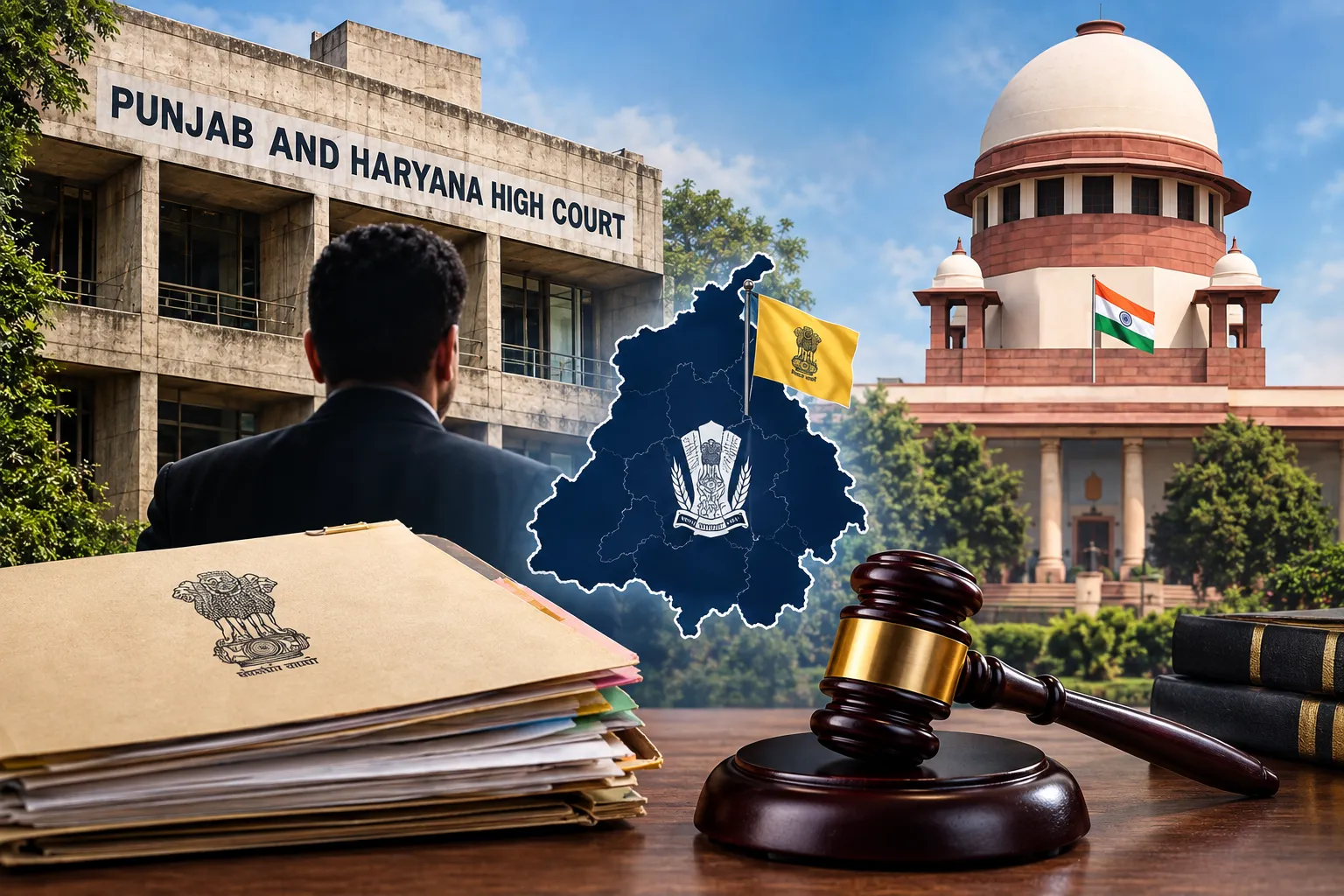
The Punjab government has approached the Supreme Court to contest an order passed by the Punjab and Haryana High Court directing the Central Bureau of Investigation to probe allegations involving an Officer on Special Duty attached to Chief Minister Bhagwant Mann. The state administration filed a special leave petition challenging the decision to transfer the investigation to the central agency, contending that established procedural safeguards and the stringent legal thresholds governing central investigative referrals were bypassed. The case has reached the apex court amid scrutiny over judicial intervention in state police matters and the limits of extraordinary writ jurisdiction.
Legal Topic
Area of Law: Constitutional and Criminal Procedure Law
Sub-topic: Police Powers, Extraordinary Writ Jurisdiction, and CBI Investigation Referrals
Core Legal Issue
The dispute centers on whether a High Court can invoke its extraordinary powers under Article 226 of the Constitution or Section 482 of the Code of Criminal Procedure to direct an investigation by the Central Bureau of Investigation without state government consent when ordinary statutory investigation avenues exist.
The matter focuses on whether the allegations demonstrated a complete breakdown of local investigative machinery, institutional bias, or exceptional circumstances sufficient to warrant bypassing the state's regular law enforcement framework.
What Did the Court / Authority Decide?
The Punjab and Haryana High Court had directed the CBI to step in and investigate the allegations concerning the Chief Minister's aide, concluding that the nature of the accusations required an independent probe free from state executive influence.
Challenging this ruling, the Punjab government petitioned the Supreme Court seeking an interim stay and ultimate quashing of the High Court's directive. The state maintains that local authorities were fully competent to act and had not exhibited institutional compromise. The matter is now pending consideration before the Supreme Court, which will evaluate whether the High Court adhered to the established legal limits governing transfers of investigation to central agencies.
Key Legal Points
-
Constitutional courts possess the power to direct a CBI probe without the consent of the concerned state government, but this power must be exercised sparingly, cautiously, and only in exceptional situations.
-
The proximity of an individual to high political or administrative office does not, by itself, justify transferring an investigation away from the state police.
-
An order handing over an inquiry to a central agency requires clear evidence demonstrating institutional paralysis, lack of bona fides, or a genuine failure of the local investigative apparatus.
-
The federal distribution of police powers under the Constitution requires judicial restraint to prevent routine interference with state investigative jurisdiction.
Relevant Law
-
Article 226 of the Constitution of India (Writ jurisdiction of High Courts)
-
Section 482 of the Code of Criminal Procedure, 1973 (Inherent powers of the High Court)
-
Section 6 of the Delhi Special Police Establishment Act, 1946 (Requirement of state consent for CBI jurisdiction)
-
State of West Bengal and Others v. Committee for Protection of Democratic Rights, West Bengal (Supreme Court precedent laying down the exceptional criteria required for directing CBI probes)
Arguments of the Parties
State of Punjab (Petitioner / Appellant)
The state government contended that the High Court directed a CBI inquiry without satisfying the high threshold articulated by the Supreme Court in binding precedents. The state submitted that local police agencies possess statutory authority to examine allegations impartially and that no material demonstrated systemic bias or bad faith. The administration further argued that routinely entrusting state-level allegations to federal agencies compromises the constitutional balance of policing powers.
Complainant / Opposing Parties (Respondents)
The respondents maintained that an investigation conducted by the state police would face inherent institutional limitations given the position of the individual involved within the Chief Minister's immediate office. They submitted that directing a probe by the Central Bureau of Investigation was essential to preserve public trust, prevent potential interference, and ensure a thorough and objective inquiry.
Why Does It Matter?
This proceeding revisits the delicate balance between state investigative autonomy and the supervisory powers of constitutional courts. For the criminal justice system, it tests the consistency with which courts apply the standard of "exceptional circumstances" before displacing state law enforcement in favor of federal agencies.
A lower threshold risks converting extraordinary remedies into routine measures whenever allegations involve public figures, potentially undermining state police morale and federal demarcations. Conversely, preserving the high threshold ensures that central agencies are mobilized only when genuine institutional compromise is demonstrably established.
Legal Takeaway
A High Court's power to assign investigations to the CBI without state consent is an extraordinary remedy intended strictly for rare instances of demonstrable institutional failure. Mere allegations against an official linked to high office do not automatically warrant stripping state police of their statutory authority to investigate.
Sources
Primary Source:
Special Leave Petition filed by the State of Punjab before the Supreme Court of India; Order of the High Court of Punjab and Haryana.
Additional Sources:
Delhi Special Police Establishment Act, 1946; Supreme Court of India jurisprudence on transfer of investigations (Committee for Protection of Democratic Rights).