"Entire Career Ahead": Delhi Court Grants Bail to 17 Students and Journalists Detained During Election Commission Protest
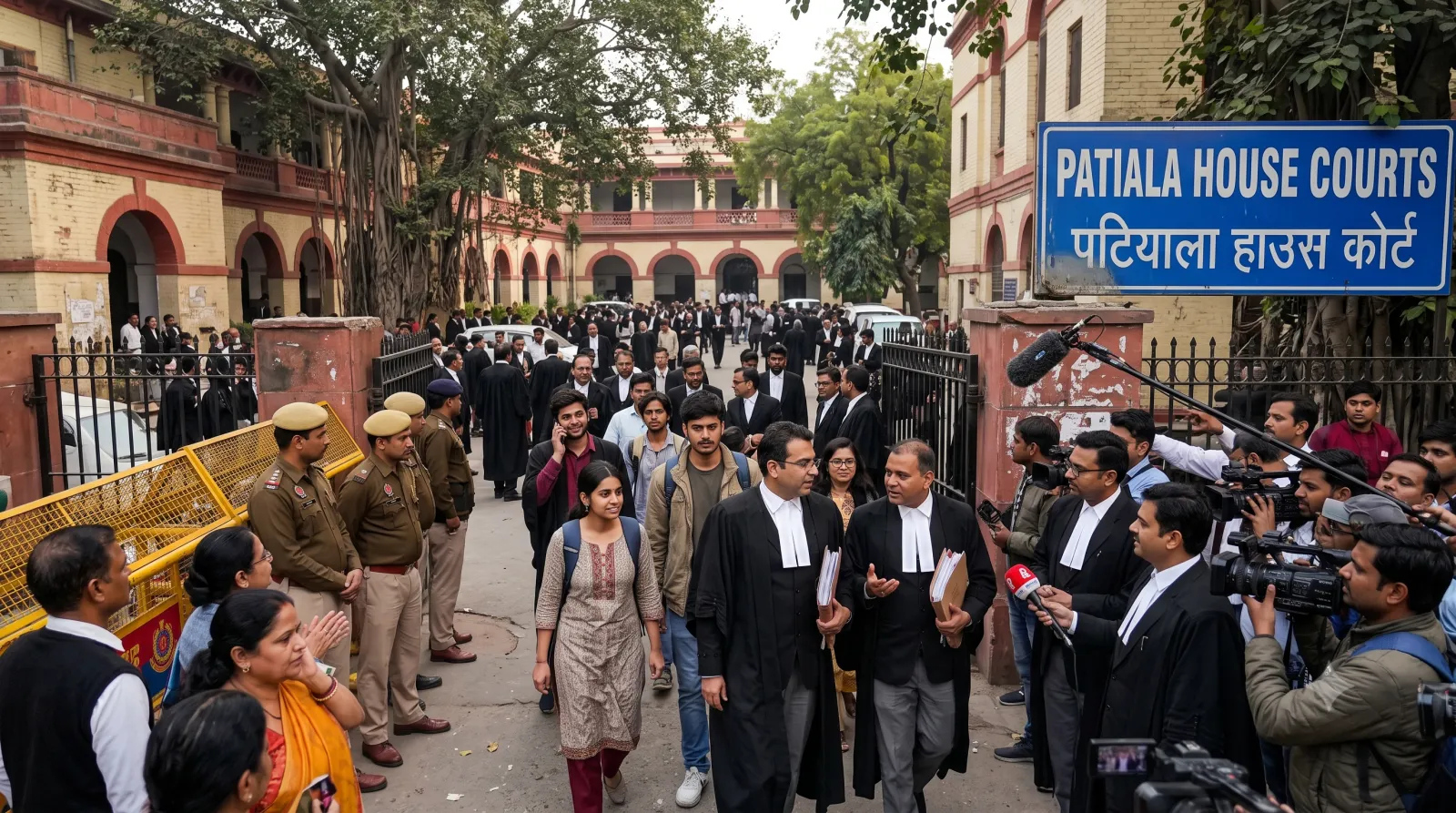
A magisterial court in New Delhi granted bail to 17 young demonstrators, including university students and freelance journalists, who were arrested by the Delhi Police during a demonstration against Chief Election Commissioner Gyanesh Kumar.
The late-night proceedings took place at the Patiala House Courts complex, where Judicial Magistrate First Class Animesh Kumar considered the bail pleas across four separate hearings. The detentions followed demonstrations in Central Delhi concerning allegations surrounding the functioning of the Election Commission of India. While police officials alleged that the demonstrators obstructed public servants and created a disturbance, the court stepped in to safeguard personal liberty, observing that the accused have clean records and bright futures that would be jeopardised by custodial detention.
Legal Topic
-
Area of Law: Criminal Procedure and Constitutional Law
-
Sub-topic: Pre-trial Bail, Freedom of Peaceful Assembly, and Offences Against Public Servants
Core Legal Issue
The primary legal issue before the magistrate was whether custodial detention was justified for first-time offenders facing allegations punishable by less than seven years' imprisonment, particularly where the police failed to attribute specific overt acts to individual demonstrators.
The court had to balance the state's interest in maintaining law and order against the constitutional protections governing personal liberty and established statutory limits on routine arrests during public demonstrations.
What Did the Court Decide?
Judicial Magistrate First Class Animesh Kumar allowed the bail applications for all 17 individuals, ordering their release upon furnishing a personal bond of ₹15,000 each with one surety of an equivalent amount.
In granting relief, the court highlighted that the primary substantive offence charged—Section 132 of the Bharatiya Nyaya Sanhita (BNS)—carries a maximum sentence of only two years' imprisonment. The magistrate observed that the accused are young, have no prior criminal antecedents, and have their entire professional careers ahead of them.
While bail has been granted, the underlying investigation remains pending. The court directed the accused to comply with the following conditions:
-
Refrain from committing any offence while on bail.
-
Provide verifiable residential addresses and ensure their mobile phone numbers remain active and accessible.
-
Attend all scheduled court hearings without default.
-
Refrain from travelling outside India without prior permission from the court.
Key Legal Points
-
Proportionality in Pre-Trial Custody: Judicial discretion strongly favours bail over detention when invoked offences carry modest statutory penalties, especially in the absence of past convictions.
-
Preservation of Careers and Antecedents: The socio-demographic profile of accused persons—such as educational standing, journalistic vocation, and lack of habitual offending—is a relevant factor when evaluating pre-trial custody.
-
Necessity of Individualised Roles: Collective allegations against a crowd do not justify custodial detention unless specific violent acts are attributed to the individual being remanded.
-
Safeguards Against Mechanical Arrests: Police authority to detain individuals during civil protests must align with statutory arrest limits and the constitutional presumption in favour of personal liberty.
Relevant Law
-
Section 132, Bharatiya Nyaya Sanhita, 2023 (BNS): Penalises assault or the use of criminal force to deter a public servant from discharging official duties, prescribing a maximum sentence of two years.
-
Section 163, Bharatiya Nagarik Suraksha Sanhita, 2023 (BNSS): Governs the issuance of prohibitory orders in urgent situations of nuisance or apprehended danger.
-
Section 35, Bharatiya Nagarik Suraksha Sanhita, 2023 (BNSS): Sets forth statutory prerequisites and necessity thresholds before police can arrest an accused for offences punishable with up to seven years' imprisonment.
-
Articles 19(1)(a) and 19(1)(b), Constitution of India: Safeguard the fundamental rights to freedom of speech, expression, and peaceful assembly without arms.
-
Article 21, Constitution of India: Guarantees protection of life and personal liberty, establishing that pre-trial custody must remain an exception rather than the norm.
Arguments of the Parties
For the Accused:
-
Defence counsel Advocate Saimon Farooqui argued that the arrests were unjustified, pointing out that all invoked offences carry statutory sentences far below the seven-year threshold that mandates strict necessity for detention.
-
The defence submitted that the investigating agency failed to specify distinct individual roles, arresting only 17 of approximately 50 people present at the demonstration.
-
Counsel stressed that the police produced no contemporaneous CCTV footage or objective evidence to substantiate claims of physical assault or damage to property.
-
It was emphasised that the detainees were primarily students and working freelance reporters exercising their democratic rights, and sustained incarceration would cause irreparable harm to their education and careers.
For the Delhi Police:
-
The prosecution contended that the accused formed an unlawful assembly in breach of prohibitory orders promulgated under Section 163 of the BNSS.
-
It was submitted that during detention, several protesters actively resisted lawful authority, manhandled personnel, and injured an on-duty female constable.
-
The police alleged that public property was vandalised during the confrontation, noting damaged bus windowpanes.
-
Investigating officers maintained that the accused refused to cooperate during preliminary questioning and initially withheld personal information such as their names and addresses.
Why Does It Matter?
The ruling provides a clear reminder that magisterial courts must act as gatekeepers of personal liberty when law enforcement agencies respond to public demonstrations. By questioning the necessity of custody for offences carrying minor statutory penalties, the court curbed the tendency toward routine, punitive detention of civil protesters.
The decision also highlights the vulnerability of freelance journalists and student activists covering or participating in political dissent. When courts recognise that custodial detention can derail young professional lives and require the state to meet basic standards of proof, it protects both freedom of expression and the rule of law.
Legal Takeaway
Pre-trial detention cannot be converted into summary punishment when the underlying offences carry minor statutory sentences and lack specific proof of individual violence. Where the accused are first-time offenders with unblemished records, judicial discretion firmly prioritises personal liberty over unnecessary custodial remand.
Sources
Primary Source:
-
Bail Orders dated October 5, 2026, passed by Judicial Magistrate First Class Animesh Kumar, Patiala House Courts, New Delhi.
Additional Sources:
-
Court proceedings and legal reporting, Patiala House Courts, New Delhi.
-
Remand documentation and public statements issued by Delhi Police (New Delhi District).