Bombay High Court Confronts Election Commission Over Flawed Revision Drive, Warning Relocated Voters Face Procedural Trap
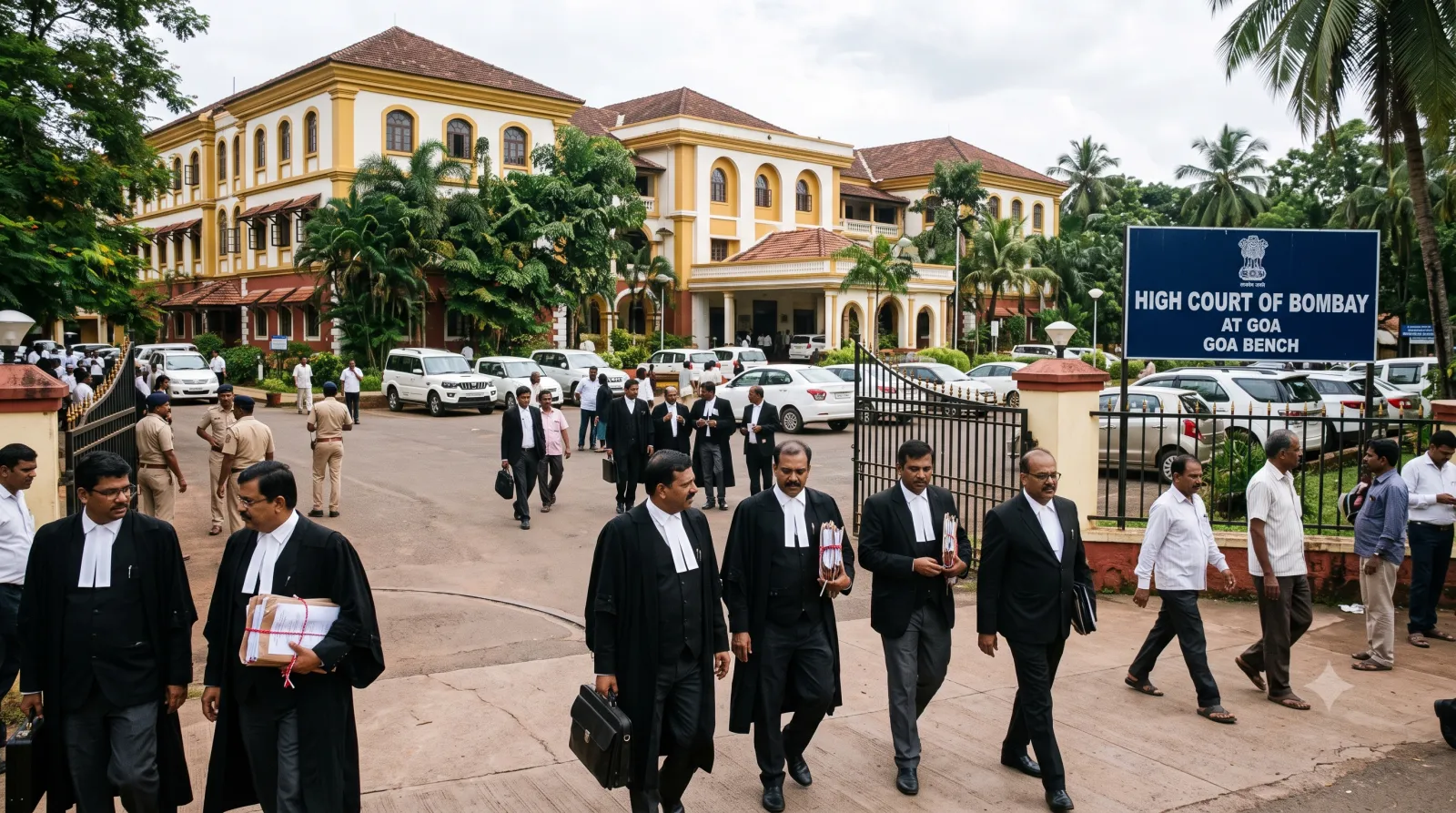
The Goa Bench of the Bombay High Court has strongly criticized the Election Commission of India (ECI) for procedural and systemic anomalies arising during its Special Intensive Revision (SIR) of electoral rolls. A Division Bench comprising Justice Valmiki Menezes and Justice Amit Jamsandekar observed that bona fide electors who moved homes within the same constituency have been pushed into an administrative deadlock, where computerized systems and rigid regulatory interpretations effectively strip them of their voting rights without due process.
The issue arose when Paresh Salgaonkar and six family members from Santa Cruz, Goa, attempted to update their residential address prior to the conclusion of the SIR enumeration phase. Because they had relocated, they submitted statutory Form 8—the designated form for altering address details and correcting existing roll entries. However, the ECI’s draft rolls excluded their names, and the commission’s automated portal, ERONET, refused to process their Form 8 submissions on the ground that there was no active draft roll entry to modify.
When the family approached electoral registration officials, they were directed to apply through Form 6, a form meant strictly for first-time or new electors. The High Court flagged that this administrative guidance places citizens in an impossible situation: submitting Form 6 forces an existing voter to execute a legally false declaration stating they are not registered elsewhere, which invites criminal liability, while attempting to file Form 8 is systematically blocked. The court questioned the very purpose of an intensive roll revision if it operates to shut out authentic citizens.
Legal Topic
Area of Law: Election Law / Constitutional Law
Sub-topic: Electoral Roll Revision, Franchise Protection, and Administrative Due Process
Core Legal Issue
The dispute centers on whether the Election Commission of India can lawfully delete or omit registered voters from draft electoral rolls during an intensive revision exercise without adhering to mandatory statutory safeguards, such as individual notice and a right to be heard.
More specifically, the court is addressing whether administrative authorities and automated software (ERONET) can compel existing registered electors who relocate to register anew under Form 6—demanding a false statutory declaration—rather than processing change-of-address requests through Form 8 evaluated against the operative, pre-existing electoral roll.
What Did the Court Decide?
The Bombay High Court delivered sharp preliminary observations rebuking the ECI for allowing software mechanics to override statutory principles of natural justice. The Bench emphasized that under Rule 21 of the Registration of Electors Rules, 1960, any deletion or omission must be measured against the existing, legally operative electoral roll, not an unconfirmed draft roll generated by the commission.
The court explicitly noted:
-
Rejection of the "Catch-22" Framework: The Bench observed that requiring electors to sign Form 6 creates an impermissible legal trap, as no citizen should be forced to execute a false declaration subject to penal prosecution just to reclaim their voting rights.
-
Primacy of the Substantive Franchise: The Bench underscored that the commission's own SIR mandate obligates officials to verify that no eligible citizen is omitted from the electoral rolls.
-
Software Subordination: The court stressed that ERONET software configurations cannot supersede statutory procedures or deprive electors of their right to be heard before their names are dropped.
The matter remains pending before the High Court, with the Bench directing the Election Commission to provide a viable procedural explanation and remedy that reconciles ERONET’s processing mechanisms with the statutory rights of affected citizens.
Key Legal Points
-
Primacy of the Existing Electoral Roll: Statutory inquiries regarding voter status and omissions under the Registration of Electors Rules must be anchored to the prevailing, legally valid electoral roll rather than an interim draft list.
-
Impermissibility of Forced False Declarations: Election authorities cannot lawfully require established voters to submit Form 6 intended for first-time voters, because doing so requires a declaration under penalty of law that the applicant holds no prior registration.
-
Technology Must Yield to Natural Justice: Digital portals such as ERONET are administrative tools; technical limitations or system rigidities cannot abrogate the statutory duty to issue notice and grant a personal hearing before disenfranchising a voter.
-
Constitutional Obligation to Ensure Adult Suffrage: The Election Commission’s mandate under Article 324 is to curate an exhaustive and accurate roll of all qualified citizens, meaning revision drives cannot become instruments of inadvertent voter suppression.
Relevant Law
-
Representation of the People Act, 1950:
-
Section 22: Authorizes the Electoral Registration Officer to amend, transpose, or delete entries in electoral rolls only after conducting necessary inquiries and providing the affected person a reasonable opportunity to be heard.
-
Section 31: Imposes criminal penalties (imprisonment or fines) on individuals who submit false declarations in connection with the preparation or revision of electoral rolls.
-
-
Registration of Electors Rules, 1960:
-
Rule 21 & Rule 21A: Prescribe the exact procedure for dealing with inadvertently omitted names and the mandatory notice requirement prior to voter deletion.
-
Form 6 & Form 8: Statutory forms designated respectively for first-time enrollment and the transposition/correction of existing entries.
-
-
Constitution of India:
-
Article 324: Vests the superintendence, direction, and control of elections in the Election Commission of India.
-
Article 326: Guarantees adult suffrage as the bedrock of representative democracy.
-
Arguments of the Parties
Petitioners (Paresh Salgaonkar & Family):
-
The petitioners submitted that they are longstanding registered voters who only changed their dwelling within the same legislative constituency and complied with statutory obligations by tendering Form 8 in a timely manner.
-
They argued that being omitted from the draft roll and subsequently locked out by ERONET left them with no procedural remedy, as Form 6 cannot lawfully be signed by an already registered voter without making a false declaration.
-
They contended that deleting citizens' names based on software errors or lack of enumeration without notice violates Rule 21 and amounts to unconstitutional disenfranchisement.
Respondent (Election Commission of India):
-
Counsel for the ECI contended that a Special Intensive Revision differs from regular summary revisions because the final list is prepared essentially as a clean slate, with the prior roll acting primarily as a background database.
-
The commission argued that Form 8 operates strictly to transpose an entry already visible on the draft roll; consequently, if a voter was missing from the draft roll due to unsubmitted enumeration forms, there was no active entry to transfer.
-
The ECI submitted that asking omitted voters to use Form 6 during the claims and objections window is an administrative measure designed to restore eligible electors and would not be treated as an unlawful or culpable false statement.
Why Does It Matter?
This development directly addresses the integrity of voter roll maintenance in an era increasingly governed by automated governance portals. When poll authorities embark on massive revision drives, administrative haste and rigid IT architectures run the risk of purging lawful voters who have merely shifted residences or experienced clerical oversights.
The High Court's intervention establishes a critical barrier against automated disenfranchisement. By demanding that electoral authorities adhere strictly to statutory notice rules rather than deferring to software defaults, the court protects the fundamental right of franchise for millions of migratory citizens. The case also highlights the urgent need for electoral authorities to audit automated systems like ERONET to ensure they accommodate ordinary life events, such as intra-constituency relocations, without imposing criminalized procedural burdens on electors.
Legal Takeaway
An administrative or software limitation cannot extinguish a citizen’s constitutional right to vote. The Election Commission remains legally bound by statutory due process to provide notice and an opportunity to be heard before removing electors, and it cannot place voters in a regulatory deadlock that forces them to sign false declarations to remain on the electoral roll.
Sources
Primary Source:
-
Proceedings and judicial observations of the High Court of Judicature at Bombay at Goa in Paresh Salgaonkar v. State of Goa & Ors. (Division Bench of Justice Valmiki Menezes and Justice Amit Jamsandekar, hearing dated October 5, 2026).
-
The Representation of the People Act, 1950 and the Registration of Electors Rules, 1960.
Additional Sources:
-
High Court hearing reports, The Indian Express, October 5, 2026.
-
Legal reporting and litigation updates, Bar and Bench and LiveLaw, October 5–6, 2026.
-
Press reports on ERONET voter revision issues, Hindustan Times, October 6, 2026.